Nolan’s Odysseus gamble turns Matt Damon into a Trojan horse
Christopher Nolan cast Matt Damon in The Odyssey to draw on audience trust, then test it as Odysseus’ hero image unravels.
By Poppy Nakagawa · Culture Writer
3 min read
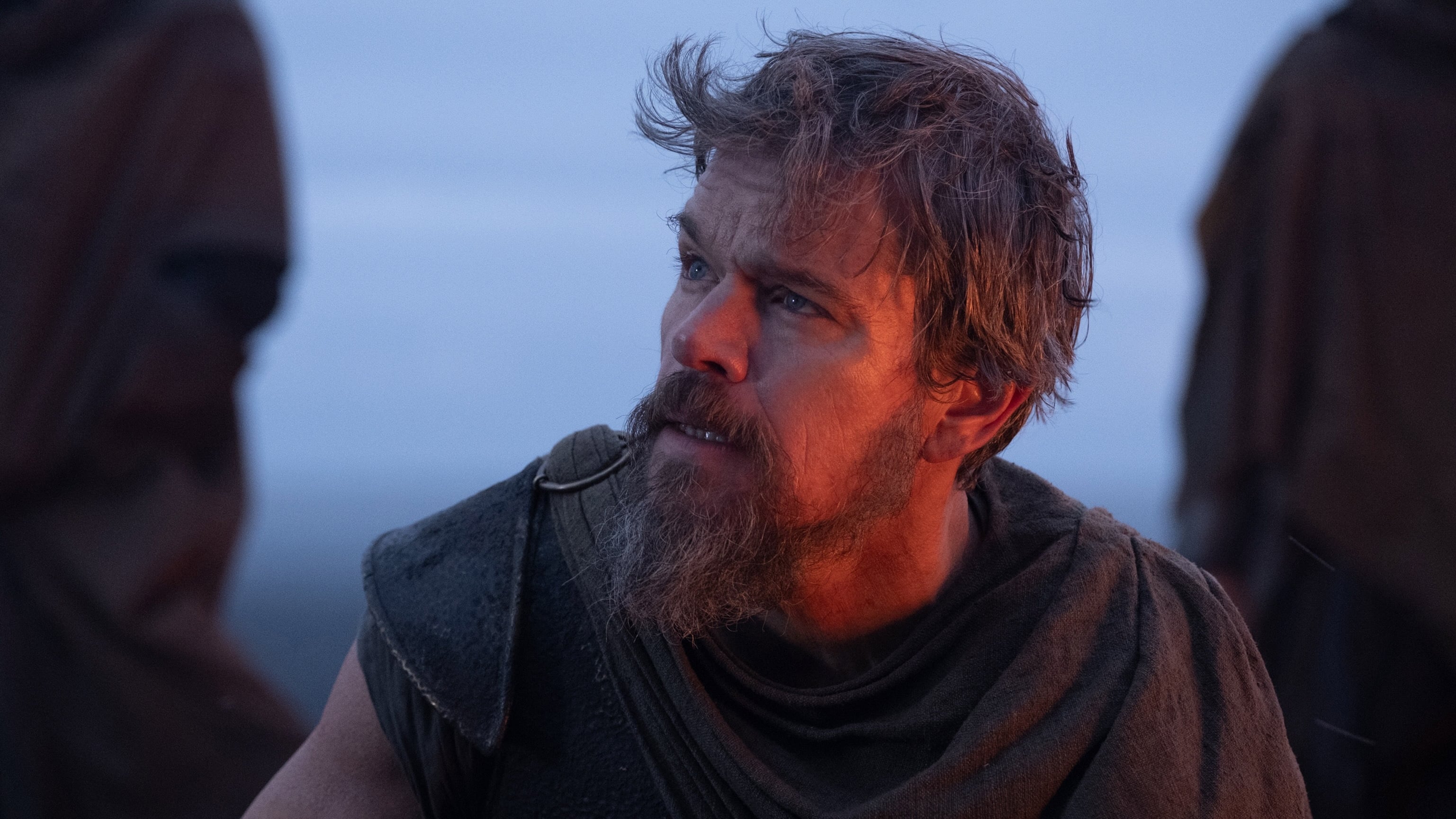
Matt Damon’s friendly movie-star aura is doing more than selling tickets in Christopher Nolan’s The Odyssey. According to Mashable’s analysis of the film, it is the key device Nolan uses to turn Homer’s wandering king into a sharper political figure.
Damon stars as Odysseus, the Ithacan ruler trying to return home after the Trojan War. The film is now playing in theaters and IMAX, with a cast that includes Anne Hathaway as Penelope, Tom Holland as Telemachus, Robert Pattinson as Antinous, John Leguizamo as Eumaeus, Travis Scott as a bard and Samantha Morton as Circe.
Mashable argues that Nolan begins by steering viewers toward the version of Odysseus they expect from a Damon role: decent, brave, physically capable and easy to root for. The film delays showing Damon’s face, first letting other characters describe Odysseus’ place in Ithaca.
His full reveal, according to the analysis, comes through a story told by Eumaeus about Odysseus saving the puppy Argos from being thrown off a cliff. Cinematographer Hoyte van Hoytema’s camera moves from the dog in Odysseus’ hands up to Damon’s face as the animal licks him.
Damon’s good-guy image becomes the setup
Mashable frames the dog rescue as a playful twist on the screenwriting idea often called a “save the cat” moment, where a character wins audience sympathy early. In this telling, Nolan introduces Odysseus through care, family and community before the darker parts of his journey come into view.
The analysis also connects Damon’s casting to his long screen history as a dependable American hero, citing roles in The Bourne Identity, Saving Private Ryan and The Martian. Damon had previously worked with Nolan on Interstellar and Oppenheimer.
Nolan discussed that trust in an interview with Brut, saying Damon can bring viewers into a character’s worldview. “Because you're confident that the audience trusts Matt,” Nolan said, a filmmaker can let the character be more difficult and “challenge that relationship with the audience a bit.”
The voyage turns uglier
Once Odysseus and his men begin their trip home, Mashable says the film reconsiders the hero story. The soldiers arrive at islands armed and uninvited, expect hospitality, and answer resistance with force.
The cyclops sequence is cited as a major example. Odysseus and his men enter the creature’s cave, recognize signs that someone lives there and start eating the cheese before the resident returns. Nolan’s version, according to Mashable, does not have Odysseus attempt a conversation with the cyclops before violence erupts.
Circe’s episode pushes the point further. Mashable describes her as recognizing the men’s greed, turning them into pigs after Eurylochus intrudes on her cottage and she offers the soldiers soup.
The analysis reads Nolan’s film as a critique of American exceptionalism, with Odysseus and his warriors treating foreign spaces as theirs to use while still expecting honor from others. The film later turns back to Troy, where Mashable says Odysseus is haunted by the killing of Cassandra.
By leaning on Damon’s familiar appeal, Mashable argues, Nolan pulls viewers into Odysseus’ legend before forcing them to judge the violence and entitlement beneath it. The result is a hero story that asks what glory is worth when the bodies, wreckage and years away from home are finally counted.
This story draws on original reporting from Mashable.