Nolan’s Odyssey reads Homer as a doomsday warning, critic says
Rolling Stone’s Sean Woods says Christopher Nolan turns Homer’s epic into an anti-war tale haunted by Troy and Bronze Age collapse.
By Bianca Rossi · Entertainment Editor
3 min read
Christopher Nolan’s new take on The Odyssey is being read as more than a monster-filled voyage home. Rolling Stone writer Sean Woods argues the film turns Homer’s ancient poem into an anti-war warning about what happens when a society burns through its own rules.
In a July 17 essay, Woods calls Nolan’s adaptation “overall excellent” and pushes back against online claims that the movie is “woke.” He points to the culture-war noise around Lupita Nyong’o being cast as Helen of Troy and Elliot Page appearing as one of Odysseus’ loyal soldiers, while noting that Matt Damon plays Odysseus, the Greek sailor at the center of the story.
Woods’ bigger point is that the movie is less interested in modern political labeling than in the old, brutal bill for war. He writes that Nolan, following Oppenheimer, seems preoccupied with destruction on a civilization-ending scale.
A homecoming with monsters, gods and guilt
The story follows Odysseus after a decade at Troy as he tries to return to his wife and son, who are dealing with hostile guests in their home. Woods recounts the familiar mythic obstacles: Odysseus blinds the Cyclops, a son of Poseidon, and is punished with years of wandering across the sea.
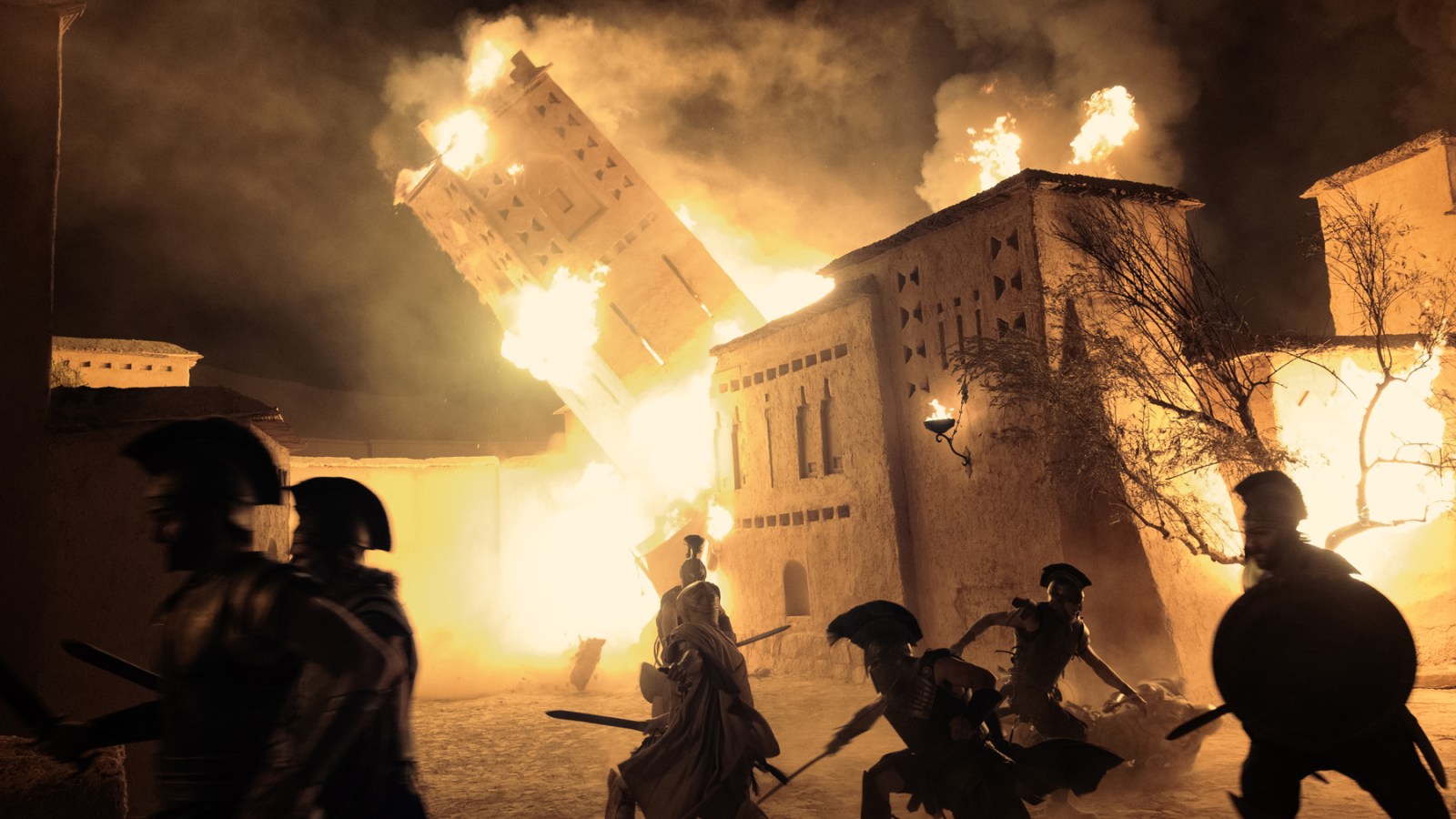
Nolan stages the journey as an adventure, according to Woods, but the film’s sharpest turn comes in a late flashback to Troy’s destruction. That sequence, Woods says, reveals the movie’s central concern: the personal and social damage left by violence.
In Woods’ account, Damon’s Odysseus warns after Troy falls that the Bronze Age is ending. The moment frames the Greek victory less as triumph than as a signal that the world they know is cracking apart.
Troy becomes a warning flare
Woods ties that choice to historical theories about the collapse of eastern Mediterranean civilizations after the fall of the historical Troy around 1200 B.C. He cites Eric H. Cline’s book 1177 B.C.: The Year Civilization Collapsed, which examines possible causes including attacks by the Sea Peoples, climate pressures, trade disruption, migration and internal revolt.
The essay says Nolan’s film echoes those cascading pressures. Woods describes the sack of Troy as frightening less because of graphic imagery than because Odysseus registers the moral damage of what the Greeks have done.
The film also connects that damage to Odysseus himself. Woods notes that Odysseus devised the Trojan Horse, the deceptive gift that led to the city’s fall, and says the character’s guilt follows him through the voyage in visions of the dead.
Woods places Nolan’s film in the long history of artists reshaping Homer’s The Odyssey and The Iliad. He also says the ending brought to mind Seamus Heaney’s The Cure at Troy, another work drawn from the Homeric tradition and concerned with suffering, revenge and the possibility of healing.
His conclusion: Nolan’s version uses an ancient epic to argue that duty, violence and collapse are not museum-piece themes. In this reading, Troy is not just a ruined city from myth. It is the warning light flashing at the edge of the story.
This story draws on original reporting from Rolling Stone.