Mussau: The First Song wraps 40-day shoot in Papua New Guinea
The $4.5 million historical drama has completed filming on Mussau Island and in Goroka, with producers targeting a 2027 festival premiere.
By Bianca Rossi · Entertainment Editor
2 min read
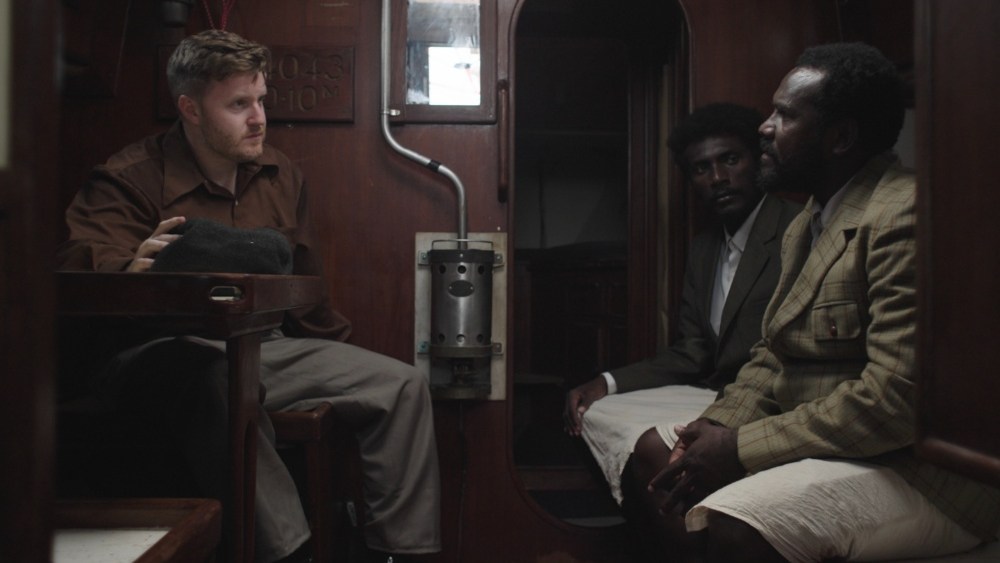
Mussau: The First Song has completed its 40-day shoot, putting the Papua New Guinea historical drama a step closer to the screen. Variety describes the $4.5 million production as the country’s most expensive film to date, a characterization based on its report rather than independently documented budget comparisons.
The film was shot on Mussau Island in New Ireland Province and in Goroka, Eastern Highlands Province. PNG-based NAFA Productions marked the wrap with a Thanksgiving event in Port Moresby, according to Variety, attended by Arts, Culture and Tourism Minister Belden Norman Namah, Chief Secretary Ivan Pomaleu and Chief Censor Jim Abani.
NAFA Productions also supplied first-look images to Variety. No release date was reported.
What is Mussau: The First Song about?
Set in the 1930s and inspired by a true story, the drama follows Taula Livovoa, a young islander who turns away from tribal violence and embraces a faith that is new to him, Variety reported. An earlier July report by Variety described the figure as Taula Lovovoa; the later wrap report uses the spelling Livovoa.
Indian filmmaker Bijukumar Damodaran directs, with Parul Agrawal producing and Noelene Taula Wunum serving as executive producer. Hilda Tanimia wrote the story, while Jennifer Litau, Joses Imona and Damodaran share screenplay and translation work, Variety said.
How did the production reach Mussau Island?
The crew had a hard road, or rather a long sea crossing. Variety reported that 120 people, including 20 technicians from India, spent 30 hours at sea getting to the remote island, where limited infrastructure and unreliable communications meant the team had to build temporary accommodation and facilities.
Island residents assisted on the production, including with scenes filmed in the sea at high tide, before the unit moved to Goroka to complete filming. Much of the cast came from the local community, Variety said, and many performers were appearing on screen for the first time. Some parts were played by great-grandchildren of people whose lives informed the story; the ensemble also includes two British actors.
The dialogue spans Mussau, Emirau, Agarabi, Gadsup, Tok Pisin and English. Variety reported that some of the indigenous languages have relatively few speakers and are at risk of dying out. The producers say the production is intended to help preserve linguistic and cultural heritage, while introducing the story to an international audience.
NAFA Productions is aiming for a premiere at a major international festival in 2027 and hopes the film could become Papua New Guinea’s official best international feature submission for the 100th Academy Awards. Neither a festival berth nor an Oscar submission has been confirmed.
This story draws on original reporting from Variety.