Canadian wildfire smoke sends Chicago and New York up pollution rankings
Smoke from Canadian fires pushed dirty air into the Midwest and Northeast, with AirNow listing hazardous conditions in downtown Minneapolis.
By Sal Moretti · Money Reporter
2 min read
Canadian wildfire smoke pushed several major U.S. cities into the upper ranks of global air pollution on Thursday, with Chicago, Detroit, Minneapolis and New York City all flagged among the dirtiest-air cities in IQAir’s world ranking.
The smoke has moved into parts of the Midwest and Northeast, MarketWatch reported, bringing orange-tinged skies and poor air quality to residents across the region. The conditions echo the smoke outbreak that hit parts of the U.S. in June 2023, according to the report.
AirNow, the U.S. air-quality tracking site, showed different levels of danger across affected neighborhoods and cities. In north Brooklyn, the air was listed as unhealthy for sensitive groups. In downtown Minneapolis, the rating was worse: hazardous for everyone.
Chicago also faced severe conditions. Around Wrigley Field, AirNow classified the air as very unhealthy, according to the report.
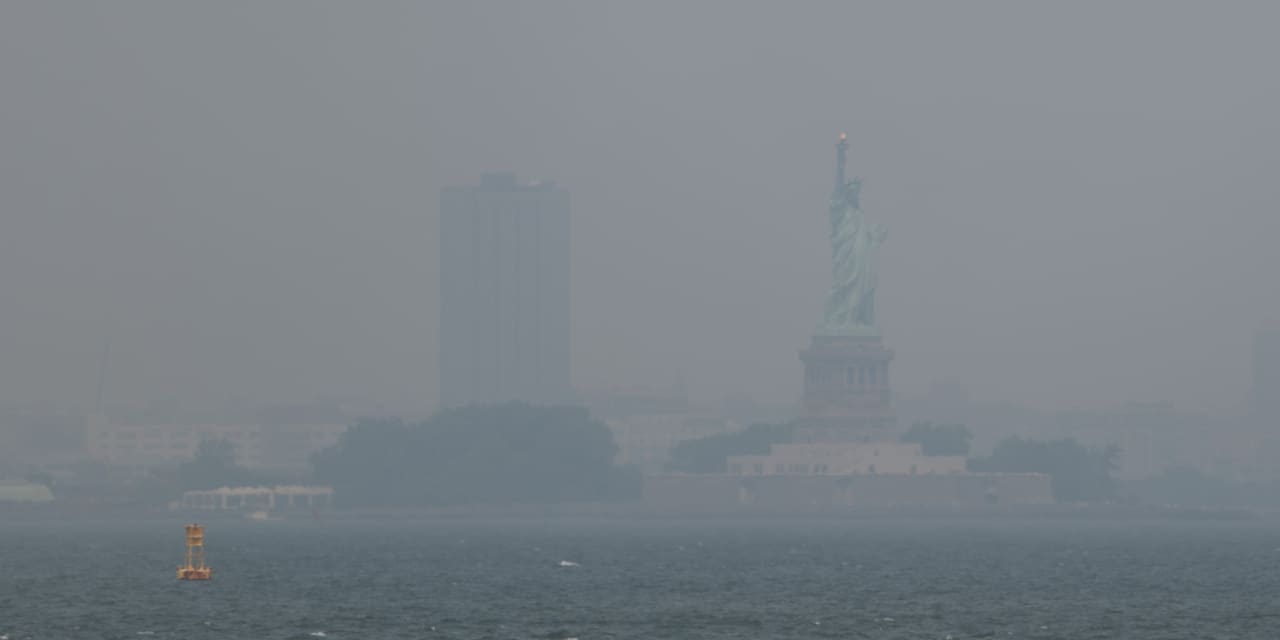
New York’s haze was visible in a dramatic image from Wednesday. A Getty Images photograph by Spencer Platt showed smoke from Canadian wildfires nearly hiding the Statue of Liberty behind a thick gray veil.
The MarketWatch report described wildfire smoke as a growing cardiovascular threat, citing the bad air quality affecting residents in the smoke zone. The report did not name a specific medical source for that phrase.
The cities highlighted Thursday are not small outliers. Chicago, Detroit, Minneapolis and New York are major metro areas, and their appearance near the top of IQAir’s global pollution ranking underscores how far the Canadian smoke has traveled.
The U.S. Air Quality Index categories cited in the report ranged from unhealthy for sensitive groups to hazardous, the most severe label mentioned. The differences show that smoke conditions can shift sharply from one place to another, even within the same broad regional event.
MarketWatch reported that the smoke has spread across several states in the Midwest and Northeast. No additional local restrictions, school closures or transportation disruptions were cited in the report.
This story draws on original reporting from MarketWatch.