USMNT’s 2026 World Cup run gets a time-capsule treatment
ESPN’s Sam Borden picked the defining scenes from a home World Cup that ended in the round of 16 but left plenty of noise behind.
By Deshawn Carter · Sports Writer
3 min read
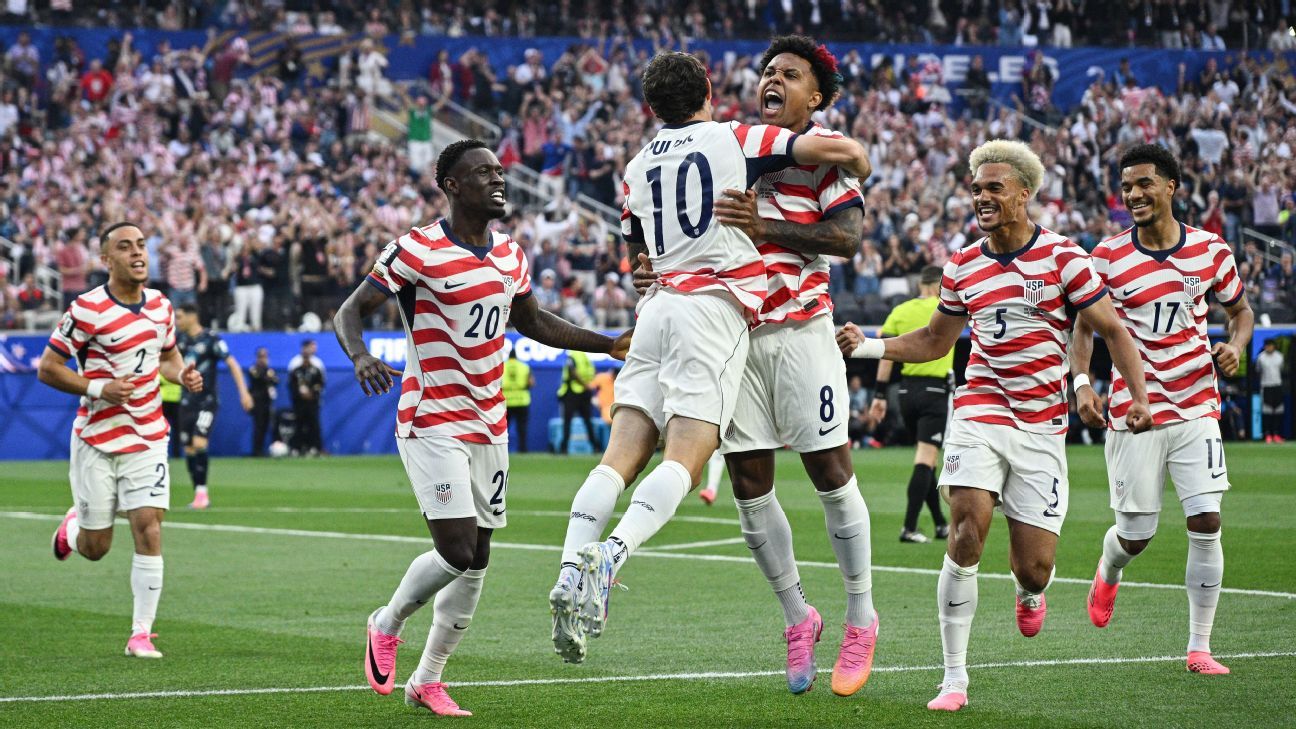
The U.S. men’s national team’s home World Cup ended with a familiar sting, a round-of-16 exit, but ESPN senior writer Sam Borden says the month still left a stack of images built to last.
Borden framed the 2026 tournament as historic from the start, noting that only six countries have hosted multiple FIFA World Cups. For the USMNT, the run brought big wins, injury drama, VAR controversy, a new singalong and, finally, a 4-1 thumping by Belgium.
The opener turned anxiety into a roar
The first keeper for Borden’s imaginary time capsule came seven minutes into the United States’ 4-1 win over Paraguay at SoFi Stadium.
According to Borden, Tim Ream said he felt more pressure before that group opener than before the first knockout match because the team still had to prove it could meet the moment at a World Cup on home soil.
The early breakthrough came after Christian Pulisic helped spark the move, Weston McKennie got a touch and Paraguay conceded an own goal. Borden described the first half as one of the best stretches in USMNT history.
That same match also gave Folarin Balogun one of his signature moments. Borden wrote that the U.S. scored 11 goals at the tournament, the program’s most at a World Cup, and that Balogun directly played a part in four by his count: three goals of his own and one forced own goal.
His best finish, Borden said, came against Paraguay, when Balogun let the ball pass him, cut back, muscled through contact, shifted the angle and fired left-footed into the top corner.
Pulisic’s calf became a daily watch
Pulisic’s tournament took a turn in that opener when he came off at halftime with an injured left calf. Borden wrote that the injury kept him out for most of the group stage.
At the U.S. training base, daily attention turned to whether Pulisic was working separately or with the squad. Reporters and photographers tracked his rehab sessions with trainers as his availability became one of the team’s biggest storylines.
Seattle found its song
The next snapshot came after the United States beat Australia 2-0 in Seattle. Borden wrote that “Country Roads” became the soundtrack of the night after the final whistle.
Alex Freeman’s goal, which stood after a VAR check, sent the U.S. bench racing into celebration, according to Borden. He described the atmosphere around that match as one of the strongest the team had experienced.
A red card lit the fuse
The Bosnia-Herzegovina match delivered both progress and uproar. The United States won 2-0, but Balogun’s red card became a flashpoint.
Borden wrote that the collision was not called a foul by the referee on the field, but a VAR review led to Balogun being sent off. What followed, according to ESPN, included a White House intervention, a U.S. Soccer appeal and an unexpected change to the one-match suspension he had been expected to serve.
That adjustment allowed Balogun to play against Belgium in the round of 16, a decision Borden said drew anger from others following the tournament.
Against Bosnia, Malik Tillman also produced a key moment with a free kick that helped seal the U.S. place in the last 16 despite the team being down to 10 men.
Belgium brought the crash landing
The run ended hard: Belgium beat the U.S. 4-1. Borden singled out Charles De Ketelaere as the Belgian attacker who torched the Americans, while noting that goalkeeper Matt Freese’s mistake led to Belgium’s third goal.
After the final whistle, Borden focused on Mauricio Pochettino gathering his players in a midfield huddle. He wrote that the wider American response, from TV interest to fan zones and public gatherings, made the tournament feel different despite another last-16 exit.
This story draws on original reporting from ESPN.com.