World Cup final reaches Antarctica, Svalbard and tiny Pacific atolls
Spain and Argentina’s final in New Jersey will be watched in some of the planet’s loneliest places, from polar bases to ocean outposts.
By Georgia Hale · Staff Writer
4 min read
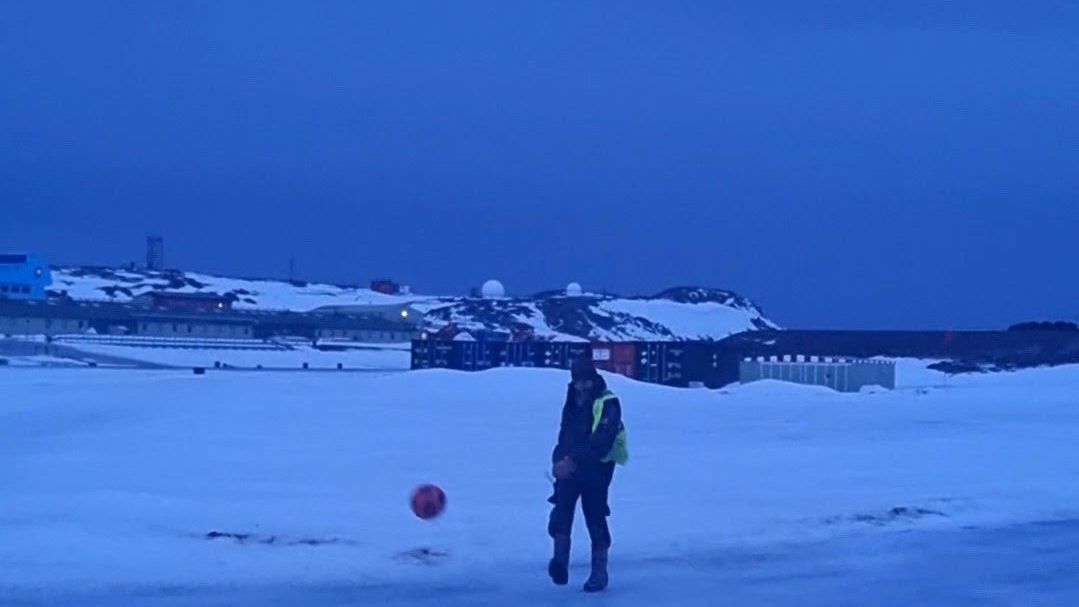
The World Cup final is heading far beyond New Jersey on Sunday, with Spain and Argentina set to draw viewers from Antarctic darkness, South Atlantic specks, Arctic settlements and Pacific atolls.
ESPN reported that an estimated 1.5 billion people watched the 2022 final in Qatar, and said this year’s showpiece is expected to top that figure. Some of those viewers will be watching in places where getting a signal, gathering a crowd or even reaching the bar counts as a logistical win.
Antarctica gets a pub night, minus the pub
At Rothera Research Station in Antarctica, ESPN reported that 26 people are wintering at the British base, with fewer than 1,000 people across 5.48 million square miles and months of permanent darkness.
Martin Kibble of the British Antarctic Survey told ESPN that the station’s football fans have been gathering around a projector and TV, especially for England and Scotland matches. He said the tournament has helped recreate the feeling of watching in a pub back home.
Kibble also said the World Cup has helped people at the base spend time together, while Rothera resident Scott Kelly told ESPN that watching Scotland’s first World Cup in 28 years from Antarctica would make a story he could one day tell his family.
The station has an aircraft hangar used for five-a-side football, ESPN reported, and after England beat Mexico, some residents even played outside in deep snow. For the final, Kibble said Rothera residents planned bunting, traditional British pub food and a 3D-printed model of the trophy.
Ascension Island tunes in from the Atlantic
On Ascension Island, a volcanic outpost in the South Atlantic with a British Royal Air Force base, football fans are also locked in. ESPN described the island as sitting between Africa and South America, nearly 1,000 miles from Liberia and farther still from Brazil.
Resident Tristan Hudson told ESPN that locals can watch matches through BBC and ITV, with some gathering at bars or the NAAFI Complex. Hudson said fans on the island have backed several teams, including England, Portugal and Brazil.
The NAAFI Complex is expected to screen the final, according to ESPN, putting one public watch party more than 5,000 miles from the match.
Tristan da Cunha has the remoteness crown
Even farther out sits Tristan da Cunha, which ESPN identified as the most remote inhabited archipelago on Earth. The British Overseas Territory has no airstrip and is reached by boats that visit about once a month after a weeklong journey from Cape Town, weather permitting.
ESPN reported that just over 200 people live there. Many have watched the tournament at home because the island’s only bar, the Albatross Bar, closes at 9 p.m. local time, before many games begin.
Islander Leon Glass told ESPN that most residents have supported England, with others following Scotland, Brazil and the Netherlands. ESPN reported that storm damage and unreliable British Forces Broadcasting Service streams have complicated plans for a final gathering.
Svalbard goes big on the big screen
In Longyearbyen, in Norway’s Svalbard archipelago, restaurant Tio Monchos has screened matches for large crowds, ESPN reported. Owner Andreas Styrsell told ESPN that about 400 people watched Norway’s quarterfinal defeat to England there.
Styrsell said the international community in Longyearbyen made the screenings feel communal, and said the restaurant planned to show the final on the biggest screen in Svalbard. He told ESPN it was probably the world’s northernmost public World Cup watch party.
Kiribati watches by phone and big screen
In Kiribati, a Pacific nation made up of 21 permanently inhabited islands or atolls, the tournament has also found an audience despite the country not being a FIFA member, according to ESPN.
Kiribati Islands Football Federation president Eriati Reebo told ESPN that people are watching on phones using Starlink internet, which arrived in 2025. Reebo said the federation and Ministry of Sport also arranged big-screen viewing from the quarterfinals onward at the Betio Sport Complex in Tarawa, beside the president’s office.
This story draws on original reporting from ESPN.com.