U.S. and Iran trade strikes as Gulf allies go on alert
Iran said it targeted U.S. facilities in Jordan, Kuwait and Bahrain after new American strikes, while Kuwait reported intercepting drones.
By Deshawn Carter · Sports Writer
3 min read
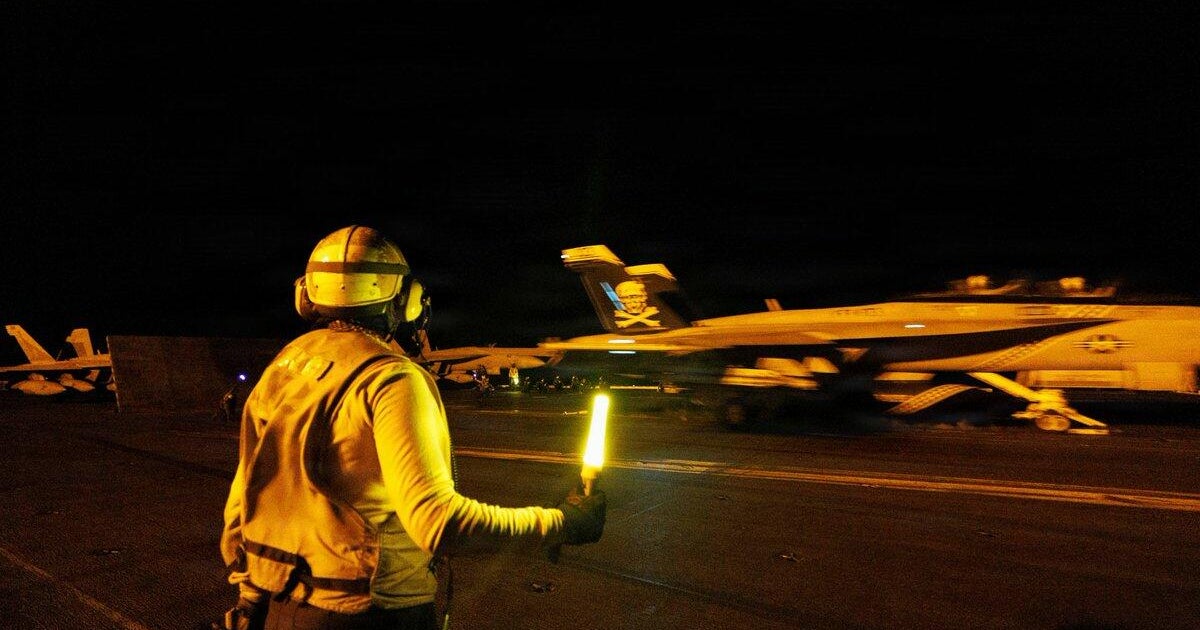
The Gulf was on alert Thursday after Iran said it launched drones and missiles at U.S. military sites in Jordan, Kuwait and Bahrain, while American forces expanded strikes on Iranian targets and enforced a renewed naval blockade.
Iranian state media reported that its military carried out separate attacks on U.S. bases and facilities across the region. There were no immediate reports confirming that weapons hit American bases, according to CBS News.
Kuwait’s army said on X that its air defenses were confronting hostile drones after what it called Iranian aggression. Earlier, Kuwait’s military said it had detected four cruise missiles and 21 drones since the start of Wednesday, CBS News reported.
In Bahrain, the interior ministry said air raid sirens were sounding and urged residents to stay calm and go to the nearest safe place. Iranian state media said U.S. military facilities at Sheikh Isa Air Base had been targeted.
Iran threatens wider strikes
Iran’s military also warned that it would attack regional infrastructure if President Trump followed through on threats to hit Iranian infrastructure.
A spokesman for Iran’s military headquarters said that if the U.S. acted on those threats, “all infrastructure in the region” would be targeted by Iran’s armed forces, CBS and AFP reported.
Trump said Wednesday that the U.S. could hit Iranian power plants and bridges unless Tehran returned to negotiations. During a defense industry roundtable in Pennsylvania, he said Iran wanted to settle and added: “We’ll find out whether or not we settle with them or we just finish it off.”
Asked separately whether he would set a deadline before strikes on infrastructure, Trump said he did not like giving deadlines and added: “They better behave.”
U.S. expands strikes and blockade
U.S. Central Command said it completed a second round of strikes on Iranian targets Wednesday, hitting air defenses, missile and drone sites, and command centers in multiple locations, including Bandar Abbas.
CENTCOM said the strikes were aimed at reducing Iran’s ability to threaten commercial vessels traveling through the Strait of Hormuz. The Associated Press reported that U.S. strikes early Thursday hit farther north, including areas around Tehran for the first time in this latest round of violence.
The U.S. military also said it disabled the Curacao-flagged M/T Belma, an empty oil tanker it accused of trying to evade the blockade of Iranian ports. CENTCOM said the vessel was heading toward Kharg Island, ignored repeated warnings and was stopped after a U.S. aircraft fired Hellfire missiles into its smokestack.
The blockade was reinstated after a June 17 memorandum of understanding between the U.S. and Iran broke down in less than three weeks, according to CBS News. Iran’s OPEX spokesman Seyed Hamid Hosseini told Iran’s IRNA news agency that Iran exported about 80 million barrels of crude oil after the memorandum was signed.
Regional spillover grows
Reuters reported that a drone crashed into a tanker docked at Iraq’s Basra oil terminal Thursday, citing four Iraqi oil and security sources. The agency said no damage or fire was reported, but crude flows were suspended at all Iraqi loading terminals after the incident.
Pakistan, which has acted as a mediator between Washington and Tehran, said it remained in contact with Iran and other regional officials. Foreign Ministry spokesman Tahir Andrabi said renewed conflict served no one’s interests and called on all sides to show restraint.
This story draws on original reporting from CBS News.