Astronomers spot signs of an atmosphere on rocky exoplanet LHS 1140b
A Science paper reports helium escaping from LHS 1140b, a nearby rocky planet in its star’s habitable zone, raising hopes it may still hold an atmosphere.
By Bianca Rossi · Entertainment Editor
3 min read
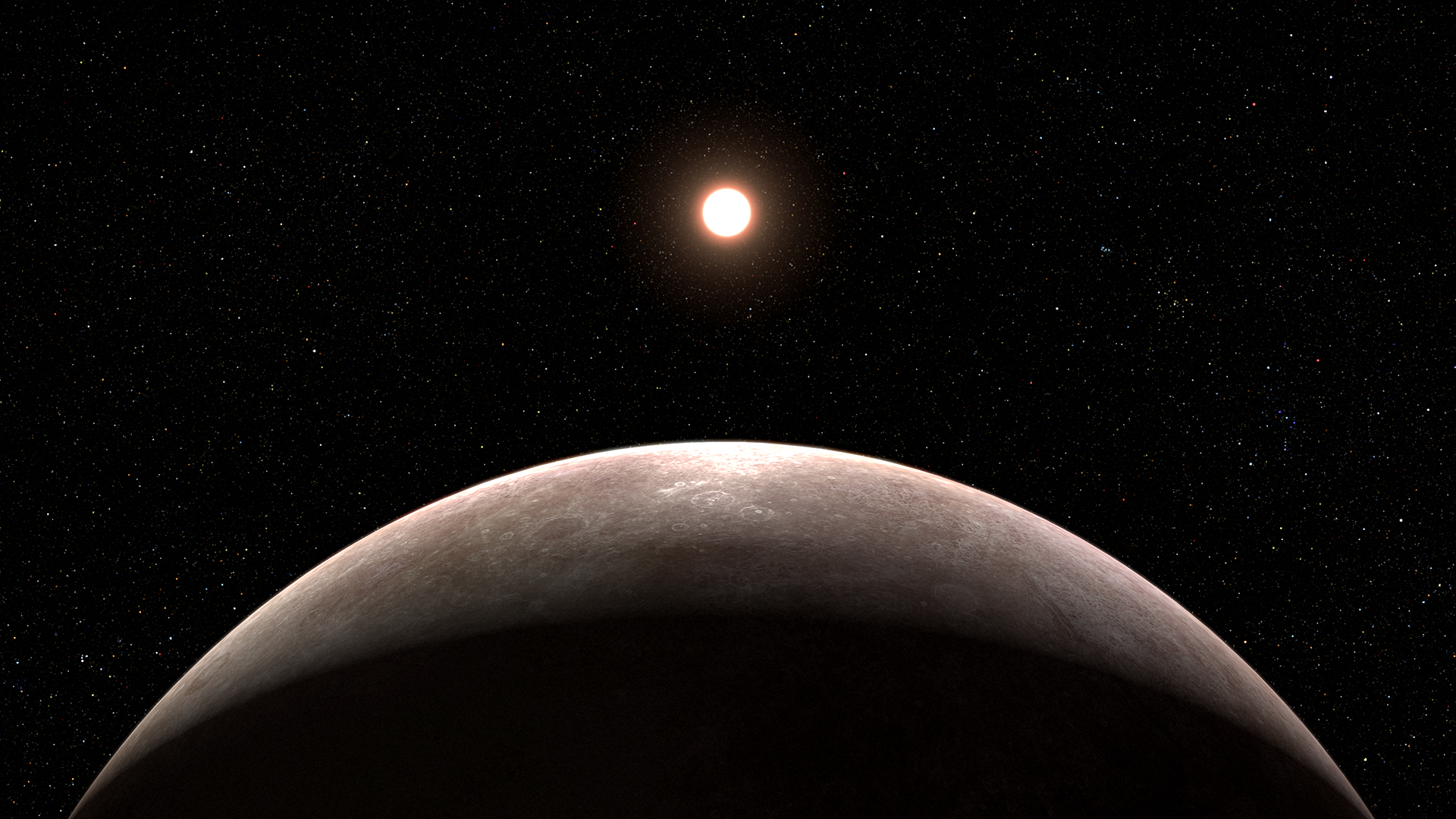
A rocky planet outside our solar system may still have an atmosphere, according to a new paper in Science, giving astronomers a fresh target in the hunt for worlds that could support the ingredients for life.
The planet is LHS 1140b, an exoplanet first identified in 2016 by a team that included Jason Dittmann, now an assistant professor of astronomy at the University of Florida. In a University of Florida release, Dittmann said the finding marks a first for scientists studying planets like ours beyond the solar system.
“This is the first time that we're seeing a rocky, Earth-like planet that could still have an atmosphere,” Dittmann said, according to the university.
LHS 1140b orbits a nearby red-dwarf star and sits in the star’s habitable zone, the region where conditions may allow liquid water to exist on a planet’s surface. The planet’s orbit also makes it tough to study, because scientists can observe it only during short windows each year, according to the report.
The planet is old, too. That matters because older rocky planets are often expected to have lost much of their atmosphere to space over time, according to the reporting on the study.
Helium offered the clue
Researchers used X-ray data from Chile’s Magellan Clay telescope gathered during two observing periods in 2024 and 2025. In that data, the team identified helium gas escaping from LHS 1140b.
That escaping helium is the key signal. According to the study’s authors, it may point to an atmosphere that is still being replenished as gases leak away. Scientists have not yet determined what the planet’s lower atmosphere is made of.
Dittmann framed the unresolved question this way in the University of Florida release: “Because there’s helium there, and because the helium is escaping, the question is: Is it a bare rock with no atmosphere that sometimes burps up some gas that then immediately escapes, or is there a steady-state atmosphere there that will leak out stuff like the Earth does from time to time?”
For astronomers, confirming a climate-regulating atmosphere around a rocky exoplanet has been a long-running prize. The report notes that observations so far have mostly turned up planets with no air or only thin atmospheric leftovers.
Two boxes checked, one big question left
If later studies back up the findings, LHS 1140b would meet at least two major conditions scientists look for in potentially habitable worlds: a rocky surface and an atmosphere.
The remaining question is water. The current findings do not confirm liquid water on LHS 1140b, and they do not prove the planet can support life. They do, however, give researchers a nearby rocky world with a promising atmospheric signal to examine next.
This story draws on original reporting from Mashable.