World Cup music gets its moment at FIFA House
FIFA and music leaders said global hooks, stadium chants and star power help turn World Cup songs into worldwide events.
By Bianca Rossi · Entertainment Editor
3 min read
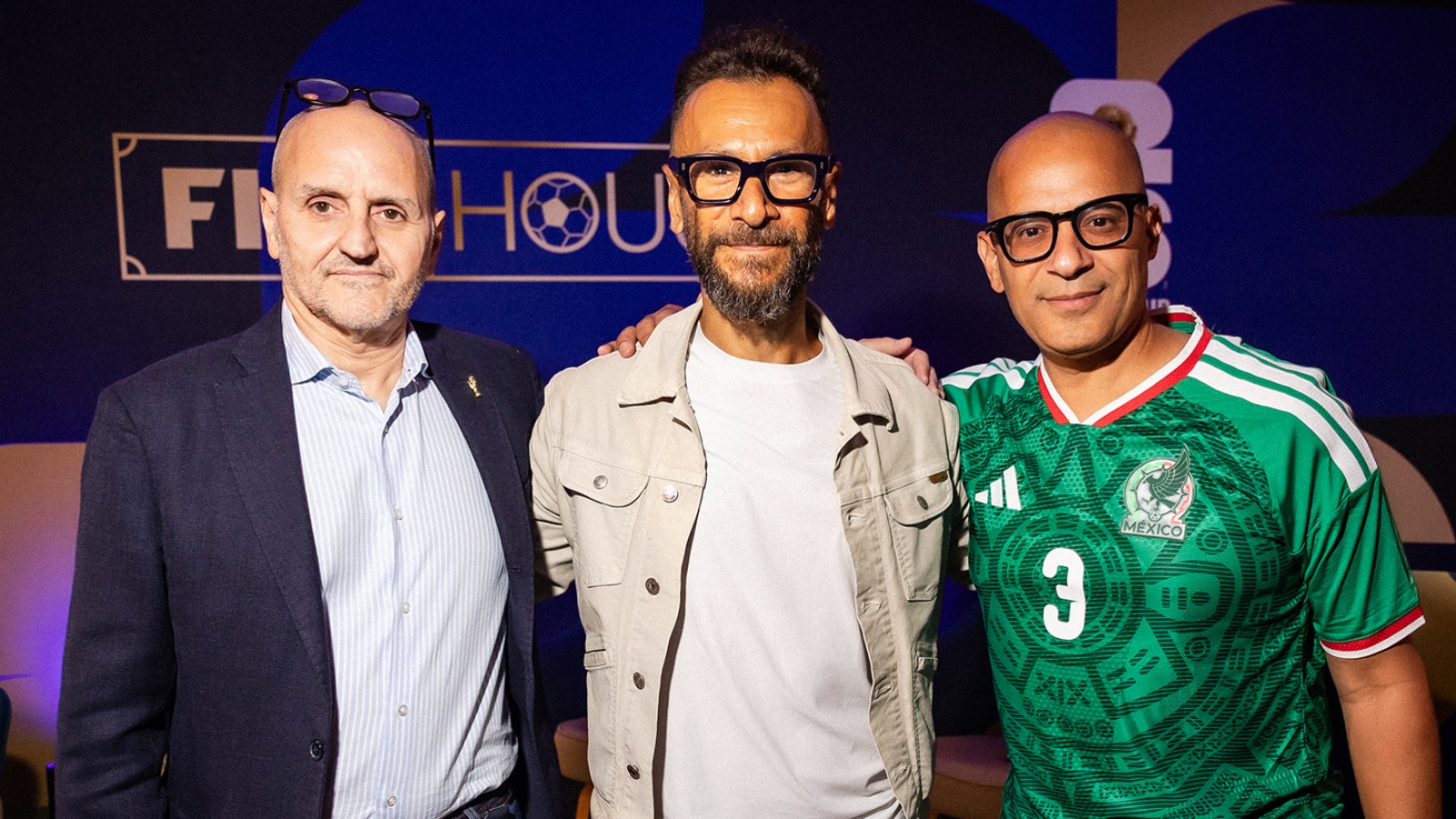
The World Cup trophy was downstairs, Ava Max had just played upstairs, and the music business was busy explaining why soccer sounds bigger than almost anything else on earth.
At FIFA House in New York on July 16, FIFA and Rolling Stone staged a panel on how the tournament turns songs into shared global signals. The discussion featured Marco Nazzari, a FIFA marketing director, Panos A. Panay, president of the Recording Academy and the Grammys, and Rodney Alejandro, dean of Berklee College of Music’s Music and Technology division.
The panel landed during World Cup Finals Week celebrations at FIFA House, a New York venue created with Rolling Stone, the Grammys and Def Jam Recordings. The space is hosting FIFA figures, creators, industry leaders and guests, with the World Cup trophy on display in the lobby, according to Rolling Stone.
Ricky Martin set the modern template
The conversation reached back to 1998, when Ricky Martin’s “La Copa de la Vida,” also known as “The Cup of Life,” became the defining song of the France World Cup. Earlier tournament songs existed, including Los Ramblers’ “El Rock del Mundial” before Chile hosted in 1962, but Martin’s track pushed the World Cup anthem into full pop crossover territory.
Panay called Martin’s song a turning point in how football and the World Cup are linked with music. His broader point was plain: the tournament can make a hook travel fast because fans already arrive with emotion to spare.
Panay said football, music and food can connect with people without needing translation. Alejandro said a successful World Cup song needs a short, memorable phrase and a feeling that fits the moment.
Shakira’s 2010 anthem “Waka Waka (This Time for Africa)” was held up as another example. The song’s title gave fans an instant chant, while its release around the South Africa World Cup tied the track to a continent hosting the tournament.
Stadium songs are part of the operation
The panel also pointed to songs that are not official anthems but become part of a team’s run. Rolling Stone cited England players and supporters singing Oasis’ “Wonderwall” after England beat Mexico 3-2 at the Azteca stadium, after playing with 10 men following a red card.
Nazzari said those moments are supported by a large FIFA operation, rather than one person deciding what to play in a stadium. He said FIFA works every four years to create a fan experience that reflects the musical identity of each qualifying country.
This year, FIFA has released the Official FIFA World Cup 2026 Album, with artists spanning K-pop, American country, Nigerian rap and Ava Max. Panay said music can draw some listeners toward sports they might not otherwise watch.
The World Cup final is also getting major pop treatment. Rolling Stone reported that the halftime show will feature Shakira, Madonna, BTS, Justin Bieber and other acts, while Post Malone will headline the closing ceremony 90 minutes before kickoff.
Alejandro summed up the ambition as music meant for a worldwide audience, regardless of language. Nazzari pointed to the opening ceremony pairing of Andrea Bocelli and South Korean pop star EJAE on “DNA,” saying they met only days before performing together.
This story draws on original reporting from Rolling Stone.