A Life Illuminated documentary follows Edie Widder into the deep
Tasha Van Zandt’s film tracks marine biologist Edie Widder’s 3,300-foot dive and her search for a deep-sea light response.
By Poppy Nakagawa · Culture Writer
3 min read
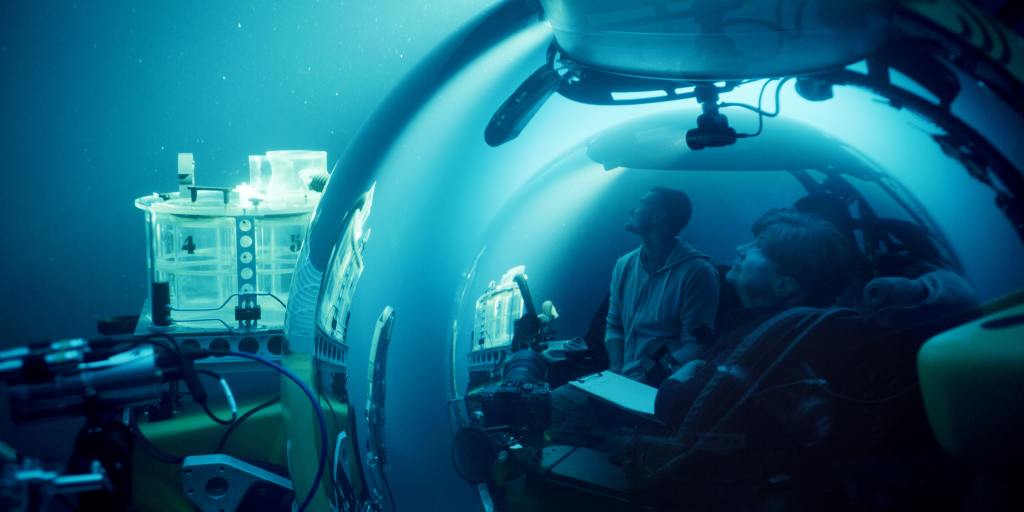
The A Life Illuminated documentary puts marine biologist Dr. Edie Widder back beneath the surface, following a 3,300-foot dive tied to her long-running effort to study the flashes and signals of deep-sea life. Directed by Tasha Van Zandt, the film combines the featured descent with archival material from Widder’s past expeditions, according to the Redford Center.
Van Zandt told Deadline that she went more than 3,000 feet down in a submersible to film Widder’s work. The film’s official materials list the depth of Widder’s mission as 3,300 feet.
What is A Life Illuminated about?
The documentary follows Widder’s attempt to capture what she calls the “flashback effect.” As Deadline described it, the experiment involves sending a flash of light from a submersible in darkness and watching how bioluminescent creatures respond.
Bioluminescence is light made by marine animals through chemicals in their bodies, Deadline reported. Widder has described it as a possible means of communication in the ocean’s dark depths. In comments recalled by Van Zandt at a Santa Monica screening, Widder said it may be the most common form of communication on Earth, a view presented as Widder’s own assessment.
The Redford Center’s film page says the mission seeks to document a mysterious bioluminescent phenomenon and frames its potential implications for understanding life on Earth as part of the film’s promotional premise.
How Widder’s cameras look without getting in the way
Widder’s career story supplies the other half of the film. Deadline reported that she developed an “eye-in-the-sea” system for remote observation using far-red illumination. The approach was designed to observe animals without disturbing them because, according to the report, most deep-sea creatures do not perceive infrared light.
She also devised an optical lure known as an “electronic jellyfish,” meant to draw animals toward a camera. Deadline credits Widder with using one of the lures to obtain video of a live giant squid in its natural habitat, describing her as the first person to capture such footage.
Van Zandt said she first saw the giant-squid video in 2012, then later contacted Widder in 2020 to learn about the work behind it. That conversation became the starting point for the film, she told Deadline. Sebastian Zeck, the film’s producer and director of photography, joined Van Zandt in the production effort.
The film’s official website listed 2026 theatrical dates including New York’s DCTV Firehouse Cinema from July 24 through July 30, Los Angeles screenings on July 28 and 29, and a San Francisco screening at the Roxie on August 2. Those dates were listed on the site and do not establish future availability.
This story draws on original reporting from Deadline.