Ari Emanuel backs Paramount-WBD merger as states press antitrust case
Ari Emanuel used a Wall Street Journal op-ed to defend Paramount’s $110 billion WBD deal and attack a 12-state antitrust lawsuit.
By Bianca Rossi · Entertainment Editor
3 min read
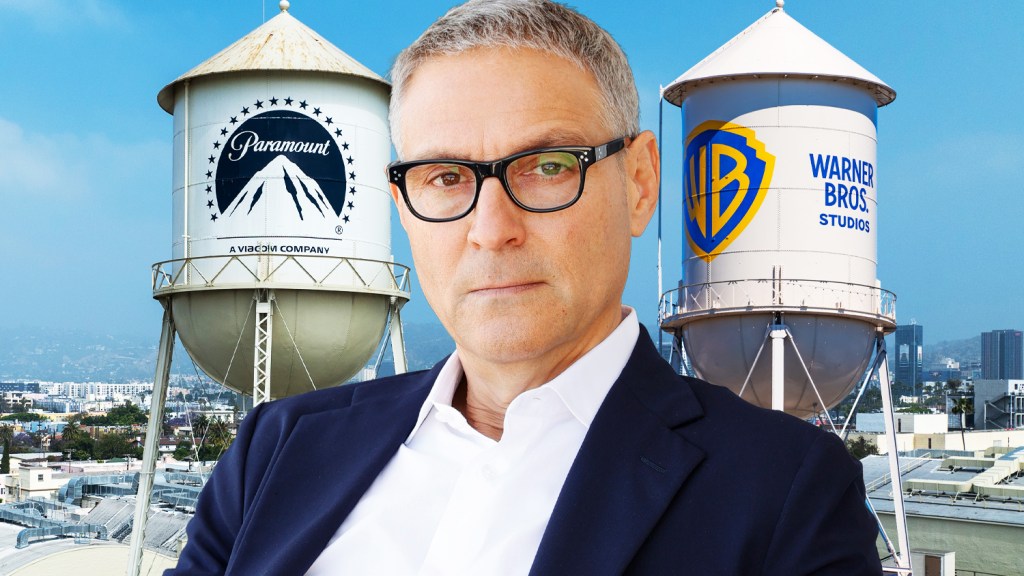
Ari Emanuel is pushing hard for the Ari Emanuel Paramount WBD merger argument, using a Wall Street Journal op-ed to defend Paramount’s pending $110 billion takeover of Warner Bros. Discovery and call the states’ antitrust case against it “trash.”
The TKO Group Holdings CEO and longtime former Hollywood agent wrote that the deal “could save Hollywood,” according to the Journal op-ed, and urged government regulators to allow creative rivals to resume competing with each other instead of blocking the transaction.
The deal, once viewed as likely to close over the summer, has been slowed by a lawsuit from 12 state attorneys general. Deadline reported that after signs a judge was skeptical of Paramount’s defense, the company agreed not to complete the acquisition before June 1, 2027, unless there is a favorable ruling before then.
Why does Ari Emanuel support the Paramount-WBD merger?
Emanuel argues in the Journal that the state officials are using too narrow a view of competition in entertainment. In his telling, the movie business is fighting for audiences, talent, money and attention against a wider field than the traditional studio system.
He wrote that the lawsuit ignores fast-growing competitors, naming Amazon MGM, A24 and Lionsgate. He also pointed to Netflix’s coming release of Greta Gerwig’s Narnia: The Magician’s Nephew as evidence that streaming players are moving further into theatrical film.
The states’ case says the relevant market should be direct competition in movie releasing, and argues that the deal would effectively combine two major studios into one. Emanuel countered in the Journal that the complaint’s claims about concentration in theatrical movies do not match the current business.
He also argued that studios now compete with YouTube, video games and streaming shows when deciding when and how to release films. In the op-ed, Emanuel wrote that he would not want a client’s horror movie opening against a MrBeast video, a new Call of Duty release or a Netflix drop of Wednesday.
What is the antitrust fight over?
An antitrust lawsuit challenges whether a merger would harm competition, raise prices or reduce choices in a defined market. Here, the states are challenging Paramount’s proposed purchase of Warner Bros. Discovery by focusing on areas including theatrical releasing and cable network concentration.
Emanuel also took aim at the cable-TV portion of the complaint. He argued in the Journal that concerns about cable concentration may have carried more weight in 2005, but make less sense now because cable subscriptions have declined and streaming has changed how viewers watch programming and how companies bargain.
Deadline noted that Emanuel has business connections to the companies in the fight. TKO’s UFC was among the early beneficiaries of Paramount’s new ownership after the David Ellison-led company paid $7.7 billion for rights to the mixed martial arts circuit last year.
The Journal identified Emanuel as executive chair and CEO of TKO, which does business with movie studios, according to Deadline. Deadline also reported that the description did not mention that Emanuel is executive chair of WME Group, the parent company of talent agency WME.
The lawsuit remains a major hurdle for the Paramount-Warner Bros. Discovery deal. Emanuel’s op-ed gives the merger a prominent industry defender at a moment when the transaction is stuck in court and regulators are being asked to decide how broad Hollywood competition has become.
This story draws on original reporting from Deadline.