Brunello: The Gracious Visionary review finds beauty, not objectivity
Variety says Giuseppe Tornatore’s Brunello Cucinelli film is a lavish portrait that leaves hard questions off the table.
By Georgia Hale · Staff Writer
3 min read
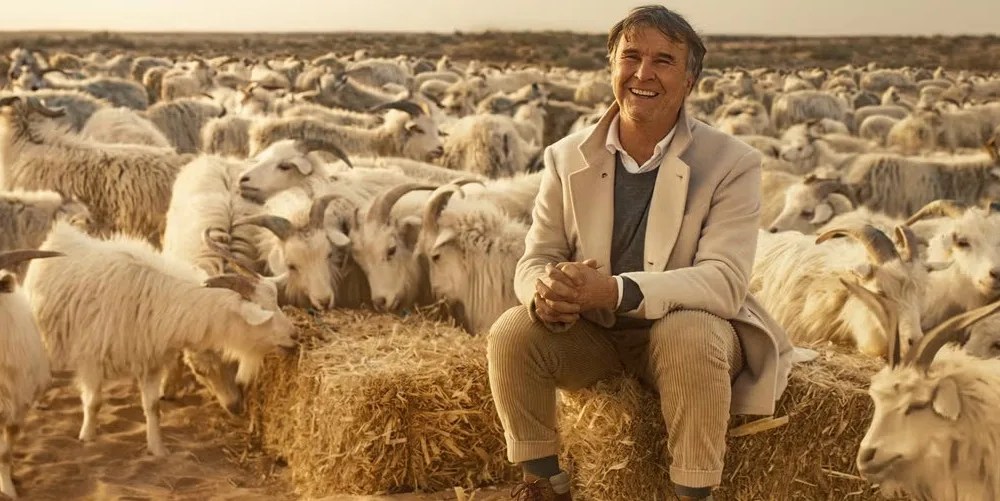
A new Brunello: The Gracious Visionary review says Giuseppe Tornatore has made a polished, affectionate portrait of fashion designer Brunello Cucinelli, with little interest in a tough examination of its subject.
Writing for Variety, Todd Gilchrist describes the 121-minute, PG-13 film as a gilded account of Cucinelli’s rise from rural Perugia, Italy, to the top tier of luxury fashion. Tornatore, the Italian filmmaker behind Cinema Paradiso, is credited as writer and director.
Gilchrist says Tornatore himself has described the project as neither a documentary, nor a feature film, nor a commercial. The critic’s verdict is sharper: he says the movie works best as a hagiography, a reverent treatment that presents Cucinelli as an almost saintly figure.
What is Brunello: The Gracious Visionary about?
The film follows Brunello Cucinelli, born in 1956, from his childhood on a farm to his later success as a designer and entrepreneur. According to Variety, it also presents his belief in “humanistic capitalism,” a philosophy that links business success with workers’ dignity, beauty and shared community.
Gilchrist writes that Cucinelli narrates memories from his early life while Tornatore stages them in carefully composed scenes. The film recreates family meals, farm work and childhood dreams, with Francesco Cannevale appearing as the younger version of Cucinelli.
Variety says the movie lingers on that early world before turning to the business story many viewers may expect. Gilchrist notes that it takes more than an hour before the film reaches Cucinelli’s first moves as an entrepreneur and the development of the colorful cashmere associated with his brand.
The review points to several formative details included in the film: a pair of green corduroy trousers Cucinelli disliked as a teenager, a caramel-colored coat that influenced his menswear, and his father’s unhappiness after taking a manufacturing job that made him feel dehumanized.
Gilchrist also reports that the film frames Cucinelli’s teenage money-making through card playing as part of his early drive. Later interviewees, including Oprah and spiritual figures, are described by Variety as speaking about his career and principles in admiring terms.
Why does Variety call the film one-sided?
Gilchrist’s central criticism is that the film celebrates Cucinelli’s ideals without pressing him on the tougher contradictions around luxury fashion. He says it does not ask why the clothes are affordable mainly to wealthy customers, or whether the workers praised in the film could buy the garments they help create.
The review says the movie highlights Cucinelli’s decision in 2021 not to lay off workers or cut salaries during the Covid pandemic. It also notes that he appeared with the then Prince Charles at the G20 summit to discuss humanistic capitalism and human sustainability.
According to Variety, the film presents Cucinelli’s company culture as a kind of extended family, including workrooms where the lights go out at the same time each day so employees can share homemade rigatoni. Gilchrist says the closing image, a long shot of Cucinelli seated at the head of a table, reinforces that theme.
Technically, the review praises the film’s craft. Gilchrist cites Nicola Piovani’s score and the lush visual treatment, saying Tornatore makes the story feel romantic and highly desirable.
The production is listed as an Italy documentary from Brunello Cucinelli, Masifilm and Rai Cinema, with Cucinelli and Massimiliano di Lodovico as producers and Mauro Calevi as executive producer. Fabio Zamarion handled the camera, with editing by Pietro Foglietti and Massimo Quaglia.
Gilchrist’s bottom line is that the film offers pleasure, polish and emotional satisfaction, while stopping short of a full portrait. In his view, Tornatore has made a beautiful object that reflects Cucinelli’s worldview more than it tests it.
This story draws on original reporting from Variety.