Chuck Lorre’s wild Big Bang spinoff finally lands at HBO Max
HBO Max’s 10-episode Stuart Fails to Save the Universe turns Big Bang Theory side characters into multiverse adventurers.
By Poppy Nakagawa · Culture Writer
3 min read
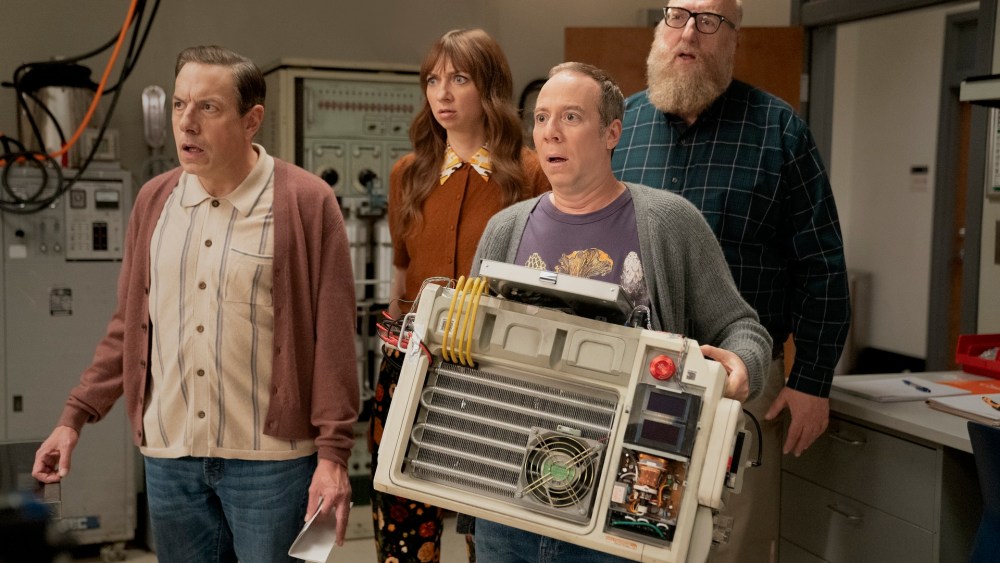
Chuck Lorre’s newest trip back to the Big Bang Theory universe began with a pitch that, by his own account, did not exactly have executives leaping out of their chairs.
Lorre told Variety he first imagined a spinoff built around Stuart Bloom, Kevin Sussman’s comic book shop owner, as The Big Bang Theory was nearing its finale. The idea: a hidden portal in the back of the store, other dimensions and a comic sci-fi adventure led by Stuart.
The response, Lorre said, was chilly. He told Variety that executives wanted a more familiar kind of spinoff, preferably one centered on the original show’s main cast. Lorre said he wanted to try something different from anything he had done before.
That oddball idea has now become Stuart Fails to Save the Universe, a 10-episode HBO Max series premiering July 23. Warner Bros. TV and HBO Max eventually gave the project the green light after Lorre reworked the concept with Big Bang co-creator Bill Prady and screenwriter Zak Penn, whose credits include The Avengers and The Incredible Hulk.
Stuart goes from side character to multiverse lead
In The Big Bang Theory, Stuart was a supporting character, best known as the owner of the Pasadena comic book shop. In the new series, he is at the center of the action.
According to Variety, the story follows Stuart and friends after a quantum interference device, made by Leonard, Sheldon and Howard, malfunctions. Those three characters are referenced but do not appear. The mishap sends Stuart’s group into alternate versions of the comic shop and Pasadena, where danger keeps changing shape.
Sussman returns as Stuart. Lauren Lapkus is back as Denise, Brian Posehn returns as Bert and John Ross Bowie returns as Kripke. Variety reported that other Big Bang performers make cameo appearances as multiverse versions of their characters, while Wil Wheaton appears again as himself. Tommy Walker joins as Gary, a new character who may compete for Denise’s attention across the show’s different worlds.
The format is a long way from the studio-audience sitcom style of The Big Bang Theory. Variety reported that the new show includes gunfire, explosions, bloody deaths and effects-heavy sequences. One production moment had Sussman and Lapkus suspended on cables above large fans to create the look of falling through a void.
Producers say the science is part of the gag
Penn told Variety that Lorre recruited him during the pandemic and that the appeal was a spinoff that changed both tone and genre. Prady said the chance to work in comic science fiction drew him in.
The producers also discussed the show’s bigger technical demands. Variety reported that the visual effects budget was unlike what Lorre had spent on his previous sitcoms, though the team brought the series in under budget. The producers credited filming in Los Angeles and California’s tax credit with helping them hire a crew able to handle stunts and effects.
Prady told Variety the show treats its science as seriously as a comedy about a malfunctioning multiverse device can. He described the continuity as “multiverse canon,” while Lorre joked that viewers should not examine it too closely.
Lorre also said the show is packed with Big Bang Easter eggs because he believes Sheldon, Leonard and their friends would have watched and debated a series like this. Sussman told Variety he does not think viewers need to know the original sitcom to follow the new one.
Lorre’s vanity cards also return. Variety reported that at the end of the second episode, he sums up the spirit of the project with the line: “Go crazy or go home.”
This story draws on original reporting from Variety.