Costa Rica filming locations put island prison and blue waterfalls on the map
Costa Rica’s former San Lucas prison leads a fresh list of film-ready sites, from Caribbean beaches to volcanic forests.
By Poppy Nakagawa · Culture Writer
3 min read
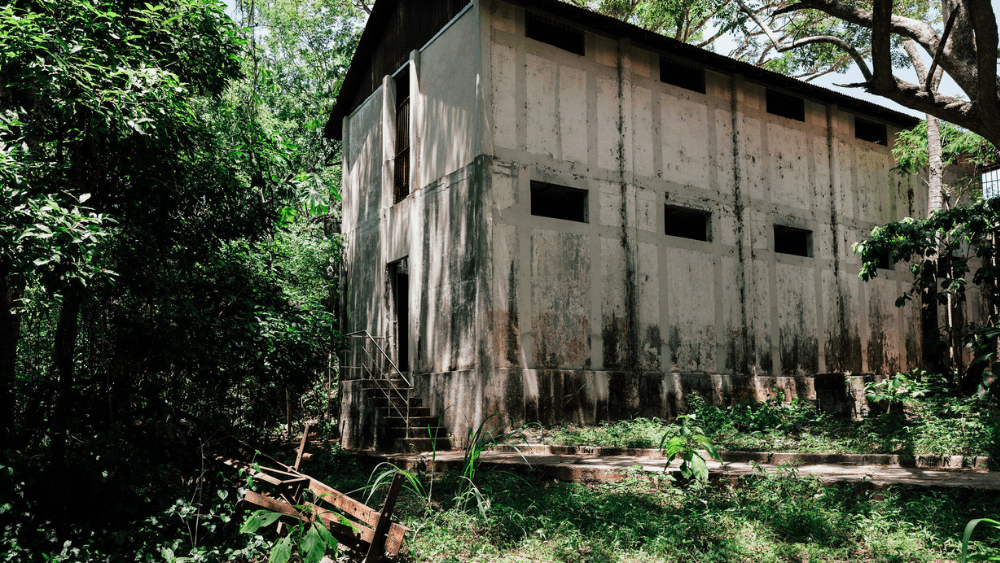
Costa Rica filming locations are getting a fresh spotlight, led by San Lucas Island, the former prison off the Gulf of Nicoya that is often described as the country’s answer to Alcatraz.
Variety reports that the island, used as Costa Rica’s main penitentiary from 1873 until 1991, has since been turned into a national park. Its prison buildings, coastal setting and protected forest now sit side by side, making it one of the country’s more unusual prospects for film and TV shoots.
The Costa Rica Film Commission and people involved in maintaining San Lucas see the former prison as a strong production site, according to the report. No major fiction project has yet filmed there, Variety says, although there was previously an unsuccessful effort to adapt José León Sánchez’s “Island of Lonely Men.” Sánchez, a Costa Rican novelist, was imprisoned on San Lucas for decades before his robbery conviction was overturned.
What is Costa Rica’s Alcatraz?
San Lucas Island earned the nickname because of its offshore prison history. The complex includes a former hospital, a church, a semi-circular cell block, a main office and an underground concrete chamber that Variety reports was used as a punishment area.
The island is part of Puntarenas District, with the city of Puntarenas about a 30-to-40-minute ride from the prison. The district has more than 500,000 residents, while Puntarenas offers infrastructure that could support productions.
San Lucas is also a National Historical-Architectural Heritage Site and a National Wildlife Refuge, according to Variety. That mix gives productions old prison structures, limited modern intrusion and tropical scenery in one place.
Which other Costa Rica locations are being pitched to productions?
The Gulf of Nicoya, where San Lucas sits, is described by Variety as Costa Rica’s largest Pacific estuary and a key maritime corridor. Its islands include Isla Venado, known for a traditional fishing village and accessible beaches, and Isla Jesucita, which offers coves, forest and broad estuary views.
Location scout Lyall Gardiner, whose credits cited by Variety include “Mission: Impossible, Dead Reckoning Part One,” “The Mummy” and “John Wick: Chapter 3, Parabellum,” told the outlet that Costa Rica’s range of settings and culture made his visit to the region “insightful and invaluable.”
Farther south, Golfo Dulce and Golfito offer another package: rainforest, beaches, mangroves, rivers and mountain backdrops. Variety reports that the gulf is one of the world’s few tropical fjords and is known as a nursery for humpback whales and a habitat for resident dolphins.
Golfito, a former banana-growing hub tied to the United Fruit Company in the mid-20th century, has Colonial and Victorian-style buildings that give it a different look from many tropical towns. Producer Ana Lucía Arias told Variety that local support was vital while filming Neto Villalobos’s upcoming “Love Is the Monster” there.
On the Caribbean side, Limón, Cocles and Punta Uva offer beaches, port-city streets and Afro-Caribbean architecture. Location manager Mickey Ryan told Variety that many Southern Caribbean sites sit within a 10-mile radius, which makes the area convenient for shoots.
Other locations highlighted include Turrialba Volcano and the nearby Burnt Forest, where Felipe Zuñiga’s documentary “The Dive” was filmed, and Bajos del Toro in Alajuela, known for more than 30 waterfalls. Ryan told Variety that Bajos del Toro remains less discovered than places such as La Fortuna or Monteverde, giving filmmakers scenery that can still feel fresh.
This story draws on original reporting from Variety.