Emily Wilson Odyssey review tears into Nolan’s Homer epic
Translator Emily Wilson praised the film’s box-office pull but said Nolan’s Odyssey script makes its hero far too simple.
By Georgia Hale · Staff Writer
3 min read
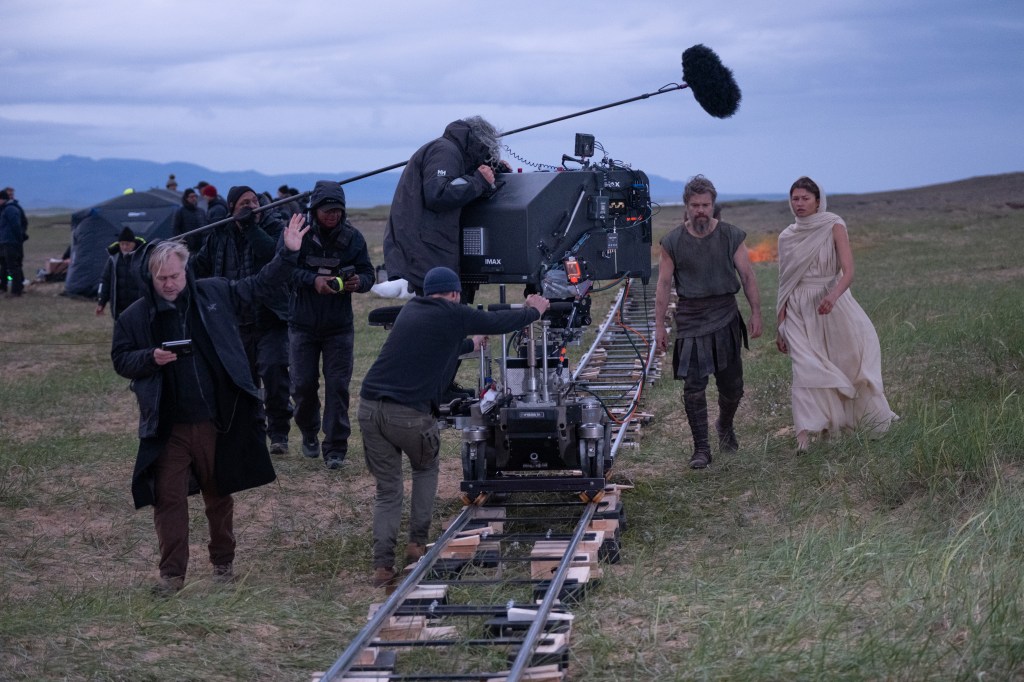
Emily Wilson’s Odyssey review of Christopher Nolan’s new film is not the polite classics-world nod Universal might have hoped for. Writing in the London Review of Books, the celebrated translator said Nolan had apparently read the opening of her translation, then added that she “would be ashamed” to have written any of the movie’s script.
Wilson, whose English version of Homer’s poem is widely read by modern audiences, said Nolan’s film works as a summer spectacle. She called it entertaining, easy enough to follow and helped by the poem’s nested storytelling structure, which suits Nolan’s taste for fractured time.
Her praise came with a sting. Wilson wrote that the movie has about the narrative and emotional weight of an elaborate fireworks display, despite adapting one of the core texts of Western literature.
Why did Emily Wilson criticize Nolan's Odyssey?
Wilson’s central complaint is that Nolan, in her view, strips Homer’s characters of their contradictions. She argued that Matt Damon’s Odysseus is driven largely by anxiety and guilt, rather than the cunning, appetite, cruelty and resourcefulness that make Homer’s hero so hard to pin down.
In Homer, Odysseus survives through brains, lies and force. Wilson wrote that the film turns him into a reluctant war figure while failing to show the cost of violence from the victims’ side, saying the Trojans are kept faceless behind masks and that the deaths of enemies carry little pity or horror.
Wilson also said the film’s moral code clashes with Homer’s world. In the poem, deception, war-making, sexual betrayal, hunger for honor and harsh treatment of others are part of the ancient value system. Wilson wrote that Nolan’s version condemns those ideas without, in her view, giving its characters motivations that hold together.
She was not against adaptation in principle. Wilson wrote that film versions should not copy a source with the precision of a translation and can gain power by transforming the original. She also rejected complaints about the movie using contemporary American speech, saying that if a script is not in Homeric Greek or metrical English verse, conversational English is a fair choice.
What did Wilson say about the cast?
Wilson singled out Robert Pattinson’s Antinous for strong praise, writing that he deserves one of the Oscars she expects the movie to win. Her verdict on several other roles was much colder.
She wrote that Anne Hathaway’s Penelope is given little to do beyond longing for Damon’s Odysseus, despite Hathaway’s expressive performance. Wilson said the film’s symbolic doll of Penelope, carried by Odysseus, ends up almost as interesting as the actual woman.
Wilson also criticized Charlize Theron’s Calypso, saying the character is drained of the anger, humor, rhetorical skill and sexual force found in Homer. In Wilson’s reading, Calypso becomes more like an unpaid therapist to a traumatized Odysseus.
On the film’s race-neutral casting, Wilson wrote that it should not be mistaken for progressive storytelling. She argued that several non-white actors, including Zendaya, Lupita Nyong’o, Himesh Patel, Corey Antonio Hawkins and Travis Scott, are placed in roles that mainly support the white protagonist. She also said Nyong’o’s parts as Helen and Clytemnestra are severely underwritten.
Wilson objected to the film’s limited use of visible gods, a point also raised by The New Yorker critic Richard Brody. She saved one of her sharpest ethical objections for the production itself, writing that filming part of the movie in Western Sahara normalized violence against the indigenous Sahrawi people.
Even after all that, Wilson said the film’s release is worth celebrating because it is bringing audiences back to theaters and may push more people toward reading Homer. Her final note was not love for Nolan’s movie, but gratitude that a blockbuster might send the public back to the ancient poem.
This story draws on original reporting from Deadline.