India paid music subscribers could near 30 million by 2028, report says
An EY-IMI report says India’s paid music streaming base may double by 2028 as platforms push subscriptions and premium features.
By Poppy Nakagawa · Culture Writer
3 min read
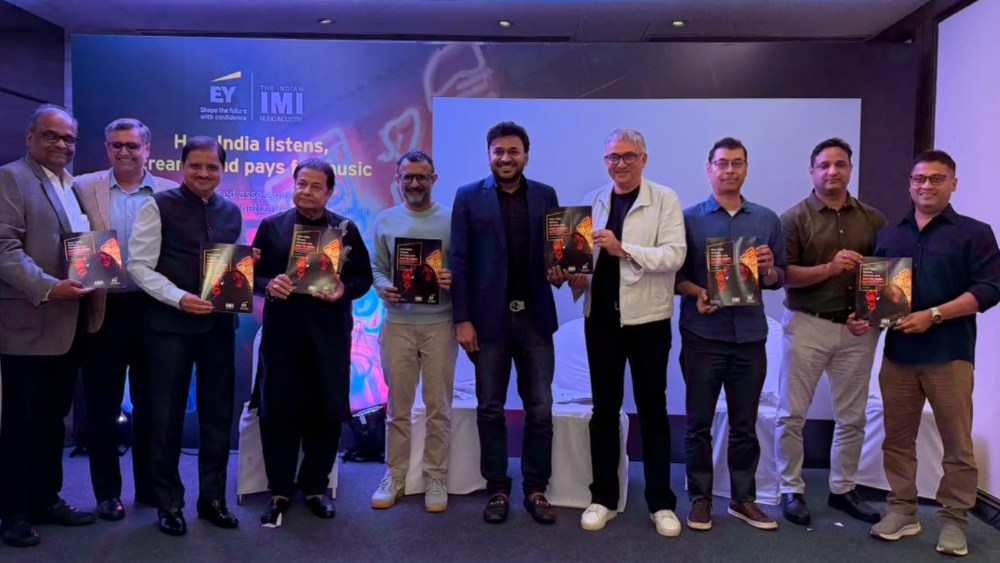
India paid music subscribers could climb to between 28 million and 30 million by 2028, according to a new EY and Indian Music Industry report released Friday in Mumbai.
The forecast would roughly double the estimated 14 million paid music streaming subscribers India had as of December 2025, the report said. EY and IMI based the findings on a survey of more than 15,000 smartphone owners conducted in March and April, plus psychometric research of more than 2,200 consumers and interviews with industry executives.
The headline number comes with a sharp catch: music is everywhere on Indian phones, but payments are still the hard part. The report found that 96% of smartphone owners listen to music, and 80% listen for more than an hour a day. Only 38% have ever paid for music streaming, including bundled subscriptions, while 86% have paid for video streaming at some point.
Why are India paid music subscribers still such a small group?
The EY-IMI report points to India’s jump from physical music formats to free, ad-supported streaming as a key reason paid audio has lagged. A paid music subscriber is a listener who pays directly or through a bundle for access to a music service’s premium tier, often including fewer ads, better control and other features.
Dedicated music streaming services remain the top place for planned listening, used by 60% of respondents, the report said. YouTube was used for music by 32% of respondents and remains the biggest discovery platform, helped by short-form video.
IMI CEO Blaise Fernandes wrote in the report that a music market built around non-payment hurts creators and rights owners over time. In a separate statement, Fernandes said paying for audio streaming is a way fans can support performers and help preserve and export India’s cultural heritage.
India still trails several major markets in paid music, according to the report. Brazil has more than 30 million paid music subscribers, the United States has 106 million and China has more than 171 million. The report said China ranked behind India’s music industry as recently as 2015, but has since become the world’s No. 2 market for streaming revenue.
Who is most likely to start paying?
MindLink’s psychometric research for the report divided smartphone owners into three groups: current payers, free users who would pay if they had to, and users who rely on YouTube and do not use paid music apps.
Among those who do not pay and are least open to it, 49% said music streaming is not worth paying for, while 36% said paying for digital products feels wrong when free choices exist. The same feeling was reported by 29% of fence-sitters and 9% of current payers.
The report said fence-sitters look like the easier audience to convert. In that group, 27% said payment makes sense once they use a service regularly, and 34% said reliability is worth paying for.
Among paying users, the top reason was cutting ads, cited by 44%. Other reasons included playing songs in any order, cited by 38%, and higher audio quality, cited by 36%. Among non-paying users, 42% said YouTube already gives them the music they need for free, 33% cited price and 30% said they do not need premium features.
EY India media and entertainment leader Ashish Pherwani said in a statement that music remains one of India’s most-used digital entertainment formats, and that the industry can lift subscriptions through clearer consumer education, distinct offerings and new products tied to listener habits.
The report also cited larger tailwinds: India had 584 million smartphone users in 2025, a figure projected to reach 735 million by 2030, and more than 400 million registered vehicles in 2025. Subscription revenue is projected to rise from about INR10 billion, or $111 million, in 2025 to INR22 billion, or $244 million, by 2028.
This story draws on original reporting from Variety.