Michael Mann’s Manhunter final cut gets a wary rave from Variety critic
Owen Gleiberman calls Manhunter a landmark thriller while arguing its new 4K director’s cut is weaker than the 1986 release.
By Georgia Hale · Staff Writer
3 min read
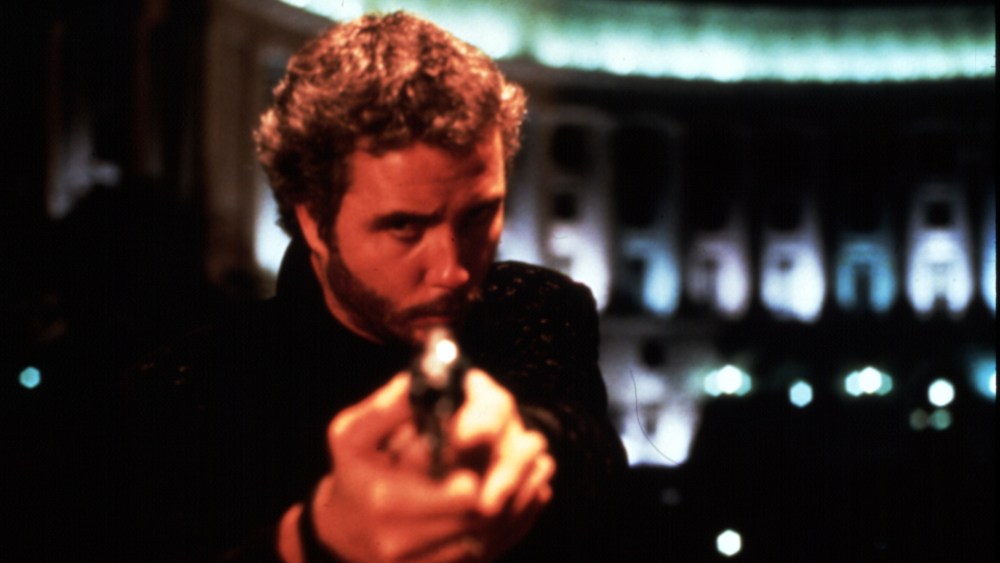
Michael Mann’s Manhunter is heading back to theaters in a 4K director’s cut on July 24, and Variety chief film critic Owen Gleiberman has delivered a very specific verdict: the movie is a masterpiece, but this cut is not the upgrade.
Writing ahead of the film’s 40th anniversary, Gleiberman called the 1986 thriller his favorite of the genre and argued that it remains one of the most underappreciated major films of the past half-century. He also said Manhunter: The Final Cut, overseen by Mann, demonstrates why director’s cuts often fail to improve on the versions audiences first came to know.
The film, based on Thomas Harris’ 1981 novel Red Dragon, follows FBI profiler Will Graham, played by William Petersen, as he comes out of retirement to hunt a serial killer by studying the killer’s way of thinking. The story also introduced movie audiences to Hannibal Lecter, played here by Brian Cox before Anthony Hopkins made the role globally famous in The Silence of the Lambs.
A thriller Gleiberman says still bites
Gleiberman argued that Manhunter has been unfairly overshadowed by Mann’s later films, including Heat and The Insider, as well as by Jonathan Demme’s Oscar-winning The Silence of the Lambs. He wrote that he admires both Harris adaptations but considers Mann’s film the stronger work.
According to Gleiberman, part of the movie’s power comes from William Petersen’s performance as Graham, a profiler trying to restore order by reading clues left at horrific crime scenes. He noted that some viewers find Petersen’s acting overly mannered, while he sees it as tense, controlled and emotionally charged.
He also highlighted Tom Noonan’s performance as Francis Dollarhyde, the killer who murders families during full moons. Noonan died in February, and Gleiberman said his portrayal remains one of cinema’s most convincing depictions of a serial killer.
Cox’s Lecter also received heavy praise from the critic. Gleiberman described the actor’s version of the imprisoned murderer as brilliant, citing the character’s intelligence, manipulation and eerie intimacy with violence.
The 1980s style is part of the case
Manhunter arrived in theaters on Aug. 15, 1986, after Mann had directed Thief and The Keep and while he was widely associated with Miami Vice, where he served as executive producer. Gleiberman said the film’s synth-heavy sound, postpunk songs, vivid colors and sleek clothes have led some viewers to see it as trapped in the 1980s.
He rejected that reading, arguing that cinematographer Dante Spinotti’s look for the film, both lush and clinical, gives Manhunter its own lasting visual language. He also singled out the soundtrack, including music tied to Pink Floyd’s The Wall, Shriekback’s “This Big Hush,” the Prime Movers’ “Strong as I Am” and Iron Butterfly’s “In-A-Gadda-Da-Vida.”
Why the final cut gets dinged
Gleiberman wrote that Manhunter: The Final Cut is the same version as the restored director’s cut released on DVD in 2003. He said it adds material to Graham’s scene at the Atlanta police station, includes extra lines in the first Lecter scene and removes some details from the climactic shootout with Dollarhyde.
His biggest objection is a late added scene in which Graham, his face badly bruised, visits another family. Gleiberman called that addition a mistake and argued that altering a great film can damage the identity that made it matter in the first place.
Even with that warning, his bottom line on Manhunter stays blazing: Gleiberman said Mann’s film remains a richer, more frightening and more cathartic thriller than The Silence of the Lambs.
This story draws on original reporting from Variety.