Nazila Azizi turns Afghan exile into magical realism in LineOut
The Afghan filmmaker’s Oscar-qualifying documentary uses phone footage, poetry and dream imagery to explore refugee grief.
By Georgia Hale · Staff Writer
3 min read
Nazila Azizi’s LineOut opens with images she captured on her phone while escaping Kabul as the Taliban took the Afghan capital, but the film quickly moves away from a straight chronicle of evacuation.
Deadline reports that the documentary, now in an Oscar-qualifying run in Los Angeles, examines the emotional aftermath of being forced from home. Azizi, an Afghan-born architect and filmmaker, said at a Beverly Hills screening that she chose magical realism because it can make “the impossible believable.”
The film puts poetry at the center of that approach. Its narration speaks as if home itself were alive, a presence searching for the people who have been separated from it. Azizi told the audience she began writing the words as a form of therapy, addressing home in an effort to locate it again. In that process, she said, home became a woman to her.
For the voice of that presence, Azizi brought in actress Anousha, who was born in Shiraz, Iran and has her own history of displacement. Anousha said during the Q&A that she wanted the performance to feel personal rather than theatrical, imagining the words as a gift to her younger self, the child who left Shiraz and later moved through Tehran, London, San Francisco and New York.
LineOut also uses images of rough water and a drowned sense of home. Deadline noted that the sea imagery suggests the danger faced by migrants in the Mediterranean, citing reports that more than 50 Afghans have died this year while trying to cross it after fleeing Taliban rule.
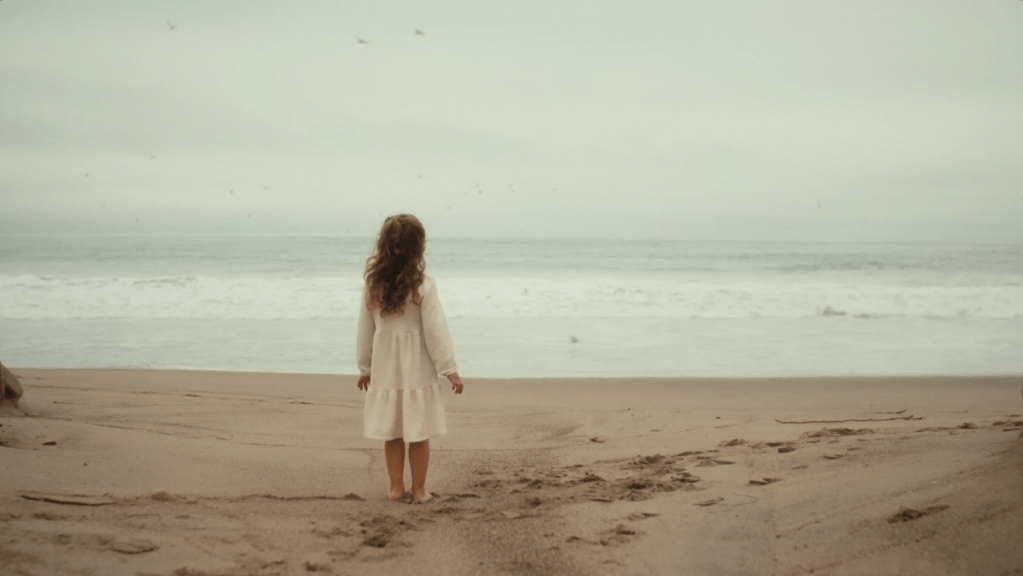
Another recurring image shows a small child alone on a beach, drawing the outline of a house in the sand with a stick. The waves erase it. Anousha said the moment reflects a cycle of wanting something stable from life and having to keep returning to it after it disappears.
Azizi told the Beverly Hills audience that many Afghans who fled did not have the time or safety to grieve what they had lost. She said she saw anxiety and sadness among refugees leaving Afghanistan, but not a fuller acknowledgment of missing home. With LineOut, she said, she hopes to make room for that grief, including for children born to parents carrying the pain of displacement.
The filmmaker also invoked Rumi, the 13th century poet who fled the region now known as Afghanistan as Mongols advanced. Azizi cited his idea that sorrow should be invited in when it arrives.
Since coming to the United States, Azizi has worked across film, architecture and design, including urban installations and theater lighting concepts. She said she found academic and career opportunities after arriving, while still spending about two years in constant sadness over leaving home. Making LineOut, she said, helped her.
Azizi also described a harsher conclusion about the place she left behind. Home, she said, can stop being home when it becomes a place of killing, torture and suppression. Under those conditions, she said, it becomes a cage or prison instead.
This story draws on original reporting from Deadline.