New York Times asks court to block DOJ subpoenas for three reporters
The paper says grand jury subpoenas tied to Air Force One reporting violate press rights and are meant to expose confidential sources.
By Poppy Nakagawa · Culture Writer
3 min read
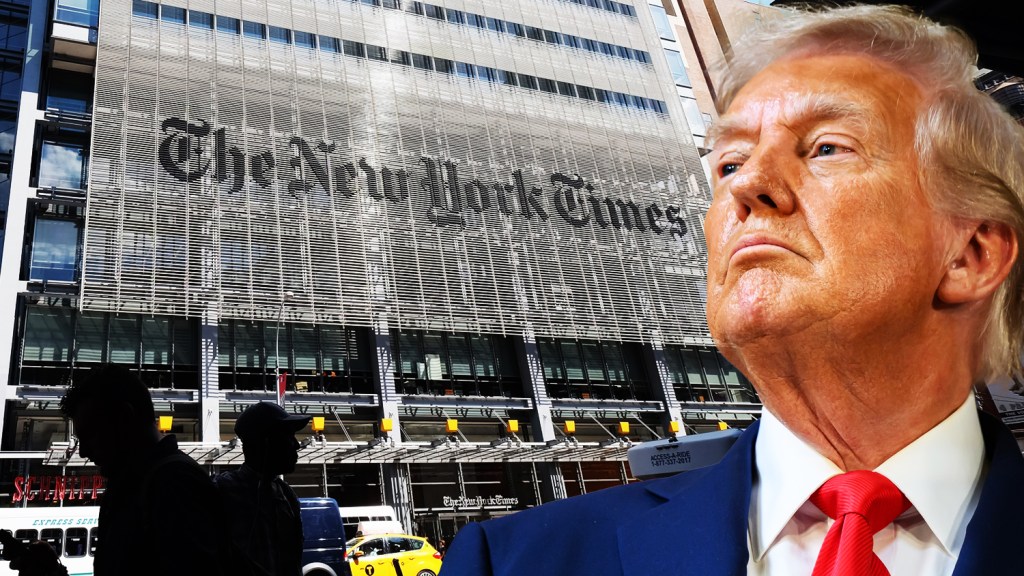
The New York Times is trying to stop Justice Department subpoenas that would force three of its journalists to appear before a grand jury after the paper reported on security concerns involving a new Air Force One.
The Times said Julian E. Barnes, Eric Lipton and Eric Schmitt were subpoenaed as the White House pursues an effort to find the source or sources of leaks. According to the paper, the Justice Department sought information from the reporters “in regard to an alleged violation of federal criminal law.”
David McCraw, the Times’ senior vice president and deputy general counsel, said Wednesday that the company filed a motion to quash what he called “abusive and improper subpoenas” issued to the three journalists in the Southern District of New York.
McCraw said the subpoenas demanded that the reporters appear before a grand jury and reveal confidential sources. He said the Times argues in its motion that the subpoenas were brought in bad faith to punish the paper for its coverage and violate the constitutional rights of the Times and its journalists.
The court filing is under seal because of a court order. McCraw said the Times is also seeking to have the papers made public, saying the public has a right to information about the case.
DOJ says reporters are not targets
A Justice Department spokesperson said the department will continue to investigate breaches of national security “in whatever form they come.” The spokesperson said reporters are not the targets and that the focus is on people leaking classified information.
The DOJ spokesperson said the department values the role of the press, while also saying the agency has a duty to ensure people trusted with national secrets do not share classified information.
The Times reported that subpoenas were being prepared for two other Times journalists, Adam Goldman and Tyler Pager, but that they never received them.
The Times’ reporting at the center of the dispute described security worries about the new Air Force One. According to the report, President Donald Trump left a NATO summit in Turkey last week on the older aircraft. The report said the new plane, a Boeing 747-8 donated by Qatar’s government and later retrofitted, lacked antimissile capabilities.
Manhattan prosecutor defends subpoenas
The subpoenas were issued by Jay Clayton, who is serving as U.S. attorney in Manhattan. Trump has nominated Clayton to become director of national intelligence.
At his confirmation hearing Wednesday, Clayton defended the subpoenas while answering Sen. Michael Bennet, a Colorado Democrat. Clayton said his office consulted with the Justice Department or the White House.
Clayton told Bennet he was confident that procedures meant to protect the First Amendment, press freedom and prevent journalist intimidation were followed.
Clayton also said that when national security issues are involved, there should not be a “huge blind spot” allowing someone to provide information to journalists, including information that could reach adversaries, without any chance to find out how it happened.
Bennet responded that he believed people would agree the First Amendment is not a “glaring loophole.”
Times executive editor Joseph Kahn said in a video posted Wednesday that the Justice Department has said the reporters are not targets of the investigation and that government officials who provided the information are the real targets.
Kahn said the Times views the subpoenas as an attempt to intimidate the journalists and the newspaper. He said the Times will keep reporting on Air Force One and on the government’s use of prosecutorial power toward independent news media.
This story draws on original reporting from Deadline.