No Rest for the Wicked review praises a moody Faroes ghost romance
Variety says Kaspar Kalle’s Fantasia drama blends queer romance, seafaring grief and supernatural dread in 1860s Faroe Islands.
By Poppy Nakagawa · Culture Writer
3 min read
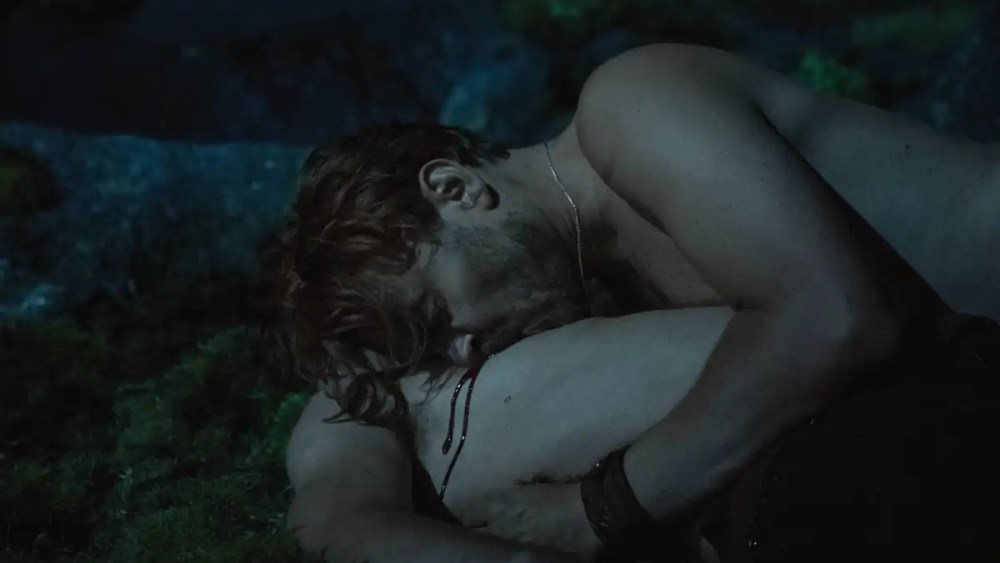
A new No Rest for the Wicked review from Variety casts Kaspar Kalle’s Danish period drama as a mournful blend of gay romance, maritime folklore and eerie supernatural turns.
Writing after an online screening dated July 20, 2026, for Fantasia Festival, Variety film critic Dennis Harvey described the 103-minute film as an atmospheric story set in a remote Faroe Islands fishing village in 1862. The film is directed by Kalle, with a screenplay by Rasmus Birch and Kalle, adapted from Karl Heinrich Ulrichs’ 1884 short story Manor.
Ulrichs, identified by Variety as a German writer and very early advocate for gay rights, supplies the literary backbone for a tale about two men whose bond is shaped, interrupted and darkened by the sea.
What is No Rest for the Wicked about?
No Rest for the Wicked follows Baldur, played by Egor Venned, a quiet young man living with his widowed mother Asla, played by Sofia Nolsoe. During a solo fishing trip, Baldur is caught in strange cloud cover, hears calls for help and injures himself before being rescued by Helge, a sailor played by Pilou Asbaek.
Helge has lost his way on an unfamiliar part of the island, and the two men make their way back to Asla’s cabin. Variety says Asla is taken with the visitor’s lively manner, while Baldur is more guarded, irritated over the loss of his boat and unsure whether Helge’s teasing carries hostility or attraction.
The relationship grows beyond friendship, according to the review, upsetting Asla after she realizes Helge’s attention is directed at her son. When a whaling ship arrives, both men plan to join the crew, but Asla, already bereaved by the sea, pressures Baldur not to leave. Helge sails without him.
That voyage ends in disaster. Variety reports that Helge returns as one of the dead after a shipwreck, and Baldur’s grief leads him to make a blood wish for his lover’s return.
How does the review describe the supernatural turn?
Harvey writes that the film has already planted visions and nightmares before the story shifts into overtly supernatural territory. Asla fears Helge may be dangerous, even vampiric, and alerts the village. When his body is exhumed, it is found warm and unspoiled, and a kind of contagion begins affecting others, according to the review.
Variety says the film plays with horror expectations, but its darker clues eventually serve as misdirection in a love story with tragic weight. Harvey compares the emotional aftertaste to Brokeback Mountain and All of Us Strangers.
Who made and stars in the film?
The film stars Venned, Asbaek and Nolsoe, with Johannes Haukur Johannesson, Kjartan Hansen, Brimheim, Bui Egason Dam, Noomi Kunoy Heradottir and Klaus Sondergaard also listed in the cast. Dialogue is in Danish and Faroese.
Variety credits cinematographer Jacob Moller with making strong use of stark locations, while also noting the period design and Hettarher’s score, which includes wordless choral passages. The production is from SF Studios in association with the Danish Film Institute, in coproduction with Faroese Outlier Projects and Truenorth. Charades is listed for world sales.
Harvey’s verdict is broadly positive: he says the film has some uneven elements, but finds its final movement haunting and emotionally persuasive. The review also notes that Kalle avoids turning the story into a blunt allegory about homophobia, presenting Asla chiefly as a mother afraid of being left alone again.
This story draws on original reporting from Variety.