Nolan’s Odyssey shoot pushed cast across five countries and 91 days
Christopher Nolan and his cast told Variety how The Odyssey became a grueling IMAX epic with Oppenheimer echoes and sharper roles for women.
By Georgia Hale · Staff Writer
3 min read
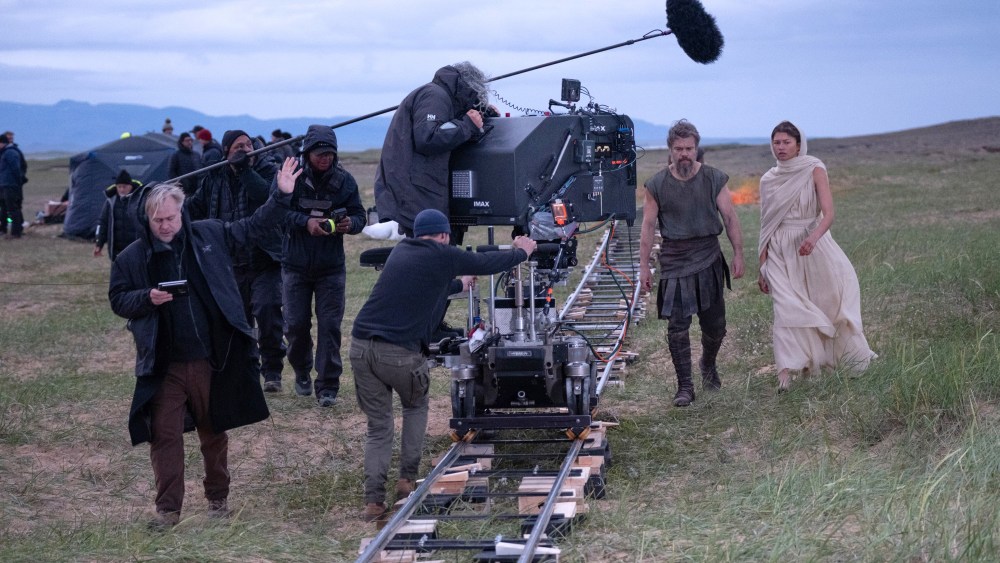
Christopher Nolan’s The Odyssey sent its cast and crew through five countries over 91 filming days, with ocean shoots, mountain climbs, forests and beaches all part of the grind, according to Variety.
Nolan told Variety the production left him more worn out than any previous film. He described it as the toughest work he had done and said the team was tested physically throughout the shoot.
Matt Damon, who plays Odysseus, said the job felt closer to an expedition than a conventional movie. According to Damon, each new country brought another round of harsh conditions, including sideways rain during night work in Iceland.
Damon also said Nolan shared the discomfort with the crew, staying beside the camera in the same cold, wet and steep places as everyone else. Nolan told Variety the shoot could have run another nine days, but the team had reached its limit, especially on the boat work.
A myth built with IMAX muscle
The $250 million, R-rated film was made entirely with IMAX cameras, which Variety reported makes it the first feature shot that way. The format was used for both large-scale scenes, including Troy and the Cyclops, and more intimate material set in Ithaca.
The equipment created its own drama. Variety reported that the IMAX cameras weighed about 300 pounds and held under three minutes of film at a time, which meant frequent reloads during scenes.
Anne Hathaway, who plays Penelope, told Variety the cast had to place a lot of trust in Nolan because IMAX had been used by his team for action before, but not for the kind of close, private scenes she was performing.
Nolan changed his set routine to preserve momentum. Rather than calling “Cut” whenever a camera ran out of film, he would ask actors to pause, reload quietly and then continue, Variety reported. Nolan said he wanted to protect the focused space between action and cut, comparing the needed ensemble rhythm to stage performance.
Oppenheimer’s shadow reaches ancient Greece
Variety reported that Nolan and Damon see The Odyssey as connected in spirit to Oppenheimer. Damon, who appeared in both films, pointed to Odysseus’ role in the Trojan Horse and J. Robert Oppenheimer’s role in the atomic bomb as acts of ingenuity followed by terrible consequences.
Nolan also told Variety he was drawn to xenia, the Greek code of hospitality toward strangers. He said the idea speaks to human interdependence and to how fragile civilization becomes when that duty is ignored.
The film keeps Homer’s broad story: Odysseus leaves Troy for home, is driven off course and faces threats including cannibals, sirens and Circe. Nolan wanted those mythic elements to feel physical, Damon said, with practical effects, dirty costumes and lived-in sets.
Penelope and Circe move forward
Variety reported that Nolan’s version gives more weight to Homer’s women. Hathaway’s Penelope is presented as a political operator protecting her son’s claim while suitors circle Ithaca in Odysseus’ absence.
Hathaway said Nolan’s Penelope is still moral and patient, but also under pressure and alert to the price of survival. Samantha Morton, who plays Circe, told Variety she approached the character through ideas of war, family and the dangers women face, rather than treating her as a stock temptress.
Nolan told Variety he still wants first to entertain. He said if the film works, its ancient violence and questions of civilization will also speak to the world audiences are living in now.
This story draws on original reporting from Variety.