The Odyssey Imax cameras could spark a large-format rush
Christopher Nolan’s The Odyssey is fueling fresh Hollywood interest in all-Imax shooting after strong box office and packed 70mm screenings.
By Bianca Rossi · Entertainment Editor
3 min read
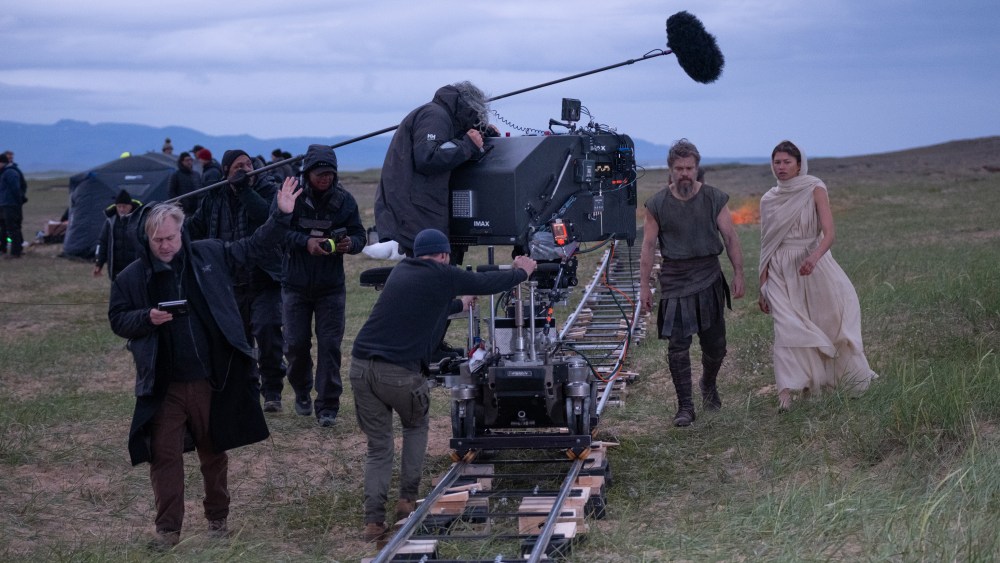
Christopher Nolan’s The Odyssey Imax cameras are now the talk of Hollywood after the film became the first feature shot entirely with Imax 70mm cameras, Variety reported.
The movie has climbed to nearly $300 million at the domestic box office, according to Variety, while Imax 70mm showings have been sold out weeks ahead. An Imax source told the outlet that the film’s performance is expected to push interest in full-Imax productions much higher.
Nolan has been moving toward this moment since using Imax on The Dark Knight. Variety reported that The Odyssey delivers a sharper image and brighter projection, adding to the immersive pull of the format.
Who could shoot a film entirely on Imax next?
The obvious question now is whether anyone besides Nolan has the budget, clout and technical appetite to make an entire feature this way.
The format is not cheap. Variety reported that The Odyssey cost $250 million to make, making it the most expensive film of Nolan’s career so far. The raw film stock alone costs about $1.50 per foot, and the production used roughly two million feet, putting that part of the bill at about $3 million.
Prints add another heavy line item. An Imax source told Variety that a single print of The Odyssey costs $50,000, while adding that studios decide how many prints they want made.
Denis Villeneuve is already in the large-format lane. Variety reported that he shot a large portion of Dune: Part Three on Imax 70mm film. At the film’s trailer event, Villeneuve said a “big part” of the movie used Imax film, though he kept the desert scenes digital because he liked what he called the “brutality” of digital Imax.
Villeneuve also called the result on screen “quite unmatchable” and said he hoped to use the format again, according to Variety. His next film is a James Bond movie, giving him another broad canvas if he chooses to go bigger.
Ryan Coogler is another name in the mix. Variety reported that Coogler and cinematographer Autumn Durald Arkapaw used both 15-perf Imax film and Ultra Panavision 70 for sequences in Sinners, creating different large-format looks.
Coogler’s next film is Black Panther 3. Variety reported that Marvel Studios revealed at Comic-Con that the movie will be partly shot in large format on 70mm film, making it the first Marvel film to do so. It has not been confirmed whether Durald Arkapaw will shoot the film.
An Imax source told Variety the company was closely involved with Sinners and would support Coogler using film again. The source said Imax could not say whether the Black Panther 3 team wants to take on a fully Imax shoot, but said the company has enough cameras and blimps to try to make it work if they did.
What does shooting for Imax mean?
Imax shooting can mean using Imax 70mm film cameras, Imax-certified digital cameras or other large-format methods designed for Imax presentation. The payoff is a bigger theatrical image, especially when paired with Imax projection and film prints.
Other upcoming or recent projects are also tied to the format. Variety reported that Michael B. Jordan’s The Thomas Crown Affair remake was shot for Imax, while The End of Oak Street and Resident Evil were filmed for Imax. Digger was filmed in VistaVision and shown in Imax.
Imax also has hybrid options. Variety reported that Project Hail Mary was shot with an Imax-certified digital camera, while Imax created film prints for the release.
An Imax source told Variety the company is willing to support filmmakers who want to create for the format, as long as camera scheduling works and there is enough time to make prints with Kodak and Fotokem.
This story draws on original reporting from Variety.