Venice 2026 lineup boss explains missing studios and Guadagnino no-show
Alberto Barbera says Venice’s 83rd edition drew 4,500 submissions, but fewer studio titles and only one female-directed competition film.
By Bianca Rossi · Entertainment Editor
3 min read
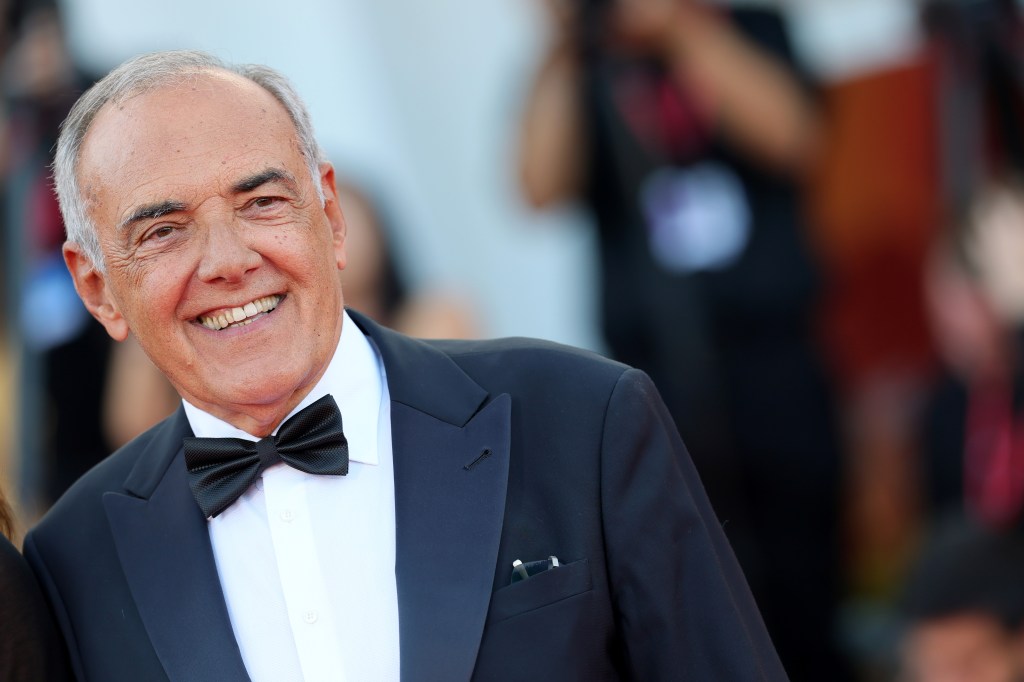
Venice 2026 lineup chief Alberto Barbera says this year’s festival field is one of the most politically charged he has assembled, even as the 83rd edition arrives with conspicuous gaps: few major studio films, only one female-directed title in competition, and no festival launch for Luca Guadagnino’s Artificial.
The Venice Film Festival artistic director unveiled the selection on Thursday. Deadline reported that this is Barbera’s 19th lineup across two stints in the job, first from 1998 to 2001 and again since 2012. His mandate was extended earlier this year through 2027 and 2028.
Barbera told Deadline the festival received a record 4,500 submissions. He described the selection as steeped in contemporary crises, naming wars, Palestine, Putin’s Russia, Ukraine, climate change, immigration, social conflict, pressure on free expression, violence against regime opponents, family and school crises, and the lack of a future facing young adolescents.
Competition titles cited by Deadline include Lee Chang-dong’s Possible Love, Hirokazu Koreeda’s Look Back, Martin McDonagh’s Wild Horse Nine and Lance Oppenheim’s Primetime, which stars Robert Pattinson.
Why are studio films missing from Venice 2026?
Barbera pushed back on the idea that Hollywood has permanently cooled on festivals, telling Deadline he did not want to conclude that studios now see festivals as too costly or not worth it. He said several anticipated titles were absent for specific reasons tied to timing, production or marketing.
According to Barbera, Warner Bros. quickly made clear that Alejandro G. Iñárritu’s Digger would not play Venice for marketing reasons. He said Aaron Sorkin’s The Social Reckoning was not finished because reshoots were set for August, while David Fincher’s The Adventures of Cliff Booth had fallen behind after post-production was interrupted by what Barbera described as a personal issue for Fincher.
Barbera also said he had been in regular contact with Denis Villeneuve about Dune: Part 3. According to Barbera, Villeneuve told him the film was far from finished, with a Christmas release planned and completion expected only somewhat before then.
He added that studios are in a difficult period involving mergers, revised production plans and lower earnings, and that they are reassessing how to market films.
Why is Luca Guadagnino’s Artificial not at Venice?
Barbera told Deadline he had hoped Neon would bring Guadagnino’s Artificial to Venice after taking on the film in June, and he called the movie beautiful. He said Neon chief Tom Quinn told him the distributor would not release the film until January, except for a technical December release to qualify for the Oscars.
According to Barbera’s account, Quinn said Neon did not want to release the film earlier because it needed time to sell the movie internationally after paying a high price for it. Barbera said Neon therefore decided to skip festivals.
What did Barbera say about women directors?
The main competition has 21 titles, with only one directed by a woman: May el-Toukhy’s Woman Unknown, according to Deadline. Barbera said he did not believe Venice could fairly be described as hostile to women, citing awards for women-directed films since 2020 and female jury presidents, including women heading all three juries this year.
He said the share of submitted fiction films directed by women fell to 24% this year from 30% last year. Barbera called the drop difficult to explain and said he would have welcomed more female-directed films in the main competition if the submissions had supported it.
Barbera also addressed controversy around Russian participation at the wider Venice Biennale. He said the Biennale did not have legal means to stop Russia from using its national pavilion, which he said is owned by Russia, and argued that the institution’s role is to protect cultural exchange and freedom of expression.
This story draws on original reporting from Deadline.