AI exposure is pushing more older workers out of jobs, study says
A Boston College retirement researcher found older workers in AI-exposed roles are leaving work more often since ChatGPT’s launch.
By Sal Moretti · Money Reporter
3 min read
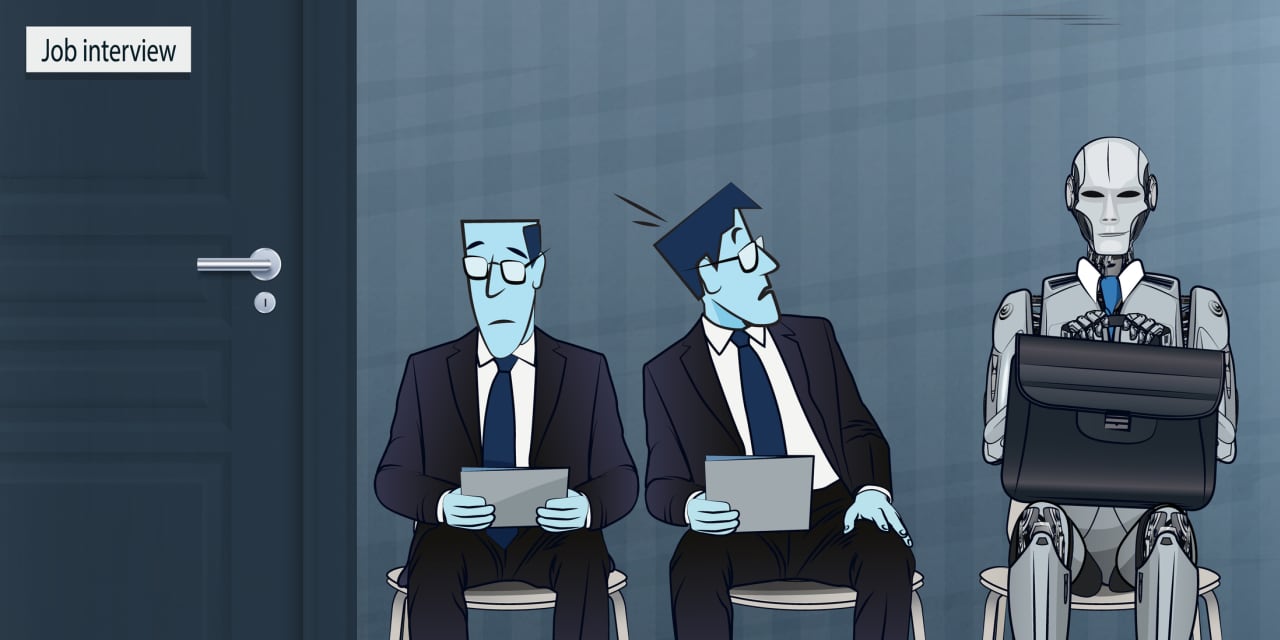
Older workers in jobs most exposed to artificial intelligence are leaving employment more often than comparable workers did before ChatGPT arrived, according to new research by Geoffrey Sanzenbacher, a Boston College economics professor and research fellow at the Center for Retirement Research.
The finding lands at an awkward moment for Americans nearing retirement. Sanzenbacher noted that the Social Security Trust Fund is projected to run dry in 2032, and that benefits would be cut by 22% for current and future beneficiaries if lawmakers make no changes.
That means many workers may need longer careers to protect their retirement finances. Yet Sanzenbacher’s analysis suggests AI could be shortening careers for some older employees, especially in white-collar and higher-paying jobs.
How the research tracked AI’s impact
Sanzenbacher used the Current Population Survey, the same dataset the Bureau of Labor Statistics uses to calculate the monthly unemployment rate. He identified workers age 55 and older, then followed them for one year to see whether they stayed employed or stopped working.
He then matched each worker’s occupation to Digital Planet’s AI Exposure metric, which estimates how much of a job’s task list can be handled efficiently by tools such as large language models and machine learning systems.
That measure does not assume AI will wipe out every exposed job. Sanzenbacher said the same tools that can automate tasks can also make workers more productive, depending on how employers use them.
To compare the period before and after ChatGPT’s November 2022 launch, Sanzenbacher ran a regression that controlled for factors including education and earnings. His model also accounted for the fact that workers in AI-exposed jobs often had different career patterns before the new wave of AI tools appeared. The analysis excluded 2020 and 2021 because of the COVID-19 pandemic.
Programmers see a sharp predicted jump
The main result: older workers in more AI-exposed occupations had bigger relative increases in exits from work than those in less exposed jobs, according to Sanzenbacher’s issue brief.
For painters, an occupation with a low AI exposure score of 5, the predicted increase in transitions out of work was barely noticeable. For computer programmers, at the high end of the exposure scale, the predicted increase was more than 25%.
Jobs in the middle of the AI exposure range showed predicted increases from 9% to 16%, Sanzenbacher found. He described those changes as meaningful because they are appearing while policymakers are weighing how to address Social Security’s funding gap.
The pattern also differs from earlier waves of automation, which Sanzenbacher said tended to hit middle-income workers harder. In his analysis, AI exposure appears to be pressing more heavily on higher-paying occupations.
Those jobs still had lower overall rates of leaving work than lower-paying roles, even after ChatGPT, according to Sanzenbacher. But he said AI may be narrowing the career-length advantage that higher earners have historically had.
That could complicate Social Security reform proposals. Sanzenbacher pointed to one proposal that would raise the retirement age for the top 40% of earners. He said that approach may look less straightforward if the workers most exposed to AI are also the ones being asked to keep working longer.
This story draws on original reporting from MarketWatch.