AMD Nvidia server CPU fight heats up with new Venice chips
AMD unveiled its sixth-generation EPYC server CPUs as Nvidia pushes Vera, turning their AI chip rivalry toward data-center processors.
By Frankie Delgado · News Reporter
3 min read
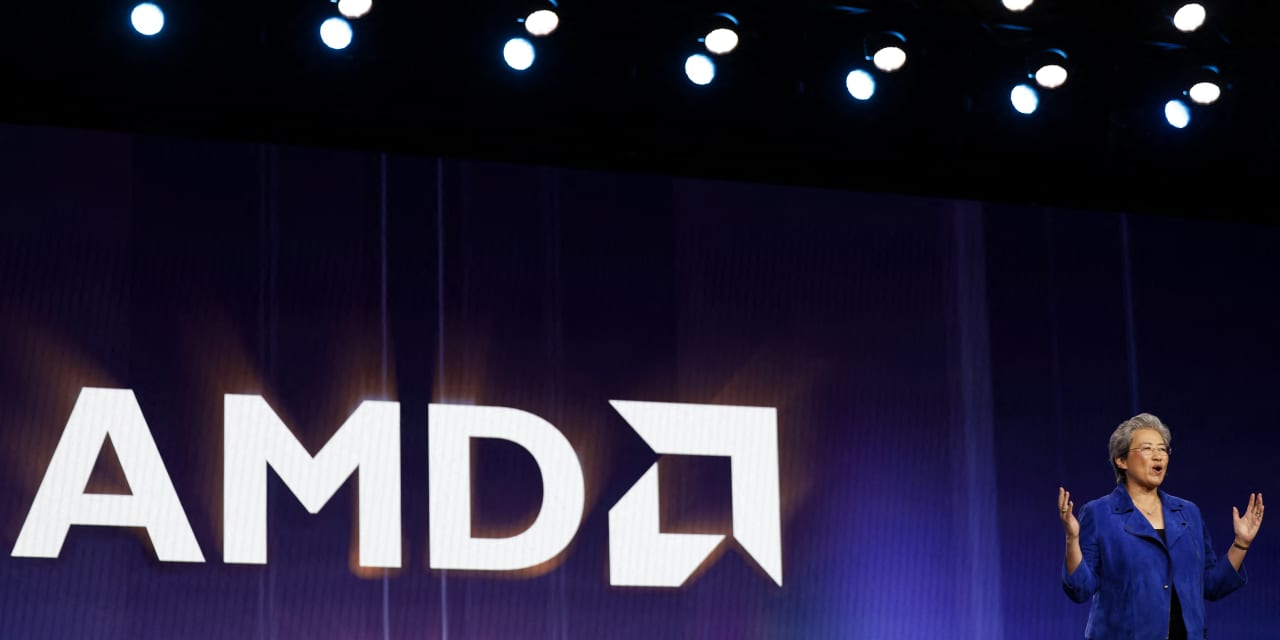
AMD Nvidia server CPUs are becoming the next hot corner of the AI chip fight, after Advanced Micro Devices used its Advancing AI event Thursday to unveil the sixth generation of its EPYC processors for data-center servers.
AMD Chief Executive Lisa Su said during her keynote that the new Venice line is built for agentic AI workloads. AMD said the chips offer high thread density, which means they can run large numbers of separate tasks at the same time on one chip.
That matters for data centers trying to squeeze more work out of each rack. According to AMD, the Venice CPUs can support more AI agents per watt, per dollar and per rack.
How is AMD competing with Nvidia in server CPUs?
The fresh AMD rollout lands just days after Nvidia released performance figures for Vera, its first standalone AI central processing unit. Nvidia introduced Vera in March and said the chip opens a new addressable market for the company, which is already dominant in graphics processing units.
Nvidia said Vera is designed around single-thread performance, a measure of how quickly a chip can run one chain of instructions. Compared with AMD’s fifth-generation Turin CPUs, Nvidia said Vera can deliver up to 1.9 times faster agentic performance and six times better latency.
Bank of America analyst Vivek Arya wrote in a Wednesday note that he sees an “emerging battle” in server CPUs as AMD and Nvidia chase demand tied to agentic AI. Arya framed the investor question as whether these AI workloads are limited more by how fast an agent finishes a task or by how many agents a rack can run.
In plain terms, AMD is pitching throughput, or doing many tasks at once. Nvidia is pushing latency, or finishing individual tasks faster.
A CPU, or central processing unit, handles general computing work in a server. GPUs are better known for accelerating AI training and other parallel workloads, but CPUs remain central to how data-center systems coordinate and run software.
Why do x86 and Arm matter here?
Arya also pointed to a second split between the companies. AMD’s EPYC chips use the x86 instruction set architecture associated with Intel, while Nvidia’s Vera uses Arm’s power-efficient architecture.
Arya wrote that x86’s long software history could become a differentiator because more applications can run on it. Intel pioneered x86, and AMD has used that architecture as it has built share in server processors.
Su said AMD’s Venice CPUs are already in full production and that customer demand is the strongest AMD has seen for a new EPYC generation. She also said AMD plans to launch Florence CPUs in 2028 and Ravenna, its eighth-generation line, in 2030.
AMD sees the server CPU market growing to more than $200 billion by 2030, according to Su. She said AMD reached a record 46% revenue share in the server-CPU market last quarter.
AMD also announced that Helios, its first rack-scale system, is in full production for multigigawatt-scale customer deployments. Su said shipments remain on track to begin at the end of the third quarter and increase into the fourth quarter, with AMD planning a new Helios system each year.
MarketWatch reported that AMD shares fell 2.3% in Thursday trading, then were up 1.7% after hours at last check. Nvidia shares ended the session down 1.6%, while Intel fell 2.3%.
This story draws on original reporting from MarketWatch.