Audi Q9 SUV arrives as three-row flagship with $89,095 start
Audi unveiled the Q9 and SQ9, big three-row luxury SUVs aimed at U.S. buyers as sales trail BMW and Mercedes.
By Frankie Delgado · News Reporter
3 min read
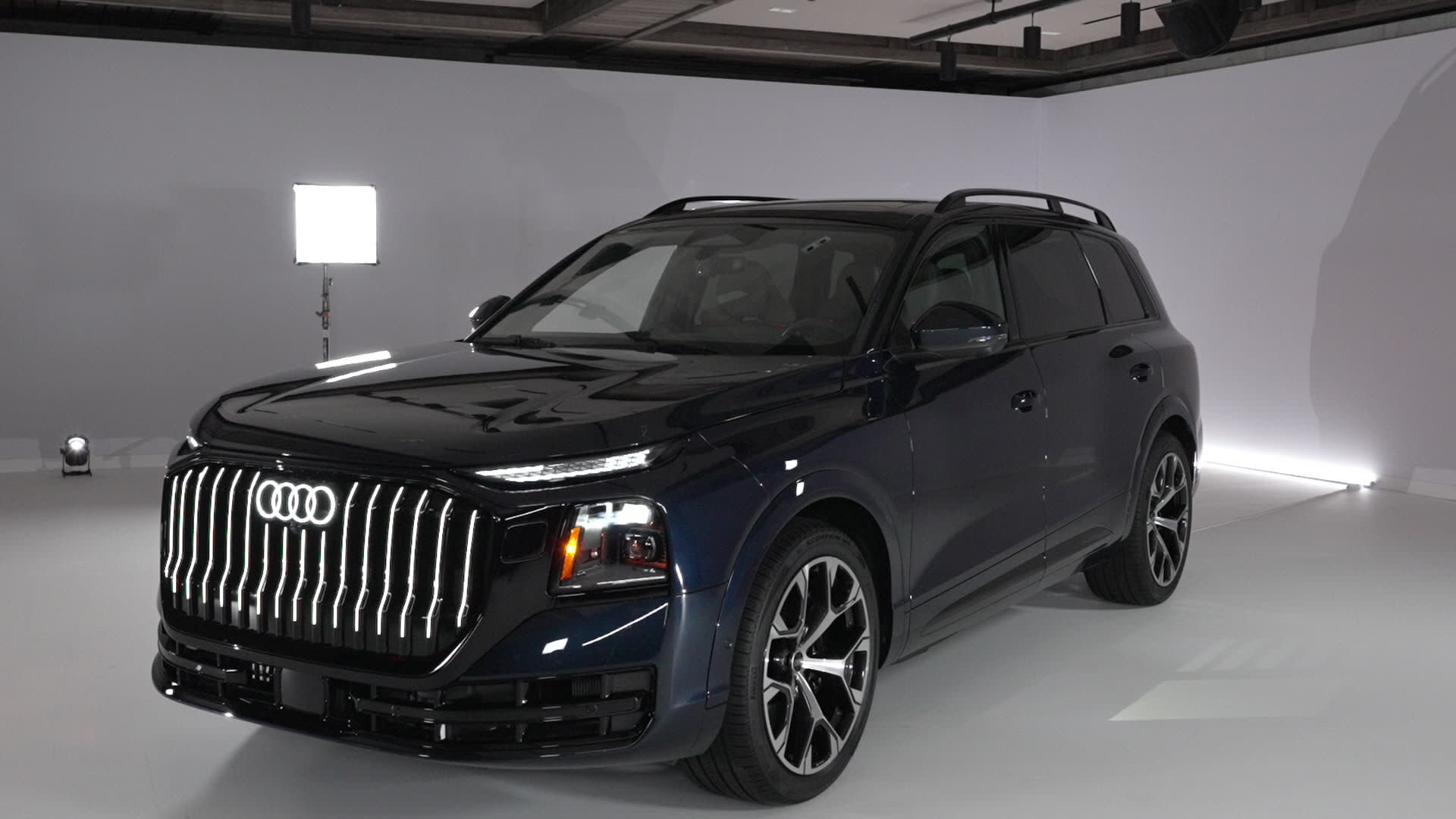
Audi has unveiled the Audi Q9 SUV, a full-size three-row luxury model built with the U.S. market in mind and priced from $89,095.
The German brand showed the Q9 in New York on Tuesday alongside the higher-performance SQ9, which starts at $119,395. Together, Audi says, the two versions will sit at the top of its U.S. lineup.
The launch adds another SUV to a busy year for Audi in America. The company revealed the compact Q3 in March and the midsize Q7 in June, part of a broader push to revive U.S. sales after several weak quarters.
What is the Audi Q9 SUV?
The Q9 is Audi’s new full-size, three-row luxury SUV and the first vehicle to carry that name. Audi says it was designed around performance, cabin space and technology, with room for adults in the third row.
Filip Brabec, Audi of America’s senior vice president of product management, said at the New York reveal that the vehicle was developed primarily for American buyers. He pointed to six- and eight-cylinder engines and large cupholders as examples of that focus.
Brabec said SUVs account for more than 80% of the premium market, and described the Q9 as Audi’s most luxurious entry in that space.
The Q9 measures 209 inches from end to end and 86.8 inches wide including the side mirrors, according to Audi. That makes it slightly longer than the Mercedes-Benz GLS and BMW X7, two key rivals in the segment.
- The Q9 uses a 2.9-liter V6 engine with 429 horsepower, according to Audi.
- Audi says the Q9 can accelerate from 0 to 60 mph in 4.9 seconds.
- The SQ9 gets a 4.0-liter V8 with 591 horsepower and 590 foot-pounds of torque.
- Audi says the SQ9 reaches 60 mph in 3.8 seconds.
Audi also says the Q9 includes matrix adaptive beam headlights, a technology long available in Europe that uses clusters of small LEDs to shape the beam and reduce glare for oncoming drivers.
Other features include a ChatGPT-powered voice assistant, a driver-assistance system with a hands-free function and the largest moonroof Audi has put on a vehicle, according to the company.
Karl Brauer, executive analyst for iSeeCars, said the Q9 will offer high-end touches such as power-opening doors and unusual interior materials by Audi standards.
Why Audi is pushing bigger SUVs in the U.S.
Audi’s U.S. sales fell 16% in 2025 from the prior year, according to company data. The slide continued through the first half of 2026, with sales down 17% from the same period in 2025. In the first quarter alone, sales dropped 30% year over year.
Audi has cited tariffs and the end of federal electric vehicle incentives as factors hurting its U.S. performance. Analysts said the new SUV lineup could help, but noted that Audi faces a tougher cost position than some competitors because it does not build vehicles in the United States.
BMW and Mercedes-Benz both manufacture vehicles in the U.S. Audi imports all of its models, although parent company Volkswagen operates a plant in Chattanooga, Tennessee, and is building a South Carolina factory for the Scout SUV brand.
Mercedes-Benz sales were down about 3.5% through June, while BMW sales rose 4.7% over the same period.
Tom Narayan, global autos analyst at RBC Capital Markets, said Audi had once gained ground against BMW and Mercedes with performance, interiors, technology and value. He said tariffs have weakened that pricing advantage.
Audi was also early among established automakers in electric vehicles, launching the e-tron SUV in 2019. But Cox Automotive said pure EVs made up only 5.6% of U.S. sales in the second quarter of 2026.
Brauer said Audi put major resources into EVs and got less back from that market than expected. He said the new SUVs are a step toward strengthening the rest of Audi’s powertrain lineup.
Narayan said the new products are positive for Audi, but added that tariffs remain the bigger issue for the brand’s U.S. results.
This story draws on original reporting from CNBC.