Boeing Q2 earnings miss as Air Force One charge hits results
Boeing posted a wider adjusted loss than analysts expected after booking a $280 million loss tied to the delayed Air Force One program.
By Sal Moretti · Money Reporter
3 min read
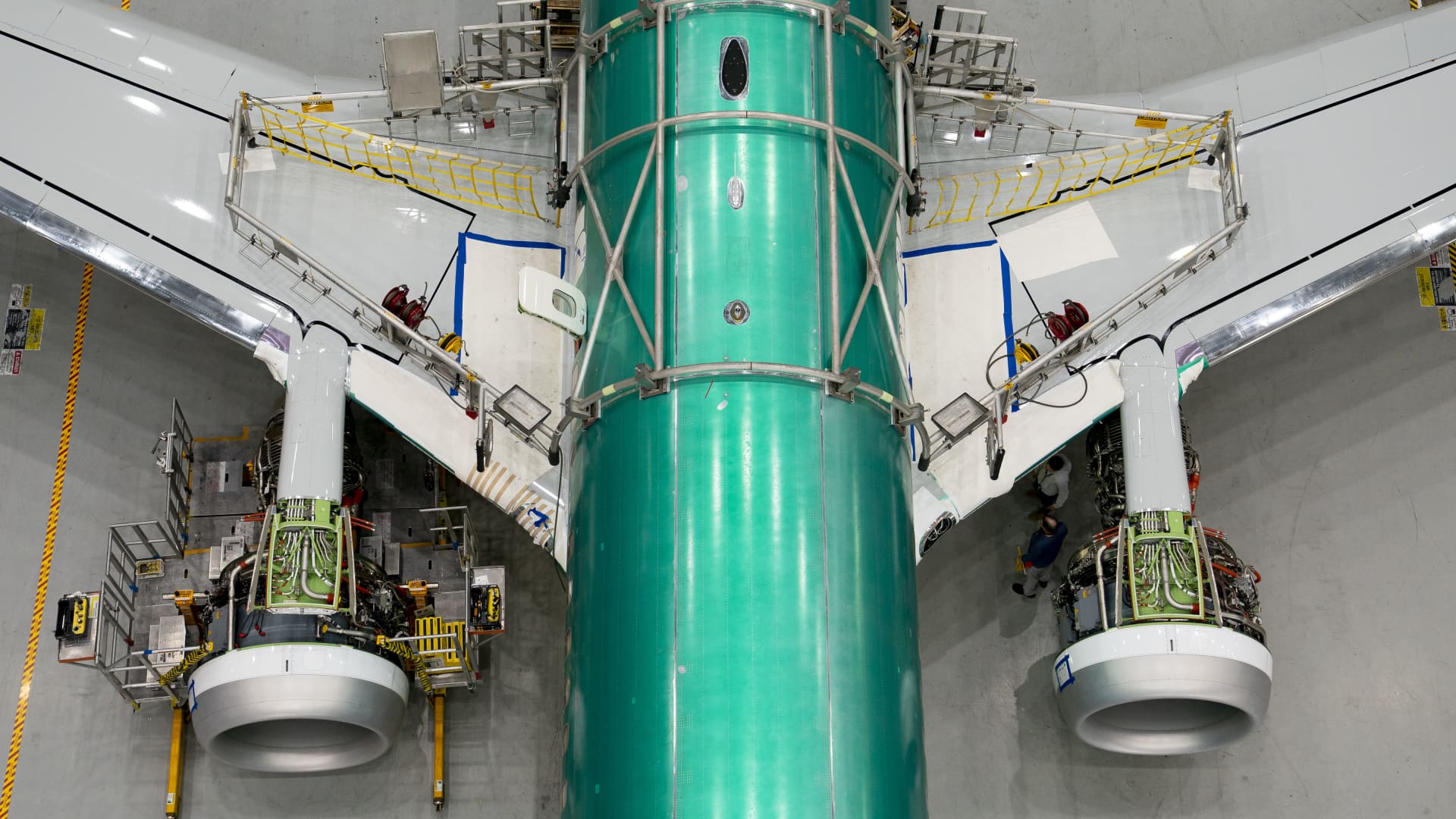
Boeing Q2 earnings came in short of Wall Street’s profit expectations after the plane maker booked another charge on the long-delayed program to build the next Air Force One jets.
The company reported an adjusted loss of 76 cents per share for the second quarter. Analysts surveyed by LSEG had expected a 30-cent adjusted loss per share. Revenue beat expectations, rising to $24.56 billion versus the $24.25 billion analysts had projected.
Boeing said it recorded a $280 million loss tied to the program to deliver two 747 aircraft that will become the next Air Force One planes for the U.S. government. The company said the charge was connected to increased investment in the aircraft, and it still expects the first delivery in 2028.
Chief Executive Kelly Ortberg told employees in a staff note that Boeing is making progress on development programs, while cautioning that the job is not finished until delivery is complete.
Why did Boeing miss earnings estimates?
Boeing missed the adjusted earnings estimate because costs from the Air Force One program weighed on the quarter. The program covers two specially built 747 aircraft for the U.S. government, a project Boeing has said remains on track for a first delivery in 2028.
The headline miss came even as Boeing’s business showed gains elsewhere. Revenue rose 8% from a year earlier, with improvement across its divisions, including more commercial aircraft deliveries.
The company delivered 171 commercial airplanes in the second quarter, up 14% from 150 in the same period a year earlier. Boeing has been raising output of its best-selling 737 Max jets toward 47 aircraft a month, with more increases planned, according to the company.
Boeing’s net loss narrowed from last year. The company reported a net loss of $428 million, or 67 cents per share, compared with a loss of $612 million, or 92 cents per share, in the year-earlier quarter.
Cash flow also came in far stronger than analysts expected. Boeing reported free cash flow of $631 million, while analysts had expected the company to burn $177 million. A year earlier, Boeing posted a $200 million cash burn in the second quarter.
What comes next for Boeing?
Ortberg told employees that two quarters do not make a full year, but said Boeing could strengthen its position in the second half if it stays focused on safety, quality and on-time performance.
Certification of delayed aircraft programs is now one of Boeing’s next major tests. The company’s 737 Max 7, the smallest jet in the 737 Max family, is expected to be among the first milestones.
Boeing executives were scheduled to speak with analysts at 10:30 a.m. ET. They were likely to face questions about the 737 Max 10 and the 777X, Boeing’s new wide-body aircraft, both of which remain closely watched by investors and airline customers.
This story draws on original reporting from CNBC.