Charter stock drops as broadband subscribers keep sliding
Charter lost 172,000 internet accounts in Q2 while adding 406,000 mobile lines, highlighting pressure from wireless rivals.
By Sal Moretti · Money Reporter
3 min read
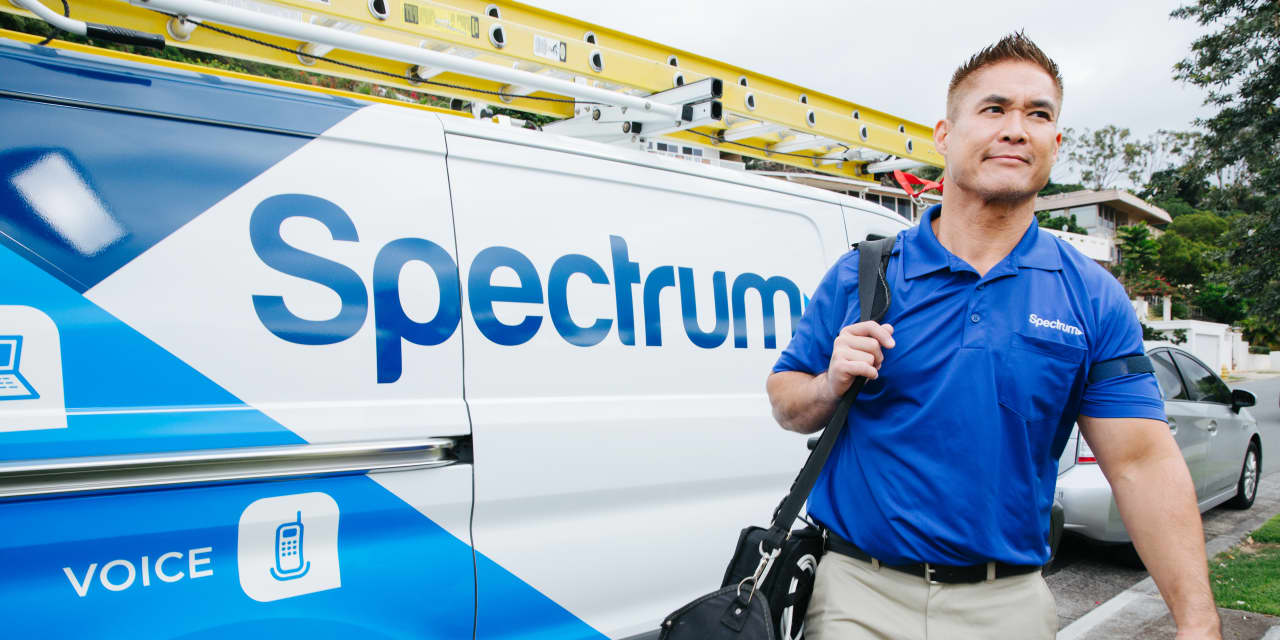
Charter stock was under pressure after the cable company reported another drop in broadband subscribers, with its internet business losing more customers in the second quarter than it did a year earlier.
Charter Communications said it lost a net 172,000 internet accounts in the quarter. That was a deeper decline than the 116,000 net internet accounts it shed in the same period last year.
The shares were down 11% in premarket trading, according to MarketWatch data, as investors weighed the broadband slide against stronger growth in the company’s mobile business.
Why is Charter stock down?
The pressure came from Charter’s core broadband business, where customer losses continued and revenue per user weakened. Citi Research analyst Michael Rollins said Charter’s average broadband revenue per user was $70 in the second quarter, down 1.5%.
Rollins wrote that the figure showed more broadband revenue “erosion” than expected. He also said the results pointed to further pressure on this year’s earnings before interest, taxes, depreciation and amortization.
Charter said Ebitda fell 4.3% in the second quarter. Excluding transaction expenses, Ebitda was down 3.2%.
Ebitda is a commonly watched measure of operating profitability before financing costs, taxes and certain noncash charges. Investors often use it to judge whether a company’s main business is gaining or losing strength.
Wireless rivals are crowding cable’s turf
Charter’s results land in a broadband market that has become tougher for traditional cable companies. Major wireless carriers have been pushing home-internet plans through fiber service and fixed-wireless access, which uses cellular networks to deliver internet service to homes.
AT&T, Verizon Communications and T-Mobile have all been expanding their home-internet efforts, putting more pressure on cable providers such as Charter and Comcast.
Rollins said Charter has continued to promote bundled services and has improved its video performance, but broadband has not shown the same progress and remains under pressure.
The bundle strategy is known in the telecom industry as convergence. It refers to selling multiple services, such as home internet and wireless phone plans, to the same household.
AT&T said its convergence rate was 42.5% in the second quarter, a measure of how many households with its home-internet service also use AT&T wireless, according to the company.
Mobile was the bright spot
Charter’s own push into wireless produced a much better number. The company added 406,000 Spectrum Mobile lines in the second quarter.
Rollins described that mobile-line growth as stronger than forecast. The gain shows how cable companies are fighting back by selling wireless service to their existing customer bases, even as phone companies move deeper into home internet.
Video also looked less weak than a year ago. Charter lost a net 21,000 video subscribers in the quarter, compared with a net loss of 80,000 in the year-earlier period.
The mixed report leaves Charter with a familiar problem: mobile growth is helping, and video losses narrowed, but investors focused on the continued decline in broadband, the business that has long been central to the cable model.
This story draws on original reporting from MarketWatch.