China’s Kimi K3 puts fresh heat on the AI race
Moonshot AI says its 2.8 trillion-parameter open model is climbing benchmarks, rattling tech stocks and drawing new scrutiny in Silicon Valley.
By Sal Moretti · Money Reporter
4 min read
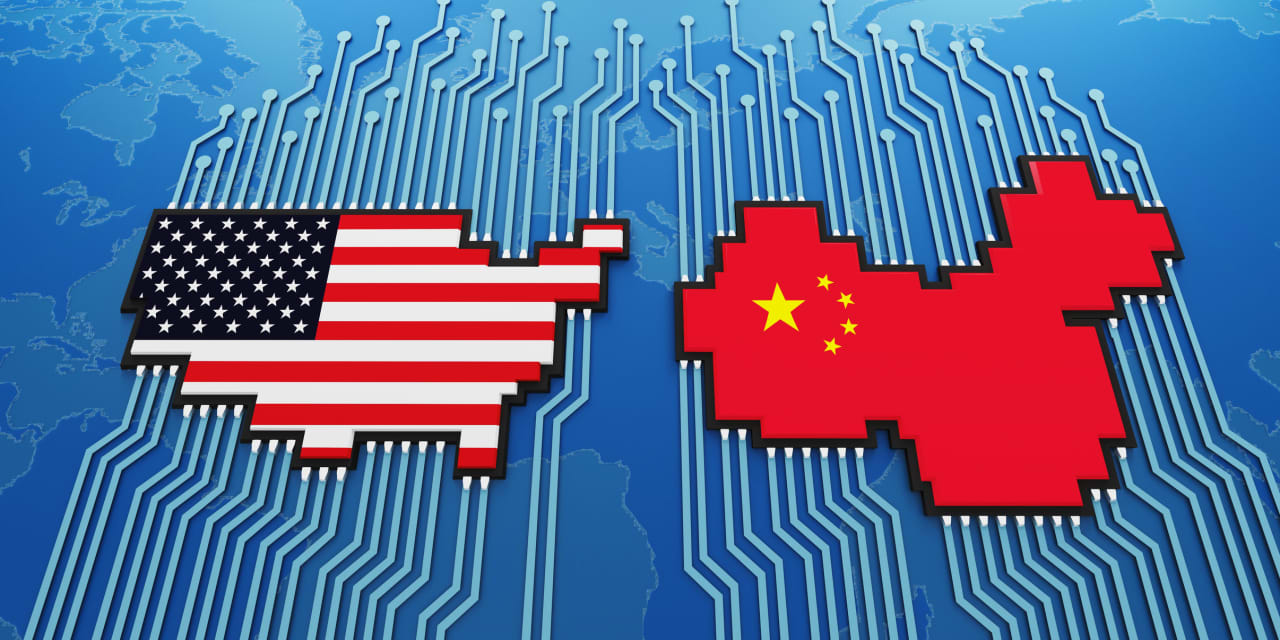
A Beijing AI startup has thrown a fresh spark into the U.S.-China artificial-intelligence fight with Kimi K3, an open model that has already taken first place on Arena’s Frontend Code leaderboard.
Moonshot AI says Kimi K3 has 2.8 trillion parameters, making it the world’s largest open model. In a company blog post, Moonshot said the model weights will be released by July 27.
Mark Malek, chief investment officer at Siebert Financial, told MarketWatch that the release would let “anyone, anywhere” download the model and build on it at no cost. Early comparisons, he said, put Kimi K3 in the same discussion as leading closed models from U.S. labs.
The market noticed. The Nasdaq Composite fell 1.4% Friday as investors weighed what it could mean if a Chinese lab is reaching top-tier AI performance with fewer computing resources than U.S. rivals. Nvidia shares were also lower, dropping 2.21%.
A new DeepSeek-style scare
Steve Hou, head of research at Silicon Data, told MarketWatch that investors were already uneasy about the money Big Tech is pouring into AI and about financing patterns among major cloud companies. He said strong open models could add pressure on pricing at the top AI labs.
Hou compared the Kimi K3 reaction to the market jolt that followed DeepSeek, when chip stocks slid on worries that more efficient AI systems could cut demand for expensive infrastructure. Morgan Stanley has said Big Tech companies could spend more than $1 trillion combined in 2027 on AI.
For China’s AI sector, the launch arrives despite U.S. export controls covering advanced Nvidia chips, EUV equipment and other technology. A post shared on QQ called K3 a “source of our glory” in Chinese and argued that its quality could not be explained by distillation, a training method that transfers behavior from a larger model to another system.
Distillation debate returns
Moonshot, DeepSeek, MiniMax and Alibaba have all been drawn into a dispute over distillation. Anthropic has accused the companies of using unauthorized accounts and exchanges at industrial scale to copy reasoning chains from Anthropic systems and train rival models more cheaply. No responses from those companies were reported by MarketWatch.
Kimi K2.5, Moonshot’s earlier model, drew attention in January after social-media users said it sometimes identified itself as Anthropic’s Claude. MarketWatch described that behavior as a likely sign the model had been trained on data from Anthropic.
Still, Kimi K3 has also received credit for technical work of its own. Hou told MarketWatch the model contains real algorithmic advances. NYU professor and AI researcher Ravid Shwartz-Ziv pointed on X to Kimi’s hybrid linear attention software, which he said helps the model handle large amounts of data while using less memory.
Florian Brand, a research engineer at Prime Intellect, told MarketWatch that fears around distillation are overstated. He said the practice is common and usually happens during a limited part of training. He also said open models reduce costs and expand choice, adding that open source pushes innovation forward.
U.S. labs use outputs from other models too. Thinking Machines said this week that its Inkling model used outputs from Kimi K2.5 during fine-tuning, while Cursor’s Composer 2 model, released in March, was pretrained on Kimi K2.5.
Not everyone is sold
Max Weinbach, an analyst at Creative Strategies, told MarketWatch that Kimi K3 is a good model, while OpenAI’s GPT-5.6 Luna remains better and cheaper. He said the GPT 5.6 series is stronger at grounding answers in real data, citing sources and avoiding hallucinations.
Moonshot also included a caution in its Kimi K3 announcement, saying the model still trails Claude Fable 5 and GPT 5.6 Sol in user experience.
Some social-media users accused Kimi K3 and other Chinese systems of “benchmaxxing,” meaning they may be tuned to score well on tests while performing less strongly in ordinary use. Weinbach also told MarketWatch that Kimi K3’s size makes it expensive to run well, requiring Nvidia GB200 or GB300 systems that cost $4 million to $6 million per rack.
This story draws on original reporting from MarketWatch.