Chinese DUV lithography reports hit AI hardware stocks in Asia
Chip names from SK Hynix to Kioxia slid after The Information reported Chinese advances in DUV tools, a key step in chipmaking.
By Frankie Delgado · News Reporter
3 min read
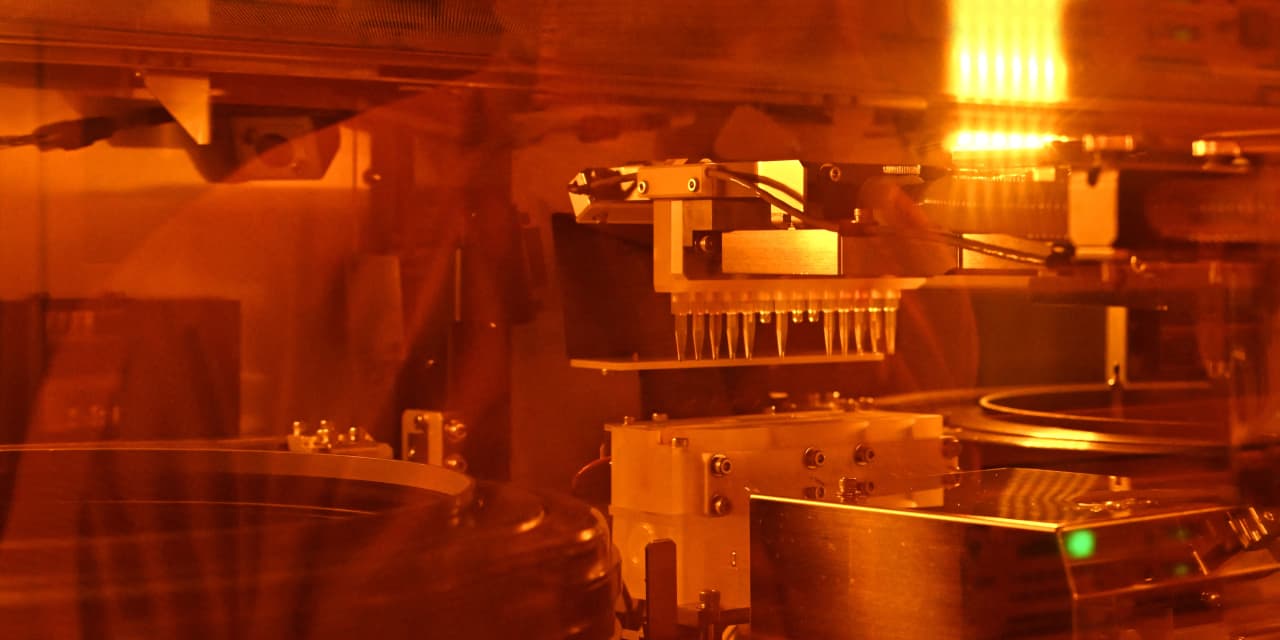
Asian AI hardware stocks were hammered Tuesday after reports of Chinese DUV lithography progress raised fears that China could make more of its own advanced chips and pressure established suppliers.
South Korea’s Kospi benchmark sank almost 11%, according to MarketWatch, with panic selling and deleveraging triggering circuit breakers for the ninth time this year. The pressure landed hardest on two of the market’s biggest AI chip winners: SK Hynix fell 14%, while Samsung Electronics dropped 13%.
Japan’s Kioxia Holdings took an even sharper hit. The memory-chip maker slid 18%, and MarketWatch reported that its share price has been cut in half over the past month. Kioxia had been Japan’s largest company by market value as recently as June, but has now fallen to fourth place.
Why are AI hardware stocks falling?
The selloff followed a report from The Information saying that three Chinese companies, Semiconductor Manufacturing International Corporation, Hua Hong Semis and CXMT, had made notable progress producing deep ultraviolet lithography machines.
DUV lithography machines are used to print chip designs onto silicon wafers, a core part of making advanced semiconductors. ASML has long dominated that high-end equipment market, so reports of Chinese alternatives put investors on alert.
MarketWatch reported that ASML, Europe’s largest listed company, has fallen more than 10% this week as the China story rattled the chip-equipment trade. The broader sector was already under pressure, with the Philadelphia Semiconductor Index lower and Micron among the names hit by profit-taking on Monday.
The market worry is blunt: if Chinese companies can build more of the tools needed to manufacture advanced chips, they may become less dependent on foreign suppliers. That could weaken the case for the so-called “picks and shovels” stocks tied to the AI infrastructure boom, including memory makers and chip-equipment firms.
Harvey Robinson, a technology analyst at U.K. brokerage Panmure Liberum, told MarketWatch that China appeared to have found ways around U.S. export restrictions on AI technology through innovation. He said Chinese DUV machines remain behind ASML’s most advanced systems, but added that they can get close to industry leaders’ efficiency in some cases at a much lower cost.
Robinson also pointed to the AI model launched last week by Moonshot, saying more efficient models could mean lower capital spending needs in the future. That would cut against the market story that AI demand requires ever-rising spending on hardware.
The timing is awkward for South Korea’s chip giants. SK Hynix is due to report second-quarter results Wednesday, followed by Samsung on Thursday. MarketWatch reported that both companies plan to double production capacity over the next two years.
SK Hynix raised $29 billion earlier this month through Nasdaq-listed depositary receipts to help fund that spending, according to MarketWatch. The report also said rumors have circulated that Samsung has been considering a similar step.
FactSet data cited by MarketWatch showed both SK Hynix and Samsung trading at about three times projected end-2027 earnings, before any possible guidance changes with this week’s results. In U.S. premarket trading Tuesday, SK Hynix ADRs were pointing to a further 4% decline, to about $137.
This story draws on original reporting from MarketWatch.