Cyclospora outbreak puts Kennedy’s food-safety pledge under pressure
Thousands of cyclospora cases are testing HHS Secretary Robert F. Kennedy Jr.’s promises on food safety and trust in federal health agencies.
By Sal Moretti · Money Reporter
4 min read
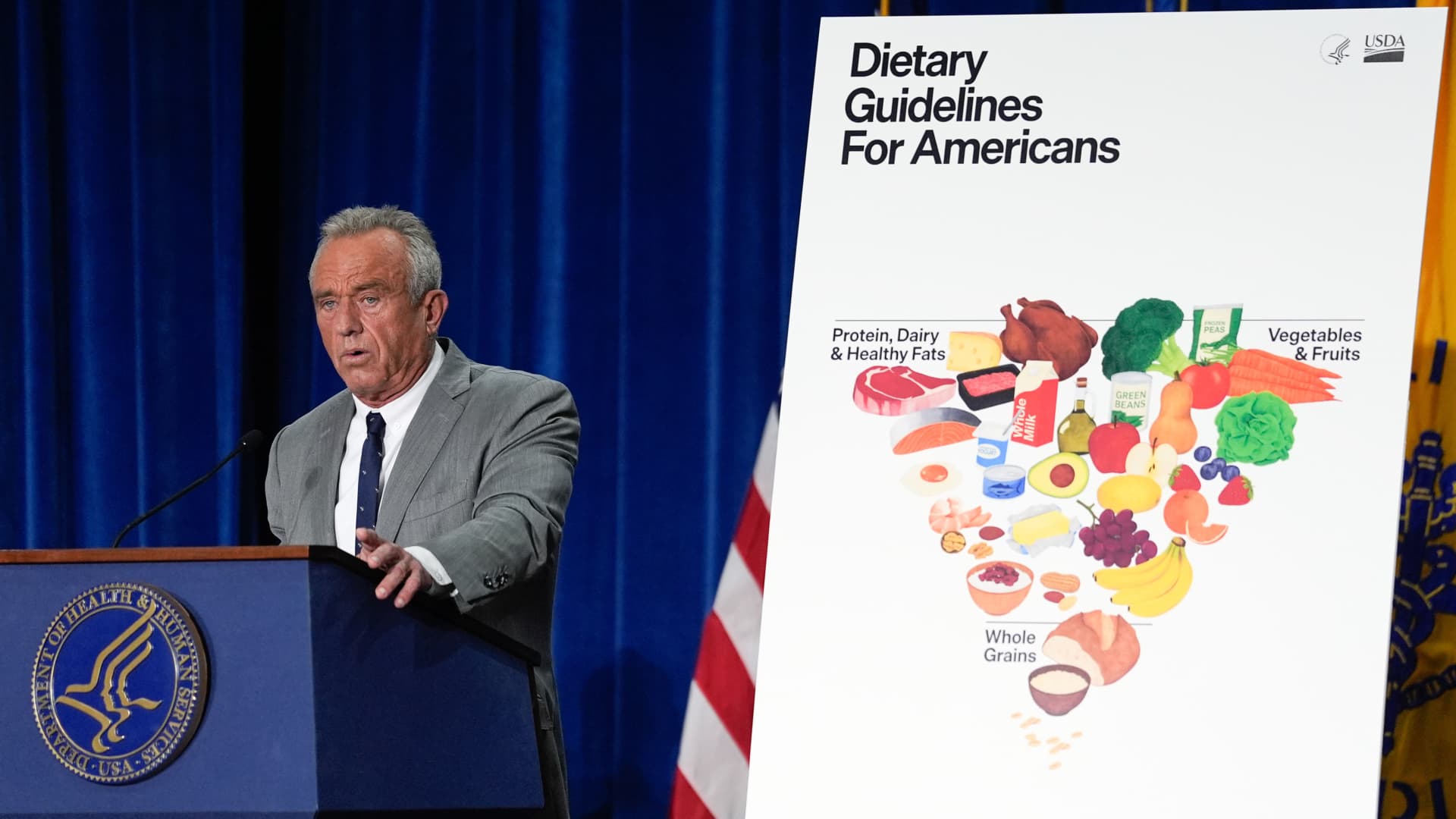
A fast-spreading cyclospora outbreak has sickened thousands of people and put Robert F. Kennedy Jr.’s food-safety promises under a hot spotlight.
Kennedy, who took over the Department of Health and Human Services last year, has pledged to remake the U.S. food system and restore confidence in federal health agencies. The current cyclosporiasis outbreak, or possibly more than one outbreak, is now a major test of that agenda.
The Centers for Disease Control and Prevention has received reports of more than 4,000 laboratory-confirmed cases, according to CNBC. The agency is also aware of more than 7,400 additional cases that have not yet been confirmed by lab testing, many of them in Michigan and Ohio. Michigan alone has reported at least 7,000 cases, CNBC reported.
Kennedy said this week that the outbreak is “under control” and rejected criticism that federal cuts have weakened the response, calling those claims “invalid,” according to CNBC.
Investigators focus on lettuce
The Food and Drug Administration and CDC have been examining shredded iceberg lettuce from Taylor Farms as a possible source, CNBC reported. The FDA initially said lettuce from the company had tested positive for cyclospora, then later said the result was a false positive.
Donald Schaffner, chair of food science at Rutgers University, told CNBC he had not seen that kind of reversal before and called it a “pretty big screw up.” A former senior FDA food official told CNBC the agency was right to release the initial result because waiting could have left more people exposed if the test had been accurate.
HHS spokesperson Emily Hilliard said in a statement to CNBC that the FDA has been transparent with Taylor Farms and that the corrected lab result does not change the agency’s findings. She said FDA and CDC have mounted a “robust, science-based response” and are working with health departments in all 50 states.
Cyclospora is a difficult target for investigators. The parasite does not grow outside the human body, making testing and case-linking harder than with some other foodborne pathogens. Schaffner also told CNBC that cyclospora tests can produce false positives because of the testing process.
Experts point to thin resources
Several food-safety experts and former federal officials told CNBC the outbreak shows the strain on a system they say has long been underfunded.
Craig Hedberg, co-director of the Minnesota Integrated Food Safety Center of Excellence, told CNBC that recent federal funding cuts have reduced the country’s ability to respond to outbreaks like this one.
Dr. Daniel Jernigan, former director of the CDC’s National Center for Emerging and Zoonotic Infectious Diseases, pointed to the CDC’s Division of Parasitic Diseases and Malaria losing $40 million in USAID funding after the Trump administration dismantled the agency. Jernigan estimated the group has lost about a quarter of its staff, CNBC reported.
Hilliard told CNBC those funds were for international work and did not support CDC’s domestic foodborne disease response. She also said Trump’s proposed fiscal 2027 budget includes a $33 million increase for food-safety activities.
The CDC’s food-safety budget this fiscal year is $74 million, up $2 million from last year, according to the agency’s operating plan cited by CNBC. At the FDA, the food center’s $1.17 billion budget accounts for about 17% of the agency’s roughly $7 billion in total program-level spending.
CNBC reported that CDC’s FoodNet program stopped mandatory reporting for six of the eight pathogens it had monitored, including cyclospora, because of insufficient funding. Kennedy said the FoodNet cuts involved “redundant surveillance.”
States feel the squeeze
State health departments are also under pressure. A Congressional Research Service analysis in May found the Trump administration terminated $5.78 billion in CDC grants to states, CNBC reported.
Sarah Sorscher of the Center for Science in the Public Interest told CNBC that states use those grants to pay epidemiologists and other outbreak investigators. In Kentucky, a state health department spokesperson said the team that conducts foodborne illness interviews has seen staffing fall 30% to 50% because of reduced federal grant funding.
Ohio has requested federal help, and several CDC Epidemic Intelligence Service officers are expected to assist there, a state health department spokesman told CNBC.
The workload may grow. On Wednesday, the FDA reported another outbreak involving dozens of people tied to a product that has not yet been identified, CNBC reported.
This story draws on original reporting from CNBC.