Data center utility stocks face voter test as power bills rise
MarketWatch says AI power demand is splitting utility winners from losers as voters and regulators push data-center costs onto Big Tech.
By Frankie Delgado · News Reporter
4 min read
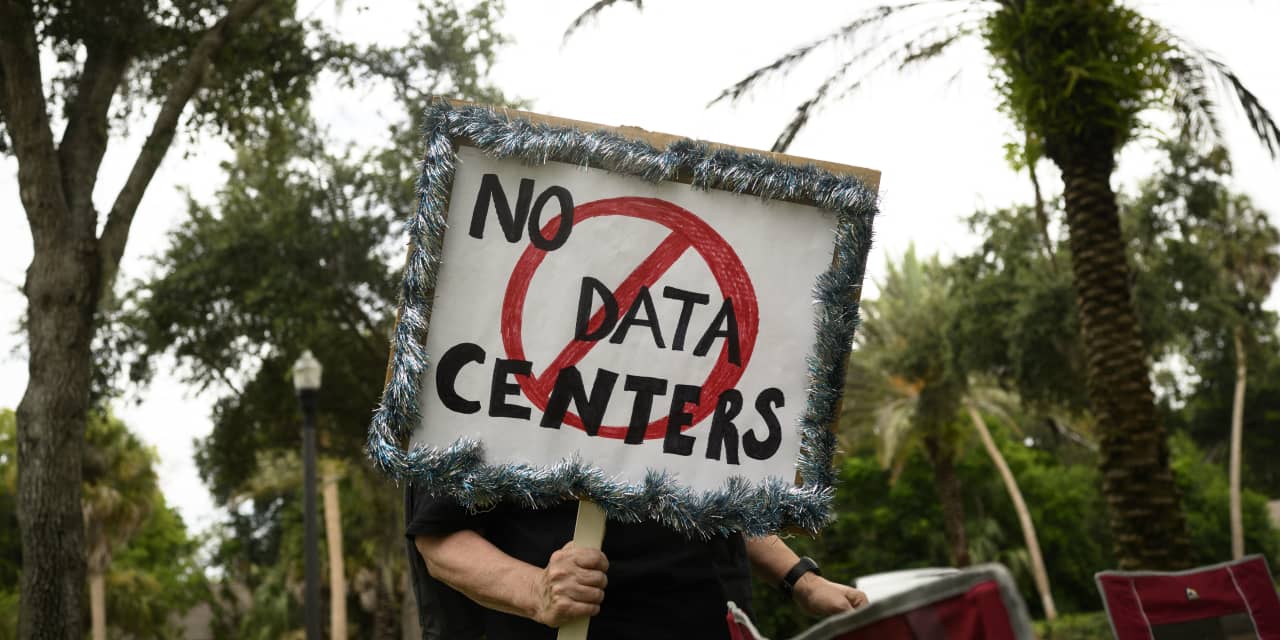
Data center utility stocks are running into a new political problem: voters are angry about electric bills, and MarketWatch columnist Jurica Dujmovic says the market is starting to separate companies paid directly by Big Tech from utilities trying to recover AI build-out costs through household rates.
Dujmovic wrote that the central question for power investors over the next two years is who pays for the new generation, transmission and grid upgrades needed by AI data centers. His view: companies with long-term contracts with tech customers look better protected, while regulated utilities depending on rate increases face a tougher election-year fight.
What does data center backlash mean for utility stocks?
It means investors may need to look past raw power demand and ask whether data-center costs are tied to a specific corporate customer or spread across ordinary ratepayers. A data center can help a utility if the customer is locked into paying for reserved power, but it can become a political liability if customers can walk away after utilities build expensive capacity.
The pressure is already showing up in power markets. The Energy Information Administration’s average retail revenue per kilowatt-hour measure showed U.S. electricity rates rose 7.1% in 2025, according to MarketWatch. Brookings also cited polling showing a plurality of voters across party lines view data centers as a direct threat to household energy costs.
In PJM, the large wholesale power market serving 13 states and 67 million people, wholesale power costs rose 76% year over year in the first quarter of 2026, according to E&E News. MarketWatch reported that Pepco customers in Washington, D.C., saw bills climb about $21 a month, with roughly half tied to capacity costs. The Natural Resources Defense Council estimated PJM households could face as much as $163 billion in added cumulative costs through 2033 if regulators spread data-center costs across all customers.
The issue has spilled into elections. MarketWatch cited Virginia Gov. Abigail Spanberger’s 2025 victory after she campaigned on making data centers pay their fair share. In New Jersey, Gov. Mikie Sherrill campaigned partly on freezing electric rates after a 20% price jump, and CNN exit polls found 87% of voters there considered electricity costs a problem. Georgia voters also elected two Democrats to the Public Service Commission, which sets Georgia Power rates.
States are now writing the backlash into policy. MarketWatch said more than 300 data-center bills were filed in more than 30 states in the first six weeks of 2026, citing MultiState. In New York, Gov. Kathy Hochul issued a July 14 order pausing permit applications for new data centers of 50 megawatts or more until an environmental review is finished or one year passes, according to Engineering News-Record.
Oregon’s POWER Act created a framework requiring data centers to carry more of their own costs, and the tariff that took effect in June raised Portland General Electric’s data-center rates by about 29% while cutting residential rates, according to Environment+Energy Leader.
At the federal level, MarketWatch reported that Amazon, Alphabet, Meta, Microsoft, OpenAI, Oracle and xAI signed the White House’s Ratepayer Protection Pledge, committing to build or buy their own power and cover infrastructure upgrades. A House bill to put parts of that pledge into law is moving through committee, according to CNBC.
Which power companies look better protected?
Dujmovic pointed to power producers with direct, long-term deals. Constellation Energy has 20-year power-purchase agreements with Microsoft for the restarted Three Mile Island reactor, now called the Crane Clean Energy Center, and with Meta for its Clinton plant in Illinois. Vistra announced 20-year agreements with Meta covering roughly 2.6 gigawatts from nuclear plants in Ohio and Pennsylvania. Talen Energy sells output from its Susquehanna nuclear plant to Amazon under a contract running into the 2040s.
The more exposed group, in Dujmovic’s analysis, is regulated utilities whose growth plans rely on regulators approving higher household bills. PowerLines said utilities requested $31 billion in rate increases in 2025 and another $9.4 billion in the first quarter of 2026, according to Fortune. Spotlight PA reported profits across a sample of 110 for-profit utilities rose from just under $39 billion in 2021 to more than $52 billion in 2024.
- MarketWatch’s five-part screen asks whether new infrastructure is funded by contracted customers or the general rate base.
- It checks whether large-load tariffs include minimum payments, collateral and exit fees.
- It weighs where the utility operates, especially in politically competitive PJM states.
- It asks how much of a five-year capital plan depends on unapproved rate cases.
- It separates contracted data-center demand from speculative forecasts.
This story draws on original reporting from MarketWatch.