Fed watchers split as Warsh keeps July rate plans under wraps
Kevin Warsh’s silence has left investors guessing as Fed officials and economists argue over whether a July rate hike is coming.
By Sal Moretti · Money Reporter
4 min read
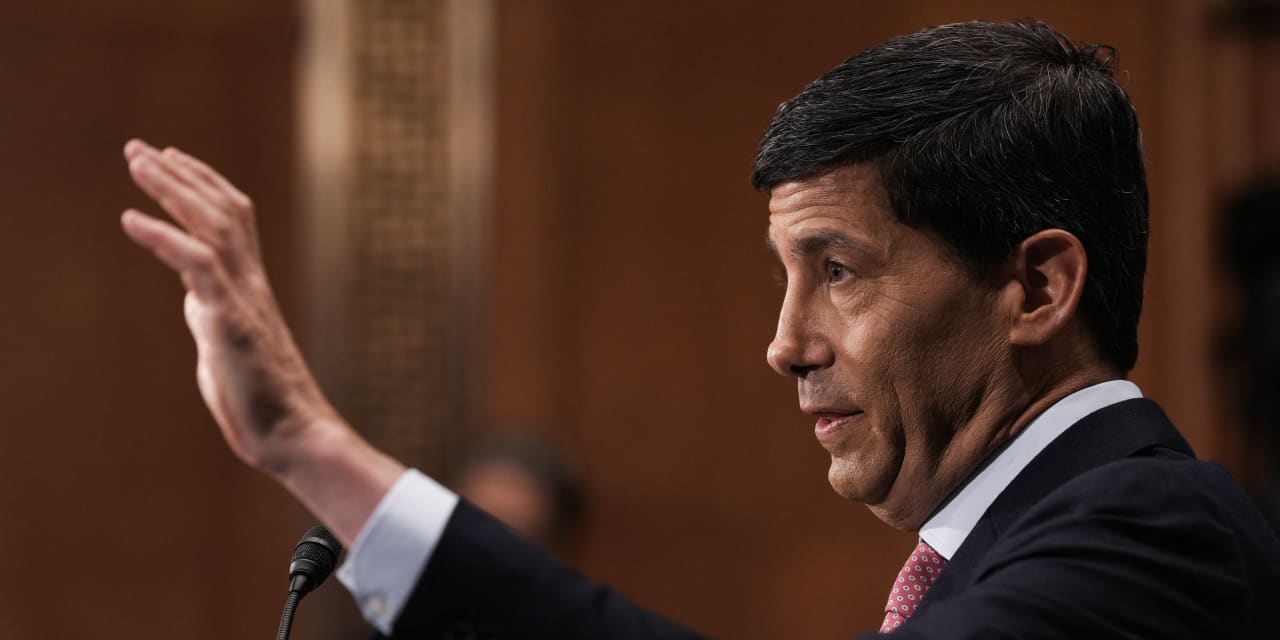
Federal Reserve Chair Kevin Warsh has left Wall Street guessing with days to go before this month’s interest-rate meeting, breaking with the recent habit of Fed leaders steering markets toward the likely outcome in advance.
MarketWatch reported that investors and analysts are weighing a messy set of signals: inflation has shown signs of easing, Warsh has not clearly pushed for tighter policy, and several Fed officials have made the case for higher rates.
Jeremy Schwartz, senior U.S. economist at Nomura, told MarketWatch that Warsh’s arrival has made the setup “tricky,” because past Fed leaders often gave markets a clearer read on whether to expect a hike or no move.
Derek Tang, co-founder of LH Meyer/Monetary Policy Analytics, told MarketWatch that investors remain uneasy because they do not know whether Warsh will deliver a surprise.
Warsh talks tough, without calling for a hike
Warsh spent two days testifying on Capitol Hill this week. According to MarketWatch, he said the Fed has “no tolerance” for elevated inflation and said the past five years of high inflation would become “a thing of the past.”
What he did not do was say he backs raising rates at the upcoming meeting.
Douglas Porter, chief economist at BMO Capital Markets, wrote in a client note cited by MarketWatch that Warsh’s congressional appearance brought “some heat but not a lot of new light” on the interest-rate outlook.
Other Fed voices have been more direct. Dallas Fed President Lorie Logan said in a Thursday speech that she currently believes somewhat higher rates would better balance the risks around the Fed’s two goals: strong employment and low inflation.
Cleveland Fed President Beth Hammack, writing on LinkedIn, said she has heard from businesses calling for rate hikes to fight inflation and from consumers struggling with high prices.
Former Richmond Fed President Jeffrey Lacker also argued for immediate action. In an interview with journalist Kathleen Hays published on her Substack, Central Bank Central, Lacker said the Fed should raise rates at this meeting and suggested Warsh could build a “center hawk” bloc.
The committee is divided
Aditya Bhave, head of U.S. economic research at BofA Global Research, told MarketWatch that Warsh would have enough support on the committee to raise rates if he chose that path.
The Fed’s June “dot plot” showed a sharp shift toward tighter policy, according to MarketWatch. Nine officials projected at least one rate increase this year, while six projected more than one. Three months earlier, no officials had forecast a hike.
Bhave said he believes five of the 12 voting members on the Fed’s rate-setting committee favor increases.
There is still a strong case for waiting. MarketWatch reported that the same dot plot showed nine officials who believe the Fed can afford patience on inflation. New York Fed President John Williams said this week that he sees several signs inflation has peaked.
Markets had leaned more toward a July hike after Fed governor Christopher Waller said higher rates could be needed if inflation stayed high. But after cooler-than-expected inflation data, traders settled closer to the view that July may be too soon, according to MarketWatch.
Bhave expects Warsh to wait until September, then raise rates three times by year-end. Derivatives traders see a better than 50% chance of a hike at the September meeting, MarketWatch reported.
Many economists expect no increase this year. Guy LeBas, chief fixed-income strategist at Janney Montgomery Scott, told MarketWatch that for Warsh, forceful anti-inflation language without a hike could be the most favorable outcome if price pressures keep easing.
Marc Giannoni, chief U.S. economist at Barclays, told MarketWatch that his baseline forecast has the Fed holding rates steady through the end of 2027, with inflation moderating in the second half of the year.
Schwartz said Nomura sees Warsh as more inclined to hold rates steady or move lower, pointing to his comments on disinflation and productivity. Schwartz told MarketWatch that Warsh has not signaled he is inclined to raise rates.
This story draws on original reporting from MarketWatch.