Gas prices outrun oil as refinery margins flare up
MarketWatch reports gasoline is rising faster than crude as the crack spread widens amid refinery bottlenecks tied to Russia, Ukraine and the U.S.-Iran war.
By Frankie Delgado · News Reporter
3 min read
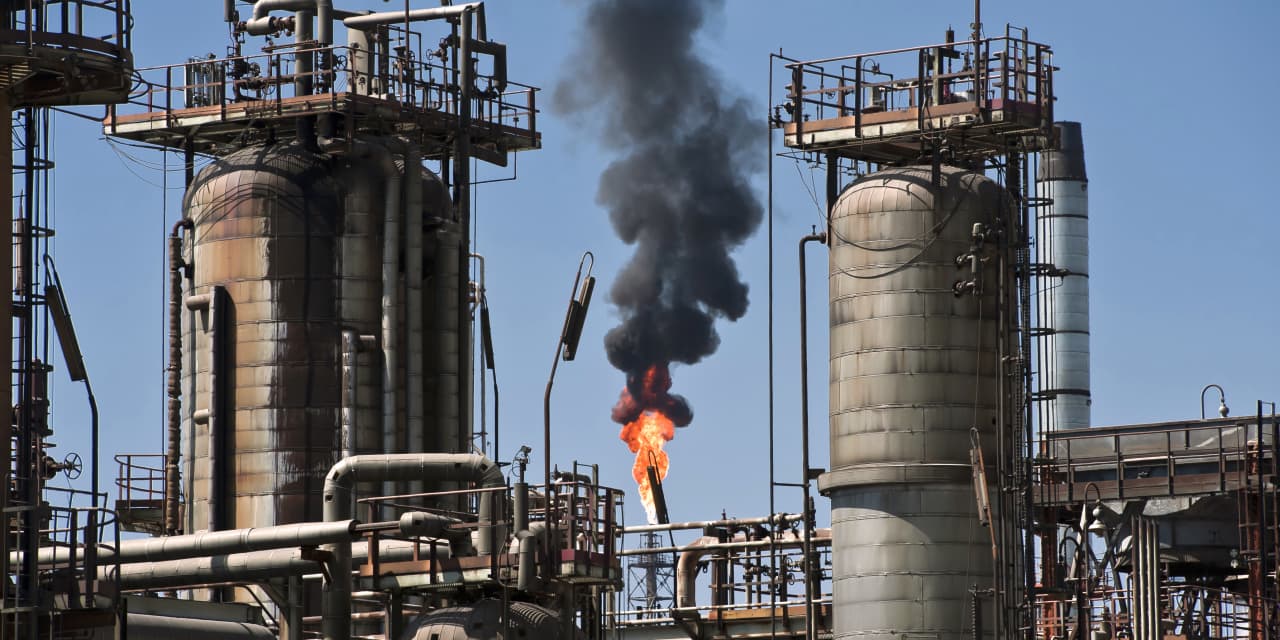
Gasoline is getting pricier faster than crude oil, and MarketWatch points to a trader term with an awkward name: the crack spread.
The crack spread is the gap between the price of crude oil and the petroleum products made from it, including gasoline, diesel and jet fuel. According to MarketWatch, that spread has widened sharply during the latest turmoil around the U.S.-Iran war, helping keep pressure on drivers even when crude prices have pulled back at times.
Patrick De Haan, head of petroleum analysis at GasBuddy, told MarketWatch that Americans are likely to spend more on gasoline relative to the oil contained in it. The reason, according to the report, is that refiners are earning more from turning crude into fuel than they have in years.
Refining is the squeeze point
Crude oil cannot go straight into a gas tank. Refineries process it into usable fuels, and MarketWatch reports that the bottleneck is showing up in that step rather than only in crude supply.
The Russia-Ukraine war, which began in February 2022, has damaged global refining capacity, according to a Truist report cited by MarketWatch. Truist said Russian crude runs dropped to a 22-year low of 3.8 million barrels a day in June.
Russia’s ban on diesel exports has added to the strain, the report said, limiting how much fuel reaches global markets. De Haan told MarketWatch the effect is serious because Russia produces 1 in 9 barrels of diesel.
The U.S.-Iran war has added another layer. The International Energy Agency said in its July oil-market report, cited by MarketWatch, that Middle East export refineries had not yet restarted despite earlier de-escalation talks.
That has created what the IEA described as a disconnect between well-supplied crude markets and tight product markets. In plain English: there may be crude available, but the world is having a harder time turning enough of it into gasoline and other fuels.
Pump prices feel the pinch
MarketWatch reported that the national average for gasoline has climbed back above $4 a gallon since hostilities resumed this month. That is the highest level since prices peaked above $4.50 a gallon in May, according to the report.
FactSet data cited by MarketWatch showed gasoline futures up 22% from their June low and trading less than 10% below their May 18 closing high. Brent crude futures rose 24% from their recent low, but remained 22% below their May 4 high.
That difference helps explain why pump prices can stay stubborn even when oil prices appear to ease. MarketWatch reported that as long as refining capacity remains tight, extra crude supply may do less to lower gasoline prices than it would under normal refining conditions.
The Strait of Hormuz remains part of the story, but not only because of crude oil. De Haan told MarketWatch that while many Americans focus on oil moving through the strait, major newer Middle Eastern refineries also are blocked from exporting gasoline, diesel and jet fuel.
The pressure may not stop at the gas station. GlobalData TS Lombard wrote in a client note cited by MarketWatch that a slowing economy, combined with the rally in crack spreads, could leave equities stalled in the near term.
This story draws on original reporting from MarketWatch.