Goldman sees oil above $120 if Hormuz squeeze drags on
Goldman Sachs says Brent could top $120 next quarter if Strait of Hormuz disruption lasts, though its base case still assumes a pullback.
By Frankie Delgado · News Reporter
3 min read
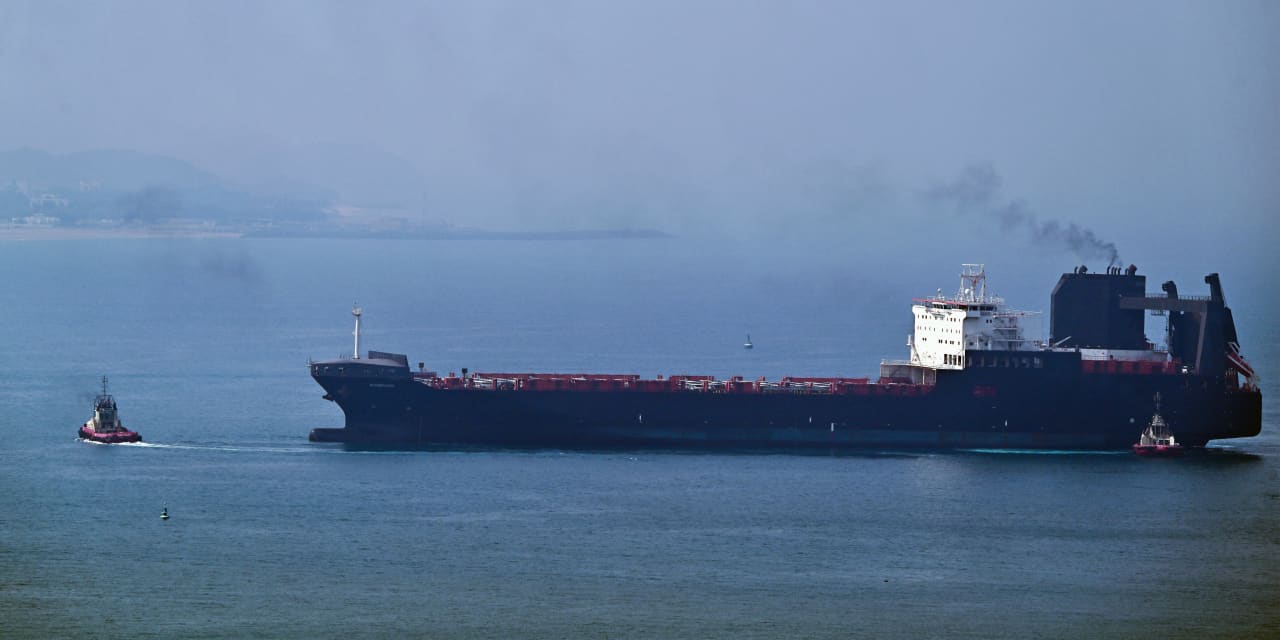
Oil traders have a new danger number on the board: $120 a barrel.
Goldman Sachs analysts led by Daan Struyven said in a note published Monday night that Brent crude could climb past that level by next quarter if disruption around the Strait of Hormuz fails to ease. In the bank’s more severe scenario, Brent would then average $100 a barrel next year if the waterway stays disrupted through 2027.
The call comes as the Strait of Hormuz, a key shipping route for Persian Gulf crude, is under heavy pressure from renewed U.S.-Iran tensions. Goldman said Gulf flows have dropped to less than 45% of their pre-war level, while traffic through the passage is again close to halted.
September Brent futures fell almost 1% Tuesday to $88.45 a barrel, according to Dow Jones Market Data. Even after that dip, the contract was still up 22% since the start of the month.
Cease-fire relief did not last
Oil initially moved lower after Washington and Tehran signed a memorandum of understanding extending a cease-fire for 60 days. Prices rose again after the two sides resumed strikes, according to MarketWatch’s report on Goldman’s analysis.
Goldman’s severe case assumes Persian Gulf output does not recover until December of next year, with help from expanded pipeline capacity. That is the path that could put Brent above $120 and keep prices elevated into the following year.
The bank’s central forecast is calmer. Goldman expects Brent to average $80 a barrel in the fourth quarter of 2026 and $75 in 2027, provided tensions ease before the end of this year.
Still, the analysts said risks are tilted toward higher prices. They pointed to possible shipping disruption in the Strait of Hormuz and the Red Sea, as well as potential damage to energy infrastructure tied to the wars in Iran and between Russia and Ukraine.
China’s oil appetite is a key brake
Goldman also flagged reasons the market is not as tight as the headline disruption might suggest. Visible oil inventories are down by 300,000 barrels a day from a year earlier, the analysts said, but demand pressure has eased in other ways.
The bank said Middle Eastern supply has become better able to adjust to an effective closure of the route. It also said the market has grown more comfortable with lower inventories, while demand for alternatives to oil has increased.
China is a major part of that picture. Goldman said the drop in crude import demand is especially pronounced there. Seaborne crude imports into China fell by 4.7 million barrels a day in June from a year earlier, a decline the analysts linked to weaker refinery activity and softer demand for products such as gasoline.
The analysts said China’s crude imports do not have to bounce back right away, particularly if prices rise further. Goldman pointed to estimated Chinese oil inventories of about 2 billion barrels and the country’s ability to replace some oil demand with coal and power.
For now, Goldman’s base case still leans toward de-escalation and lower average prices next year. Its warning is that a prolonged Hormuz disruption could turn an already hot oil market into a far more expensive one.
This story draws on original reporting from MarketWatch.