Jamie Dimon says stocks and long Treasurys look too pricey
The JPMorgan Chase chief warned that investors may be too relaxed about wars, deficits, China tensions and the AI boom.
By Sal Moretti · Money Reporter
3 min read
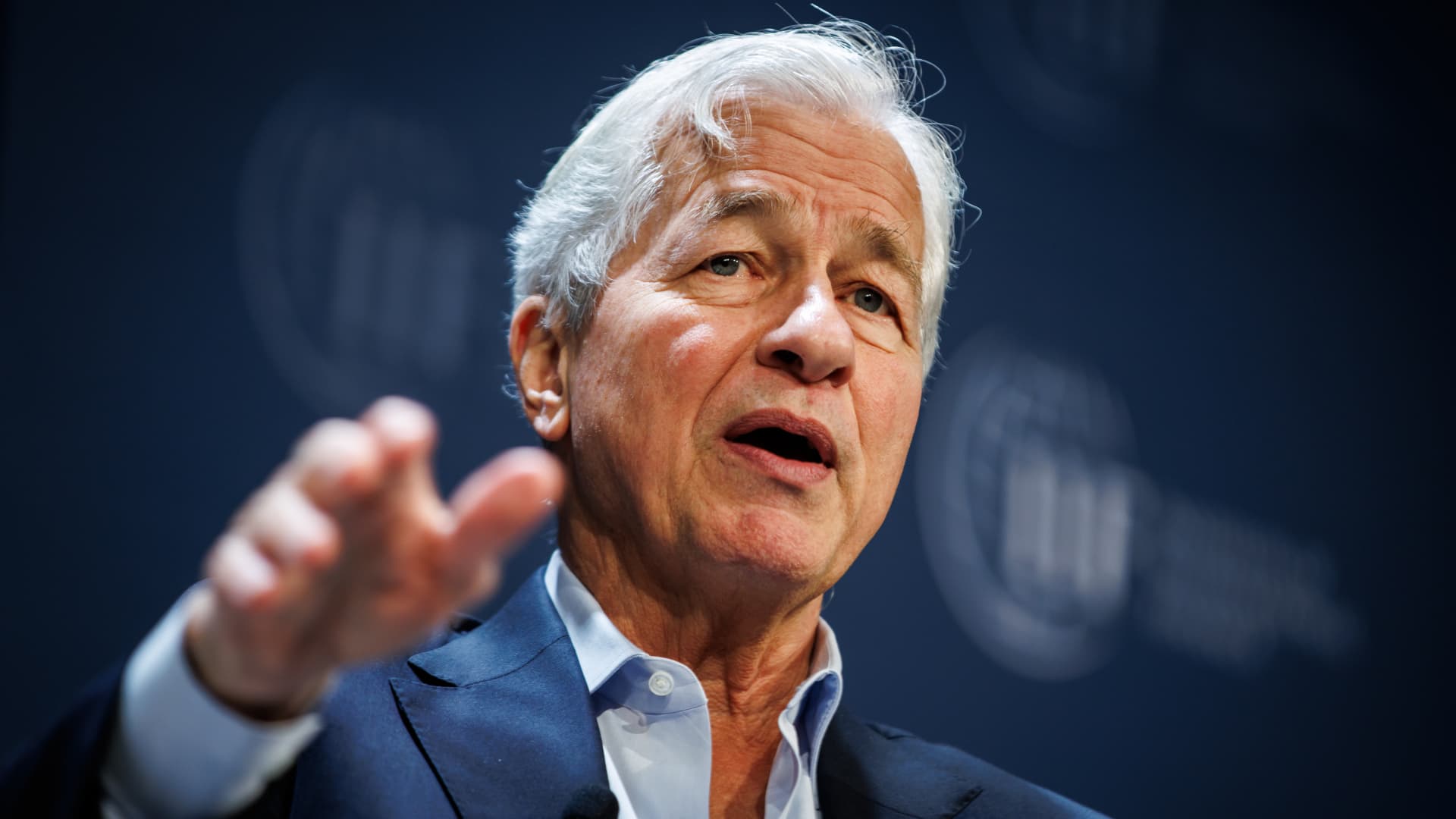
Jamie Dimon is looking at today’s markets and keeping his wallet shut.
The JPMorgan Chase chief executive said in an interview with Wilfred Frost on The Master Investor Podcast that he would not buy the broad stock market or long-dated U.S. Treasurys at current prices, according to CNBC.
Dimon said investors may be giving too little weight to a pileup of risks that could jolt the global economy. He cited the wars in Ukraine and the Middle East, tensions between Washington and Beijing, and rising military spending while government deficits keep climbing.
“I do think those risks are probably bigger than other people think,” Dimon said, according to CNBC.
Asked whether markets are too calm about the possibility of a major shock, Dimon said it is hard to know what investors have already priced in. “It’s possible something’s baked in, but what’s not baked in is what actually happens,” he said.
Markets have been shrugging off trouble
Dimon’s warning lands after investors have spent much of the year looking past wars, tariffs and other disruptions. CNBC reported that the S&P 500 has gained nearly 10% this year, helped by steady consumer spending, cooler inflation and enthusiasm around artificial intelligence.
JPMorgan Chase and other large banks also reported strong quarterly results last week, CNBC said, with trading and investment banking revenue helping to lift performance. Those results reinforced the view among some investors that the U.S. economy has handled recent geopolitical stress better than expected.
Dimon, who runs the largest bank in the world by market value, has often warned publicly about risks he sees building in the economy, CNBC noted.
In the interview, he also acknowledged that the global economy has become more durable than in past decades because it depends less on energy. Still, he said resilience does not rule out a sharp turn if enough pressure builds.
“You may need more straws in the camel’s back to cause that tipping point,” Dimon said. “Even this current war starting up again, maybe that’s not enough to do it.”
Deficits, rates and the AI rush
Dimon said persistent U.S. budget deficits will become a problem and could push interest rates higher. He said investors sometimes called bond vigilantes may eventually demand more compensation to fund the government’s debt.
On long-dated Treasurys, Dimon gave a flat answer when asked whether he would buy them: “Personally, no.”
He said that even if inflation returns to the Federal Reserve’s 2% target, the 10-year Treasury yield should probably sit around 4% to 4.5%, according to CNBC. Dimon added that he sees limited room for Treasury prices to rise from here.
His view on stocks was also cautious. Dimon said he might buy a single company if he considered it a strong investment, but he would not buy the wider market at current valuations.
Dimon also weighed in on artificial intelligence, comparing the current investment surge to the internet’s early years. He said the money pouring into AI is substantial and that the technology will probably pay off overall, as the internet did.
But Dimon warned that the winners may not be the obvious early leaders. He pointed to Yahoo and Netscape, which faded after the internet boom, while companies such as Google and Facebook emerged later.
“Will it pay off the way you expect and the timetable you expect? Definitely not,” Dimon said.
This story draws on original reporting from CNBC.