Jensen Huang backs open models as Washington weighs AI restrictions
Nvidia’s CEO used his first X post to share a tech-industry letter opposing broad limits on open-weight AI models.
By Sal Moretti · Money Reporter
3 min read
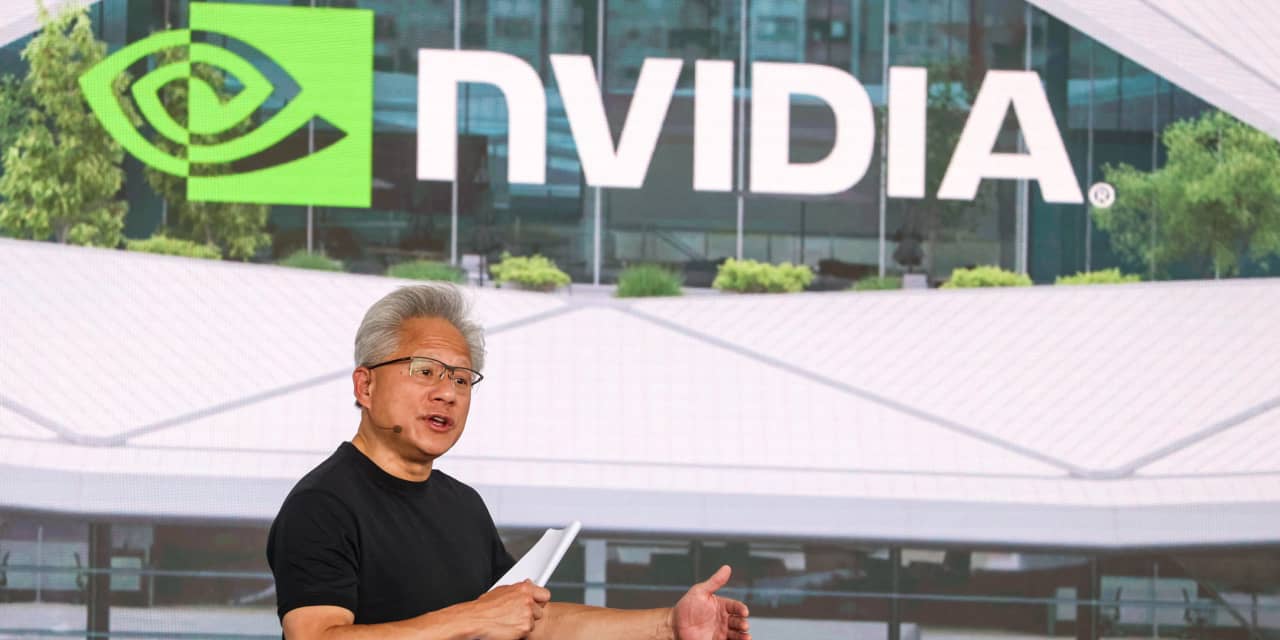
Jensen Huang open models became the tech fight of the day Friday, as Nvidia’s chief executive used his first post on X to push back against possible Washington limits on open-weight artificial intelligence.
Huang shared a letter signed by Nvidia and other major technology companies that argues policymakers should avoid broad restrictions on open models. In the post, Huang wrote that the world needs both advanced closed models and advanced open models.
The move lands as officials and companies debate how to treat AI systems whose underlying weights can be released for others to use, modify and run on their own computers.
What are open-weight AI models?
Open-weight AI models publish the numerical values a system learns during training, allowing developers to download, customize and host the model locally. Closed models, including systems made by OpenAI and Anthropic, keep key code and training materials proprietary, according to MarketWatch.
The letter backed by Nvidia says open weights can widen access to AI, encourage more uses and lower costs for customers. It also argues that open models give users more control over their technology and reduce dependence on a single vendor.
Among the companies listed as signatories were Meta Platforms, Microsoft, Palantir Technologies and IBM, according to MarketWatch. OpenAI, Anthropic and Google were not listed as signatories.
Why is Washington looking at open AI models?
The policy fight has sharpened after the release of Chinese open-weight models, including Moonshot AI’s Kimi K3, which MarketWatch reported came out last week. Those models have raised concerns in the U.S. about possible intellectual-property theft.
White House science and technology adviser Michael Kratsios said Wednesday on X that the government had obtained information indicating Kimi K3 was distilled from Anthropic’s Fable model. MarketWatch reported no response from Moonshot AI in connection with that allegation.
Distillation is the practice of using one model’s outputs to train or improve another model. The industry letter said the technique is widely used for improvement, testing and validation, and argued that concerns about abuse should be handled through targeted legal and commercial rules rather than sweeping curbs.
U.S. Treasury Secretary Scott Bessent has warned China about possible sanctions involving AI model “theft,” CNBC reported, according to MarketWatch.
Who else backed the letter?
The letter drew public support from Elon Musk, who said on X that it had his full support, though neither Tesla nor SpaceX signed it, according to MarketWatch. OpenAI CEO Sam Altman also expressed support on X, even as OpenAI did not sign the letter.
Huang’s position fits his broader criticism of technology restrictions. He has repeatedly argued that U.S. chip export controls on China will not succeed, MarketWatch reported.
The U.S. has limited sales of advanced AI processors from Nvidia, Intel and AMD in an effort to preserve its technology lead. In May, Huang said Chinese chip maker Huawei was flourishing while U.S. companies were absent from the market, according to remarks cited by MarketWatch.
This story draws on original reporting from MarketWatch.