Kevin Warsh rates warning flashes from Treasury market
Treasury yields have jumped as oil and inflation fears test whether the Fed will raise rates under Kevin Warsh.
By Sal Moretti · Money Reporter
3 min read
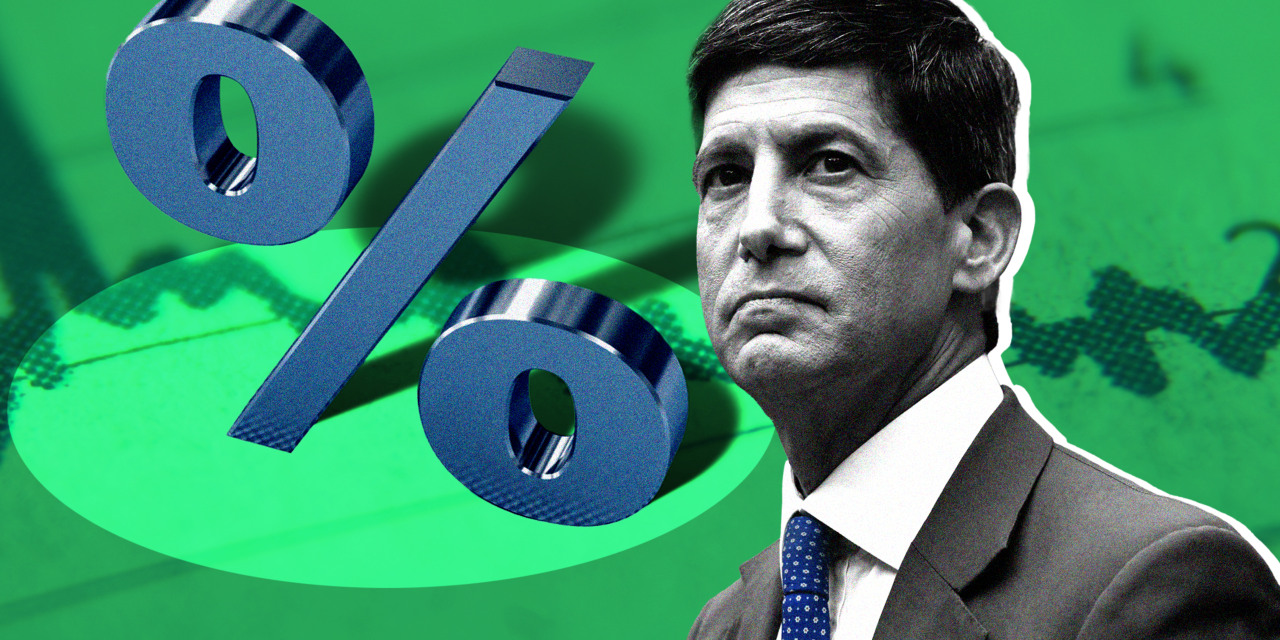
The Kevin Warsh rates question is suddenly parked in the middle of the bond market. U.S. Treasury yields have climbed as investors brace for the Federal Reserve’s next decision, with inflation worries sharpened by renewed Iran war hostilities and higher oil prices, according to MarketWatch.
The benchmark 10-year Treasury yield was at 4.678% on Friday, near its highest levels of the past decade, MarketWatch reported. It has risen more than 30 basis points since the end of June, when investors had been more hopeful about lasting calm in the Persian Gulf. Bond yields rise when prices fall.
A short-lived rally after Warsh’s first Fed news conference in June has also faded. The 10-year Treasury matters far beyond Wall Street because it helps set mortgage rates and borrowing costs across consumer lending.
Why are Treasury yields rising before the Fed decision?
Investors have been selling Treasurys as oil prices moved higher, with global crude briefly topping $100 a barrel after fresh U.S.-Iran war tensions in July, according to MarketWatch. Higher energy costs can feed inflation, which can push the Fed toward higher interest rates.
Paul Christopher, head of global investment strategy at the Wells Fargo Investment Institute, told MarketWatch that the bond market has a message for the Fed. He said uncertainties are building and investors want to be paid for taking that risk.
The Fed cannot control oil flows from the Persian Gulf or directly cut fuel prices. Gas and diesel recently moved back above $4 a gallon and $5.20 a gallon, respectively, according to GasBuddy. What the central bank can do is explain how it plans to bring inflation back toward its 2% yearly target.
Warsh has said he wants a less talkative Fed, with less advance signaling about rate plans, MarketWatch reported. That has left traders facing Wednesday’s policy decision with less guidance than they had grown used to.
The CME FedWatch Tool showed on Friday that traders saw a 62% chance the Fed would hold rates steady Wednesday and about a 38% chance of an increase. A week earlier, after cooler June inflation data, the chance of a hike had been closer to 13%.
Gennadiy Goldberg, head of U.S. rates strategy at TD Securities, told MarketWatch that the shift shows how worried markets are about inflation and whether the Fed will act on Warsh’s stated goal of lower inflation.
What does this mean for bonds, stocks and borrowers?
Higher rates usually hurt fixed-income investments because older bonds with lower yields become less attractive. They can also weigh on stocks by raising borrowing costs for companies and households, which can slow spending.
David Rosenberg, founder and president of Rosenberg Research & Associates, wrote in a Friday note cited by MarketWatch that the latest U.S.-Iran war chapter is a complication for duration assets. He also pointed to competition from tech-related corporate debt issuance.
Rosenberg said he moved out of a long position in 30-year bonds and into shorter-duration U.S. debt after the trade did not perform as expected. The 30-year Treasury yield has recently stayed above 5%, MarketWatch reported.
Barclays analysts expect the U.S. budget deficit to be roughly $2 trillion in 2026, with Treasury issuance helping fill the gap. Moody’s Ratings separately said hyperscale technology companies are expected to spend nearly $800 billion this year and almost $1 trillion in capital expenditures in 2027, with soaring spending, leverage and off-balance-sheet commitments threatening credit quality.
The policy-sensitive 2-year Treasury yield also moved above the Fed’s 3.75% upper end of its overnight target range. It was near 4.328% Friday, a level MarketWatch said signaled anxiety about possible rate hikes.
Stocks ended the week lower. The Dow Jones Industrial Average slipped 0.4%, the S&P 500 lost 0.6%, and the Nasdaq Composite fell 2.1%, according to MarketWatch and Dow Jones Market Data. The Nasdaq finished 7.8% below its early-June record close.
This story draws on original reporting from MarketWatch.