Lettuce pullback hits restaurants as cyclospora probe continues
CDC says at least 6,700 people have been sickened as officials examine Mexican-sourced Taylor Farms iceberg lettuce.
By Sal Moretti · Money Reporter
3 min read
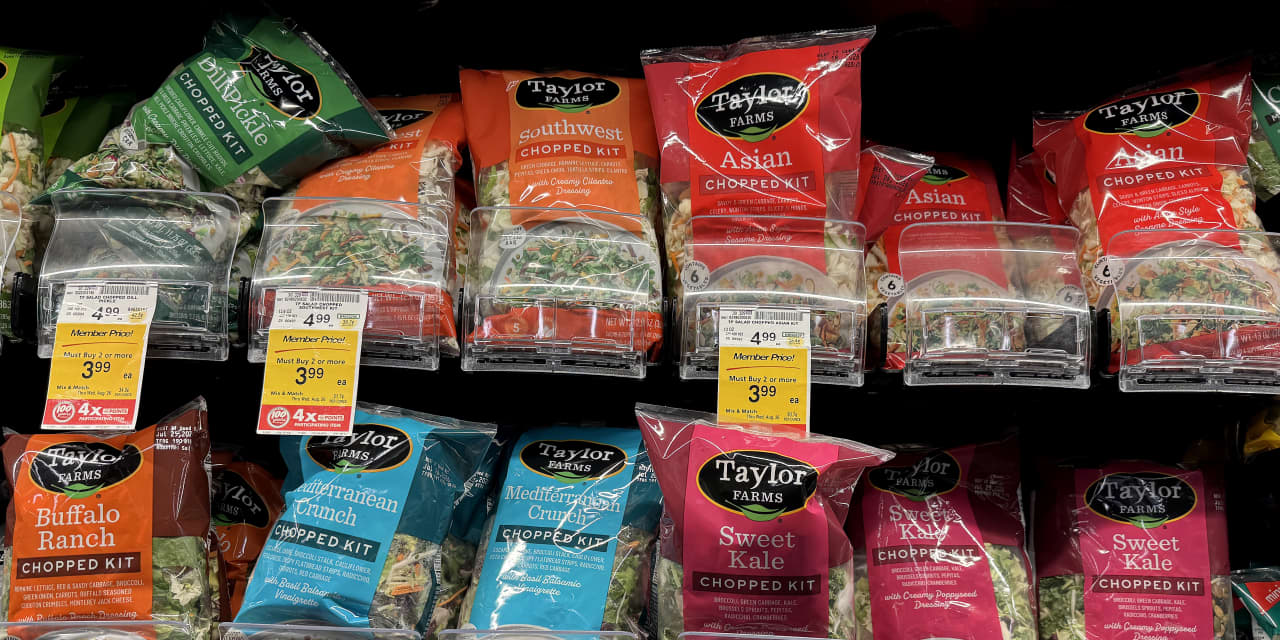
Salad is suddenly a harder sell as federal officials continue to investigate a cyclospora outbreak that the Centers for Disease Control and Prevention says has sickened at least 6,700 people.
Health officials have focused on iceberg lettuce supplied by Taylor Farms and sourced from Mexico. Taylor Farms has recalled that lettuce while the investigation continues, and federal officials have advised consumers not to eat the affected product.
The uncertainty is now spilling into shopping carts, restaurant kitchens and Wall Street. Some consumers are avoiding lettuce and packaged greens at grocery stores and restaurants while they wait for a clearer answer on what caused the outbreak.
Ernest Baskin, chair of the food, pharma and healthcare department at St. Joseph’s University in Philadelphia, told MarketWatch that some shoppers are seeking local lettuce when it is available and affordable. He said the lack of a confirmed final source leaves consumers casting a wider net if they want to reduce risk.
Restaurant stocks take a hit
Shares of several chains tied to salads, bowls and fresh toppings fell Monday as investors reacted to the still-open investigation.
Cava Group closed down 7.8%, Chipotle Mexican Grill dropped 3.8% and Sweetgreen fell 6%, according to MarketWatch. Yum Brands, Taco Bell’s parent company, slipped 0.37%, while Jack in the Box declined 1.87%.
Foot traffic data also showed a sharp move at Taco Bell. Placer.ai, which tracks visits to retail and restaurant locations, said U.S. traffic at Taco Bell on Friday was 18.9% below the chain’s average Friday so far this year.
Placer.ai said Monday that visits to Taco Bell dropped after the Food and Drug Administration and CDC named the chain in the cyclosporiasis investigation. The firm said national traffic initially fell by low single digits compared with year-to-date weekday averages, then dropped into the high teens late last week.
Taco Bell did not immediately respond to MarketWatch’s request for comment. The company has said it removed all affected Taylor Farms lettuce from its restaurants.
At Chopt, a privately held salad chain, Placer.ai said Friday traffic was 14.3% below its typical Friday level this year. Chipotle visits were down 6.9%, while Cava was down 4.2%.
Cava and Sweetgreen did not immediately respond to requests for comment, according to MarketWatch. Laurie Schalow, Chipotle’s chief corporate affairs and food-safety officer, said the company is monitoring the investigation and added: “At this time, we don’t believe the ingredients we source are associated.”
Recall focus remains on Taylor Farms lettuce
Federal regulators last week identified a connection between Taco Bell restaurants in five states and iceberg lettuce from one supplier, later confirmed as Taylor Farms, according to MarketWatch. Taco Bell had already removed lettuce from menus in the affected states.
Taylor Farms, a large privately held produce company based in Salinas, California, recalled iceberg lettuce from central Mexico. The company supplies several major restaurant and grocery chains.
Chipotle has said it does not serve shredded iceberg lettuce and that its other greens are not sourced from Mexico, according to MarketWatch. Jack in the Box told restaurants last week to remove potentially affected lettuce and replace it with greens from a domestic facility.
The investigation hit a confusing turn when a lab result that had indicated contaminated Taylor Farms lettuce was later determined to be a false positive. Taylor Farms said the FDA had apologized for the error.
The FDA wrote Monday on X that the false-positive sample did not change the agency’s outbreak investigation or the epidemiological evidence supporting Taylor Farms’ voluntary recall.
Cara Cuit, a health psychologist and associate professor of human ecology at Rutgers University, told MarketWatch that outbreaks can expose how concentrated the food supply chain is. She said past major foodborne outbreaks have led some consumers to change eating habits, though those changes have not typically lasted.
This story draws on original reporting from MarketWatch.