Mexican cattle imports restart as beef prices stay near records
The USDA will reopen one border port to Mexican cattle on Aug. 24, but analysts told MarketWatch shoppers may wait until 2028 for relief.
By Frankie Delgado · News Reporter
3 min read
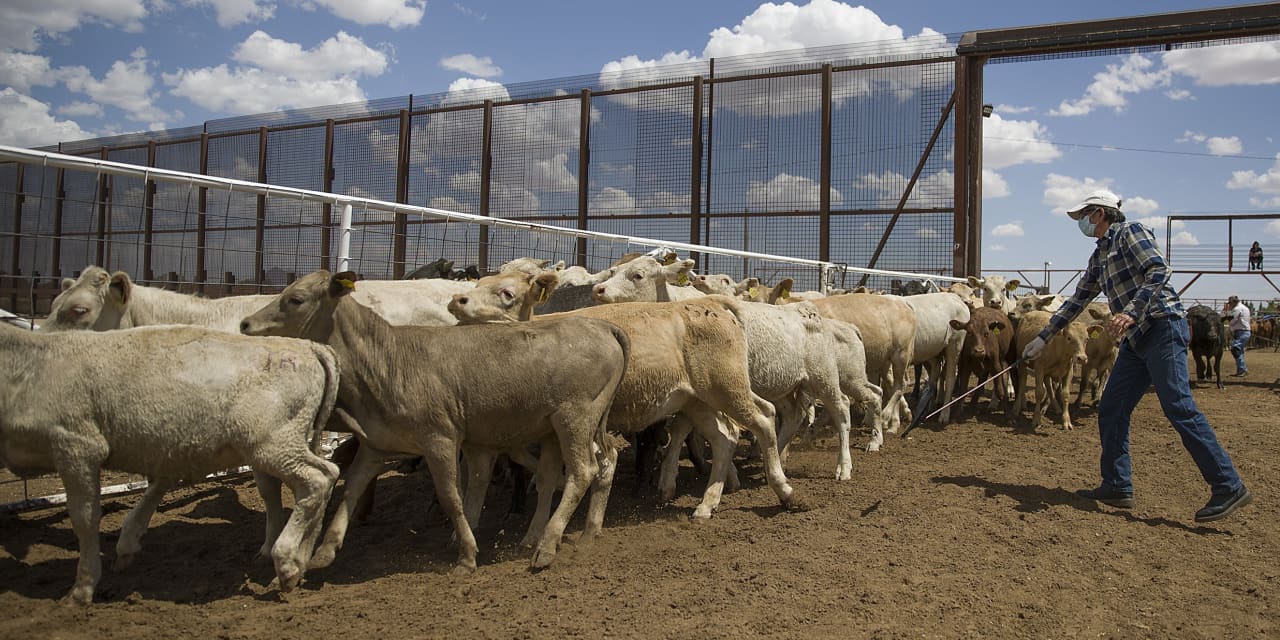
Mexican cattle imports are set to resume through a U.S. border port in late August, the Agriculture Department said, giving the beef market a new supply valve while grocery prices remain close to record highs.
The USDA said Friday it will conditionally reopen the port at Douglas, Ariz., on Aug. 24 for cattle coming from Mexico. The move follows a suspension that began May 11, 2025, when the department halted live-animal imports through southern ports because of the spread of New World screwworm in Mexico.
The reopening is limited. The USDA described it as a phased restart and said Sonora and Chihuahua have shown they can prevent the parasite from spreading. The agency told MarketWatch it would not comment beyond its release.
New World screwworm is a flesh-eating parasite that can infest livestock. The USDA confirmed its presence in the United States less than two months before the reopening plan, marking the first such U.S. confirmation since the 1960s, according to MarketWatch.
Will Mexican cattle imports lower beef prices?
Analysts quoted by MarketWatch said the border move may help supply, but shoppers should not expect a quick drop at the meat case. David Maloni, senior director of commodities at ArrowStream, said a full return to ordinary Mexican cattle flows is probably the quickest available way to add beef supply, but he does not expect meaningful consumer relief until 2028 at the earliest.
The pressure is easy to spot. U.S. cattle numbers were pegged in January at a 75-year low, according to USDA data cited by MarketWatch. The U.S. city average price for ground beef hit a record $6.899 a pound in April, according to Bureau of Labor Statistics data via FRED.
Mexican cattle were a sizable piece of the supply chain before the shutdown. U.S. imports from Mexico totaled 1.25 million head in 2024, USDA data show. Maloni said the phased restart is likely to hold down near-term volumes, and that a full return to normal import levels may not happen until late 2027.
Mackenzie Johnston, a fifth-generation Nebraska cattle rancher and content director at Standard Grain, told MarketWatch she believes the Trump administration is reopening the border to try to push down retail beef prices. She said the limited restart would not bring enough animals into the country to make a major dent in prices.
The White House disputed Johnston’s claim. Spokeswoman Anna Kelly told MarketWatch that President Donald Trump’s administration has put policies in place to support economic prosperity while protecting the country from New World screwworm.
Who gets help first?
Kevin Kester, a California rancher and former president of the National Cattlemen’s Beef Association, told MarketWatch the first beneficiaries are likely to be feedlots in Texas and California, where cattle are fattened before slaughter. He said more cattle would help those feedlots keep operating, and later help processing plants as well.
U.S. cattle herds have fallen sharply over two decades, dropping to about 94 million head in 2026 from roughly 105 million in 2006, according to USDA figures cited by MarketWatch. Close to 12% of this year’s U.S. cattle and calves were in large feedlots, the USDA data show.
The futures market reacted quickly. Maloni told MarketWatch cattle prices closed lower Monday partly because of the USDA reopening news and partly because recent data showed a slight rise in the U.S. herd. September feeder cattle futures fell 2.8% Monday to $3.32 a pound in Chicago, then edged higher Tuesday.
Johnston said lower prices would hurt the cattle market in the near term, especially as many producers prepare to sell calves over the next few months.
This story draws on original reporting from MarketWatch.