Micron leads chip rebound as Chinese AI fears flip into fuel
Memory and storage stocks jumped Tuesday as analysts said open-source Chinese AI models may drive more demand for chips, not less.
By Sal Moretti · Money Reporter
3 min read
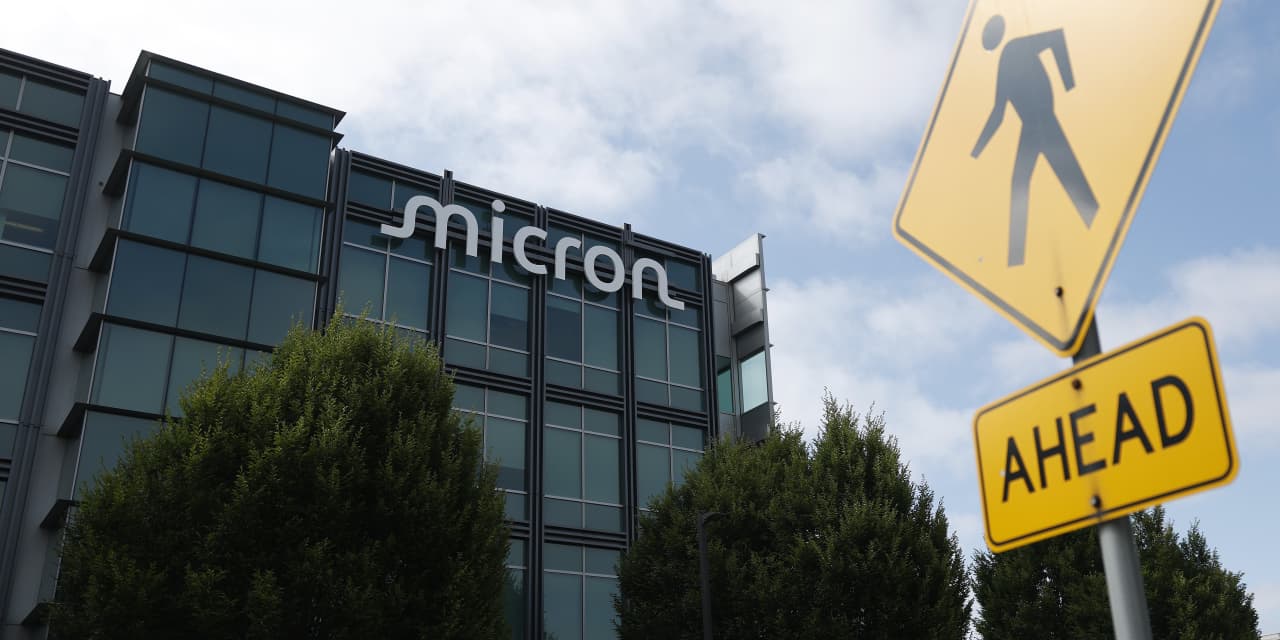
Micron Technology surged Tuesday as Wall Street warmed to a fresh idea in the AI trade: cheaper Chinese models could mean more demand for memory chips, according to analysts cited by MarketWatch.
Shares of Micron were up 11.5% in Tuesday afternoon trading, while Sandisk rose 12.4% and SK Hynix’s American depositary receipts gained 12.8%, according to MarketWatch. Storage names joined the rally, with Western Digital up 11.6% and Seagate Technology higher by 11.3%.
The bounce came after a rough stretch for chip stocks. MarketWatch reported that last week’s selloff pulled the PHLX Semiconductor Index into bear-market territory. By Tuesday afternoon, the index was up 4.8% and on pace for its best day in just over a month, according to Dow Jones Market Data.
Chinese AI turns from scare to catalyst
The latest spark is Kimi K3, an open-source AI model from China’s Moonshot AI. MarketWatch reported that the model has performed competitively against leading closed U.S. models on some benchmarks despite financial and technological limits.
That success revived a familiar market worry: whether AI developers are spending too much on hardware and computing power. Nancy Tengler, chief executive of Laffer Tengler Investments, compared the response to last year’s selloff tied to China’s DeepSeek model, which she said created a “tremendous opportunity” for investors who bought after the drop.
Bank of America analyst Vivek Arya said in a Monday note that China’s latest open-source model releases support his bullish view on memory and on Micron’s stock, according to MarketWatch.
Arya said Chinese companies are charging developers far less than Western rivals for access to open models. He said that reflects business-model choices rather than lower hardware costs.
Why memory still matters
Arya’s key point, as reported by MarketWatch, is that efficiency gains do not erase the need for memory. He said Chinese model makers may be reducing compute intensity through different techniques, but the models still require the same amount of memory or more as model weights and active parameters rise.
Kimi K3 has 2.8 trillion parameters, with 50 billion active, according to MarketWatch. Parameters are the variables AI models use to learn and identify patterns during training.
Arya also said each download of an open-weight model creates another user who needs memory to run it on their own hardware. That dynamic differs from closed models, where users access the system without downloading and running it themselves.
He said Chinese models benefit from efficient architecture and lower physical-infrastructure costs, including electricity, labor and land. Arya also pointed to government subsidies and free cash flows at Chinese cloud-service providers such as Alibaba and Baidu as factors behind cost differences.
Micron’s China risk gets a closer look
Arya said he does not see ChangXin Memory Technologies, a Chinese DRAM maker expanding capacity, as a direct threat to Micron, according to MarketWatch.
He said ChangXin does not focus on high-bandwidth memory, the type in strong demand from AI chip makers such as Nvidia. Micron, SK Hynix and Samsung Electronics are among the world’s leading DRAM producers, he said. Arya also said ChangXin’s ability to sell to U.S. customers remains unclear.
Hendi Susanto, a portfolio manager at Gabelli Funds, said memory stocks have already risen sharply in recent months, but the investment case remains compelling. He said demand is expected to keep outstripping supply through next year, supporting pricing and earnings.
Brian Mulberry, chief market strategist at Zacks Investment Management, said chip valuations have fallen to levels where investors can again participate in potential upside tied to expected earnings-per-share growth. He also said earnings from manufacturers outside technology are helping sentiment toward chip names.
This story draws on original reporting from MarketWatch.