Microsoft ai spending faces a $190 billion earnings test
Microsoft’s Wednesday earnings will test whether its AI buildout can ease investor worries over cash flow, Azure growth and Copilot demand.
By Sal Moretti · Money Reporter
3 min read
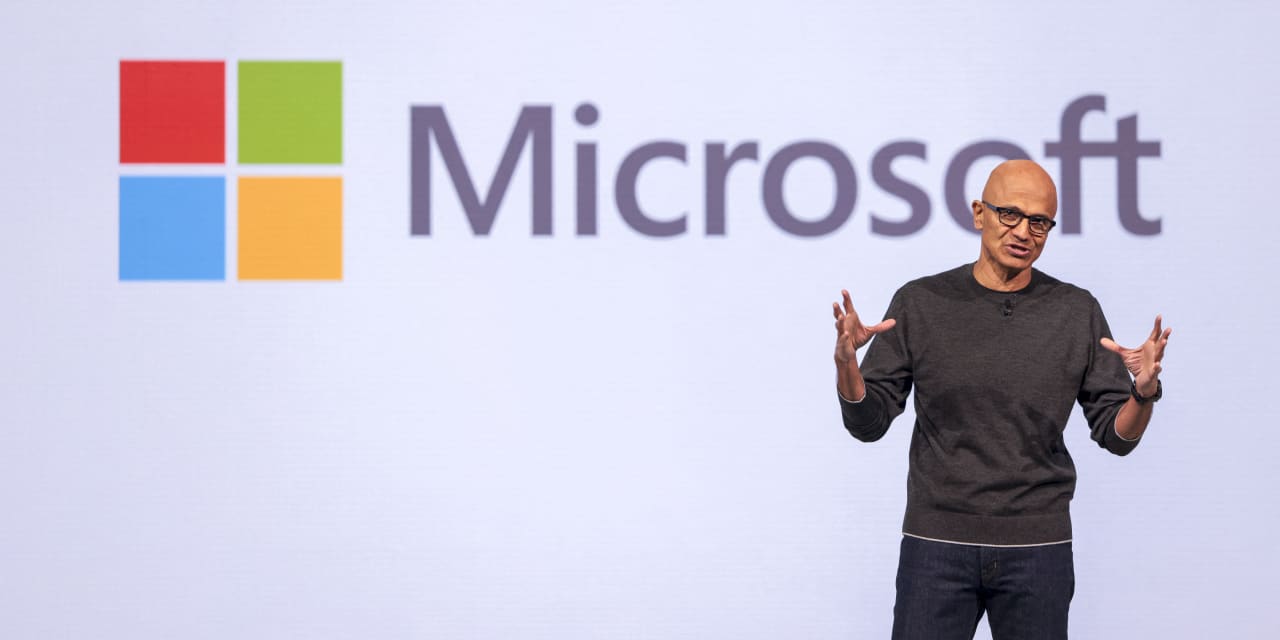
Microsoft ai spending is about to get its next Wall Street exam, with the company’s Wednesday earnings report set to show whether a planned $190 billion capital-expenditure push is starting to look worth the price.
MarketWatch reported that Microsoft projected in April that it would spend $190 billion on capital expenditures this calendar year. Benchmark analyst Yi Fu Lee told MarketWatch that any increase to that forecast would need to come with a convincing case that the spending can generate returns.
The pressure is already visible in the stock. According to MarketWatch, Microsoft shares are down 18% so far this year, making them the weakest performer among the major cloud companies tracked in the report. The stock has also trailed the S&P 500 by roughly 26 percentage points over the same period.
Deutsche Bank analysts have said that performance reflects investor concern about whether Microsoft’s record AI investment will produce adequate returns, according to MarketWatch.
What should investors watch in Microsoft earnings?
The first number to watch is Azure. Lee told MarketWatch that growth in Microsoft’s cloud business is a key way to judge whether the company’s AI spending is turning into real revenue.
Deutsche Bank analysts said Azure revenue growth of 40% to 41% from a year earlier, measured in constant currency, looks like a reasonable target for the quarter, according to MarketWatch. Constant-currency growth strips out foreign-exchange swings to give a cleaner view of business momentum.
Another AI scorecard will be Microsoft 365 Copilot. MarketWatch reported that analysts are watching the number of paid seats, meaning individual user licenses, across Copilot products and related extensions such as GitHub Copilot and Dragon Medical.
Microsoft added about 5 million Copilot seats in its fiscal third quarter, according to MarketWatch. TD Cowen analysts estimate the company added close to 6 million more in the fiscal fourth quarter.
Cash flow is the pressure point
The earnings report will cover Microsoft’s fiscal fourth quarter of 2026. Analysts tracked by FactSet expect Microsoft to report $16.8 billion in free cash flow for the period, MarketWatch reported, down 34.2% from the same quarter a year earlier.
Free cash flow is the cash a company has left after covering operating costs and capital spending. For investors, it is a blunt measure of how much room a company has to fund dividends, buybacks, debt payments or more investment without leaning harder on outside financing.
Deutsche Bank analysts expect Microsoft’s free cash flow could fall close to breakeven in fiscal 2027, which has just begun, according to MarketWatch. That forecast puts a sharper edge on every dollar Microsoft commits to data centers, chips and other AI infrastructure.
MarketWatch reported that Big Tech companies are racing to secure AI hardware while prices for key memory components have risen sharply. Alphabet raised its spending forecast last week, according to MarketWatch, adding to speculation that other major tech companies may follow.
Microsoft is trying to widen its AI base
Lee told MarketWatch that Microsoft appears to be reducing its reliance on OpenAI over time. He pointed to the company’s work on proprietary AI models, a wider group of frontier AI partners and more tightly connected infrastructure across cloud, data, security and applications.
Microsoft Chairman and Chief Executive Satya Nadella is scheduled to speak on the company’s Wednesday afternoon earnings call, according to MarketWatch.
Lee also told MarketWatch that the argument for heavy spending is about future capacity. His view is that companies that do not build AI cloud infrastructure now may lack the computing resources needed by frontier AI labs in two or three years.
One quarter is unlikely to settle the fight over Microsoft’s AI bill. Wednesday’s report can still give investors a cleaner look at the trade-off: faster Azure and Copilot growth on one side, shrinking cash flow and a rising capital-spending tab on the other.
This story draws on original reporting from MarketWatch.