Morgan Stanley says Micron’s AI memory boom still has room to run
Micron and other memory-chip names rebounded Monday as Morgan Stanley said AI demand is keeping DRAM supply tight.
By Frankie Delgado · News Reporter
2 min read
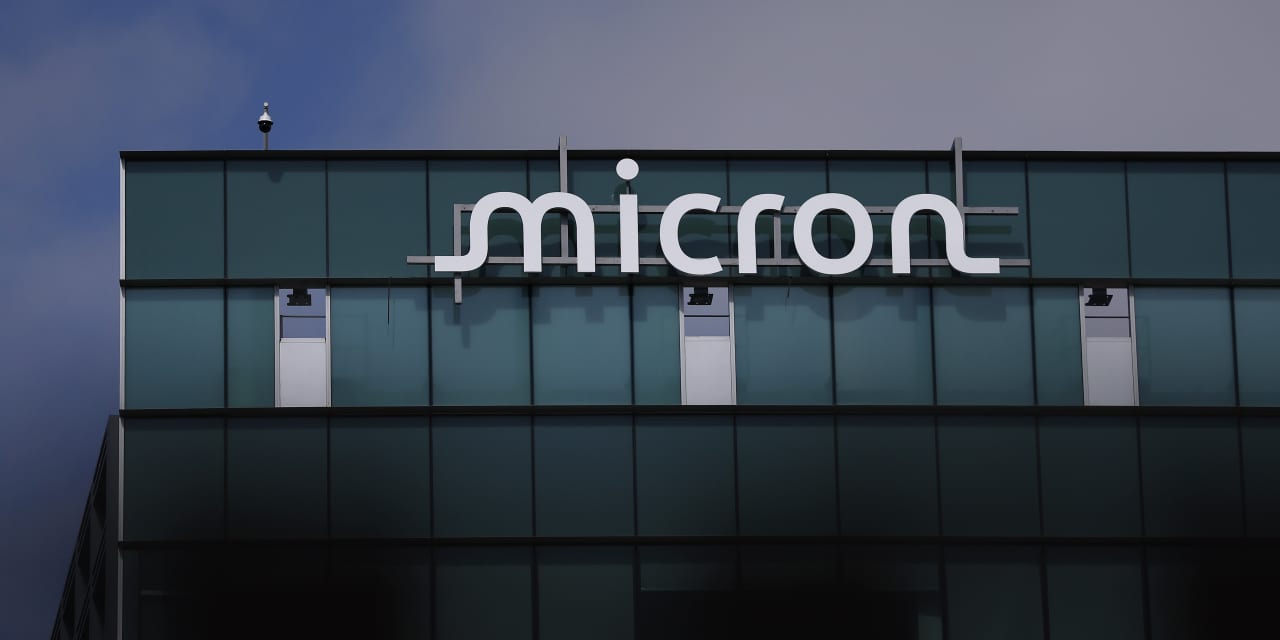
Micron climbed Monday as Morgan Stanley told clients that old warning signs from past memory-chip cycles may be the wrong thing to watch in an AI-led market.
The rebound came after a rough stretch for semiconductors. MarketWatch reported that the PHLX Semiconductor Index had entered bear-market territory on Friday before rising 1.77% Monday.
Morgan Stanley analyst Joseph Moore said in a client note that a cycle powered by data centers can throw off confusing signals from other corners of the market, including consumer electronics, PCs and smartphones. Those areas can affect spot pricing and inventories, he said, even while the main source of demand remains strong.
Moore said some recent pressure on chip stocks appeared tied to those weaker-looking parts of the market. His view: investors should not treat those signals as proof that the broader memory trade is breaking.
AI is eating the memory supply
The Morgan Stanley note pointed to data-center demand as the core driver behind tight supplies. Moore said shortages have allowed memory-chip companies to raise prices and that he does not see those shortages easing.
He expects memory prices to rise by at least 25% from the second quarter to the third quarter of this year, according to MarketWatch.
Moore’s argument centers on DRAM, or dynamic random-access memory, a key chip category used across computers, phones and AI systems. He said AI demand is taking up so much DRAM that other sectors are being squeezed, affecting PC and smartphone production. He also said cloud customers are paying premiums for memory.
According to Moore, the shortage is likely to get worse through 2028 because AI requirements are outstripping available memory supply. He said he does not see that changing.
Memory stocks join the rebound
MarketWatch data showed a broad bounce in chip and memory names Monday. Micron was up 4.86%, Sandisk rose 5.38%, and SK Hynix’s American depositary receipts gained 1.66%.
Other chip names were also higher. Nvidia gained 0.38%, while Broadcom rose 2.95%, according to the market data cited by MarketWatch.
Moore said compute stocks such as Nvidia and Broadcom still look like the best value in the market. Even so, he said memory makers are beginning to close the gap and that the group offers a good entry point.
The Morgan Stanley analyst also said changes in the industry could reshape the usual boom-and-bust pattern. Long-term supply agreements from memory companies and AI-chip redesigns meant to address memory limits could reduce the sharpness of the cycle, he said.
That may also stretch the memory upturn for longer, which Moore said would probably be better for the stocks over time.
This story draws on original reporting from MarketWatch.