Oil jumps 13% as U.S.-Iran fighting rattles crude markets
Bank of America strategists warned crude could top $100 a barrel if the conflict keeps disrupting flows through the Strait of Hormuz.
By Frankie Delgado · News Reporter
2 min read
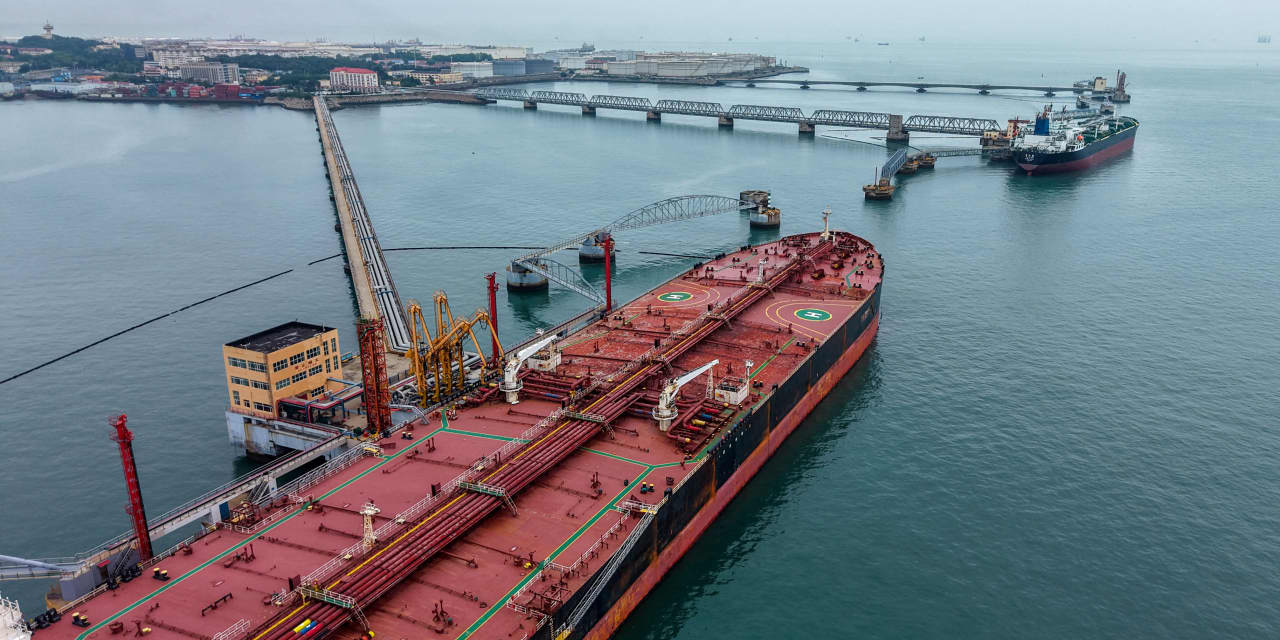
Oil just had its hottest week in months, with both major crude benchmarks up 13% as fighting between the U.S. and Iran put traders back on supply-watch.
West Texas Intermediate crude for August delivery rose more than 2% to $80.70 a barrel, while Brent crude for September delivery gained close to 2% to $85.76, according to MarketWatch. Dow Jones Market Data said the 13% weekly rise marked the biggest one-week percentage advance in four months for WTI and in three months for Brent.
Bank of America commodity strategists warned that crude could climb back above $100 a barrel if the fighting does not cool soon. The strategists said current crude inventories could absorb several weeks or months of delays around the Strait of Hormuz, but prolonged conflict could overwhelm that cushion.
Hormuz fears move back to center stage
The Strait of Hormuz is once again the pressure point for the oil market. MarketWatch reported that shipping through the waterway has effectively shut down since attacks resumed this week, adding strain to an oil market that was already tight.
JPMorgan analysts led by Natasha Kaneva framed the issue around control of the waterway’s operations, according to MarketWatch. Their view: the debate for the market is now centered on who sets the terms for movement through the strait.
The price surge followed six days of worsening tension between Washington and Tehran. On Thursday, the U.S. carried out strikes on Iran for a sixth straight night, according to the report.
Iran’s state-controlled IRNA news agency said the U.S. attacks hit bridges and civilian infrastructure, including a railway station and a maritime control tower. U.S. Central Command said the strikes were intended to further weaken Iran’s military capabilities.
Iran’s Revolutionary Guard Corps said it answered by targeting U.S. military sites in Oman, Kuwait and Bahrain. The United Kingdom Maritime Trade Operations reported that a tanker off Oman’s coast was struck by an unknown projectile.
Markets count the supply risk
The latest move in oil came as traders priced in the possibility that energy flows could face longer delays if the conflict continues. The Strait of Hormuz is a key route for global crude shipments, so disruption there can quickly feed into futures prices.
The current rally has not yet pushed WTI or Brent back to triple digits, but Bank of America’s warning shows how quickly the market’s tone has changed. For now, crude’s next move is tied closely to whether fighting eases or the disruption around Hormuz deepens.
This story draws on original reporting from MarketWatch.