SLB earnings get a data centers boost as Middle East bites
SLB beat Wall Street estimates as offshore work and data center revenue helped offset Middle East disruptions.
By Frankie Delgado · News Reporter
3 min read
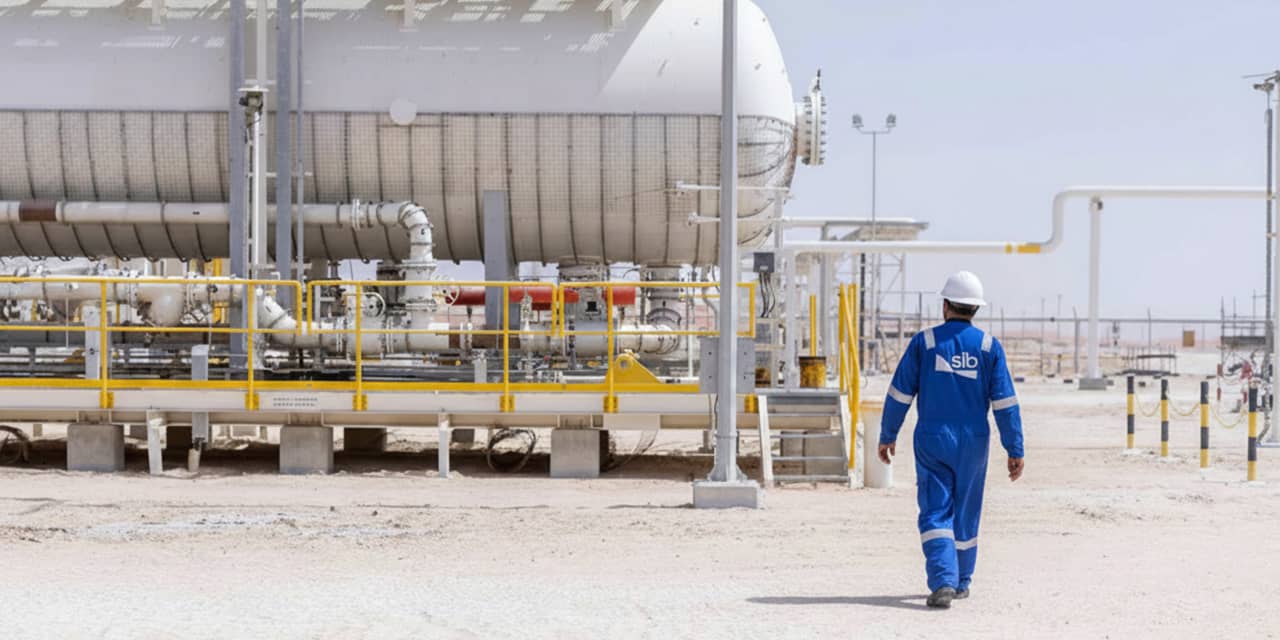
SLB earnings data centers momentum gave investors something new to cheer Friday, as the oilfield-services giant beat Wall Street expectations while disruption in the Middle East weighed on its core energy markets.
The company, formerly known as Schlumberger, reported adjusted earnings of 55 cents a share on revenue of $8.97 billion for the second quarter. FactSet estimates had called for 51 cents a share on sales of $8.67 billion.
Shares of SLB jumped 10% Friday, ranking as the second-best performer in the S&P 500. The stock was on pace for its strongest one-day gain in six months.
Chief Executive Olivier Le Peuch told analysts that offshore activity in Latin America, Europe, Africa and Asia “more than offset” the drag from Middle East disruptions. SLB also said the quarter marked a return to year-over-year revenue growth outside the Middle East.
Why is SLB moving into data centers?
SLB says it wants to become an industrial technology partner for the data-center industry, a fast-growing market tied to artificial intelligence infrastructure. The company said revenue from its data center business rose 33% from the previous quarter and 80% from a year earlier.
That business is now expected to top a $1 billion annualized revenue run rate by the end of this year, SLB said. The company also said it expects to pass a $2 billion annualized revenue run rate by the end of next year as it expands its customer base and footprint.
SLB announced an expanded agreement with Nvidia earlier this year to build AI infrastructure, according to the company. Nvidia shares were lower Friday.
The company’s old-school oilfield work still sits at the center of the story. Oilfield services companies provide the labor, tools and technology that exploration and production companies use to drill wells and keep them running.
Le Peuch told analysts that the market is beginning to show signs of an upcycle. He said companies and governments are expected next year to rebuild inventories and strengthen new supply connections as the war reshapes energy markets.
SLB’s chief executive said lower crude prices would help encourage inventory rebuilding and the need to restore spare capacity. He also said higher oil prices would support development of new supply and open new business opportunities for SLB.
Crude futures fell Friday from recent highs, though they were still set to finish the week up more than 8%. Market concerns intensified after Iran-backed Houthis entered the conflict earlier in the week, raising fears about more pressure on Middle East oil flows.
The Wall Street Journal reported Friday that President Donald Trump has become skeptical that negotiations with Iran can produce a lasting peace and has grown increasingly frustrated as the conflict continues.
Energy markets have responded by drawing from commercial and strategic reserves, holding down demand and turning to other countries for crude and refined products. Energy experts have warned that some of those fixes cannot continue indefinitely.
Fuel prices are also drawing attention. AAA said U.S. gasoline averaged $4.11 a gallon Friday, while diesel averaged $5.24 a gallon, with both prices rising in recent days.
SLB’s report opened earnings season for major U.S. energy companies. ExxonMobil and Chevron are scheduled to report next Friday, with major refiners also due to report next week or in early August.
This story draws on original reporting from MarketWatch.