Space stocks falling as defense spending jitters hit SpaceX halo trade
Space stocks are sliding as investors weigh SpaceX’s retreat, defense budget risks and a possible House flip, analysts and FactSet data show.
By Frankie Delgado · News Reporter
3 min read
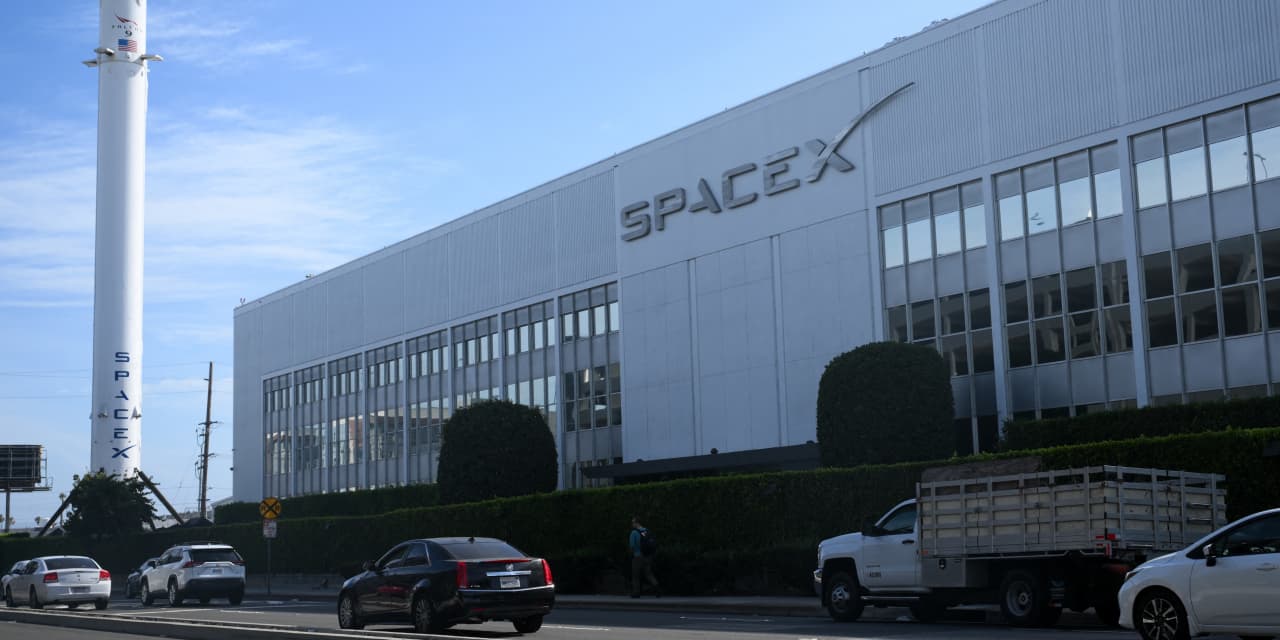
Space stocks falling in July are giving investors a rough comedown from the run-up around SpaceX’s public debut, with analysts pointing to worries about U.S. defense spending and a possible shift in control of the House of Representatives.
The selloff has not been limited to SpaceX, the industry’s biggest name. FactSet data cited by MarketWatch show the Procure Space ETF lost 22.4% in June and was down another 13.5% so far in July. The Roundhill Space and Technology ETF and other space-focused funds have also posted similar declines.
Individual names have taken sharper hits. Intuitive Machines shares were down 42% for July, while Satellogic had fallen 38%, according to FactSet. At least 10 space stocks, including AST SpaceMobile and Planet Labs, had dropped 30% or more during the month.
Why are space stocks falling?
Analysts say investors are worried that new defense funding could become harder to pass if Democrats win control of the U.S. House in the midterm elections. Citizens analyst Trevor Walsh said in a client note that the elections, along with uncertainty tied to the Iran conflict, could lead to long negotiations in Congress.
That matters because many space companies depend on U.S. government contracts. Rocket Lab, one of the better-known publicly traded space companies, announced a $266 million defense contract with the U.S. Space Force on Monday, according to the company.
KeyBanc analyst Michael Leshock said in a Monday report that a House flip could weigh on newer and faster-growing defense programs, especially those funded through reconciliation, supplementals and new-start programs. Leshock said much of the recent weakness in defense-tech stocks appears tied to that debate.
Leshock also said a divided Congress could slow or shrink the White House’s requested $1.5 trillion defense budget, with about $350 billion of that request tied to reconciliation. Reconciliation is a budget process that can let some tax and spending measures move through the Senate with a simple majority.
Citi analyst John Godyn wrote last week that investors appeared worried about “peak defense” and a possible “blue wave,” according to MarketWatch. Many Democrats in both chambers voted this month against laying out Pentagon funding, an event that is usually bipartisan.
How much is SpaceX part of the selloff?
SpaceX is still a big part of the market mood. Its shares recovered nearly 3% on Tuesday, but remained about 48% below their high, according to MarketWatch.
Walsh told MarketWatch that other space stocks benefited from a “halo” trade before the SpaceX IPO, then began falling as SpaceX’s own shares pulled back. In other words, enthusiasm around the marquee listing helped lift the group, and the reversal has dragged attention back to risk.
The sector was already known for wild swings. A Goldman Sachs basket of space stocks is about twice as volatile as a comparable artificial-intelligence basket and five times as volatile as the S&P 500, according to MarketWatch.
The pain has reached retail investors, too. Jacob Keeton, previously profiled by MarketWatch for a large Rocket Lab position, wrote on X last week that he was “wiped out” after taking risky bets.
The next test comes soon: SpaceX is scheduled to report earnings next Tuesday for the first time as a public company. Analysts and investors will be watching to see whether the report calms the space trade or adds another jolt.
This story draws on original reporting from MarketWatch.