SpaceX slips below IPO price, but the IPO graveyard has company
MarketWatch analysis says SpaceX’s early stock slide fits a common pattern among new listings, with Meta’s post-IPO rebound as a reminder.
By Frankie Delgado · News Reporter
3 min read
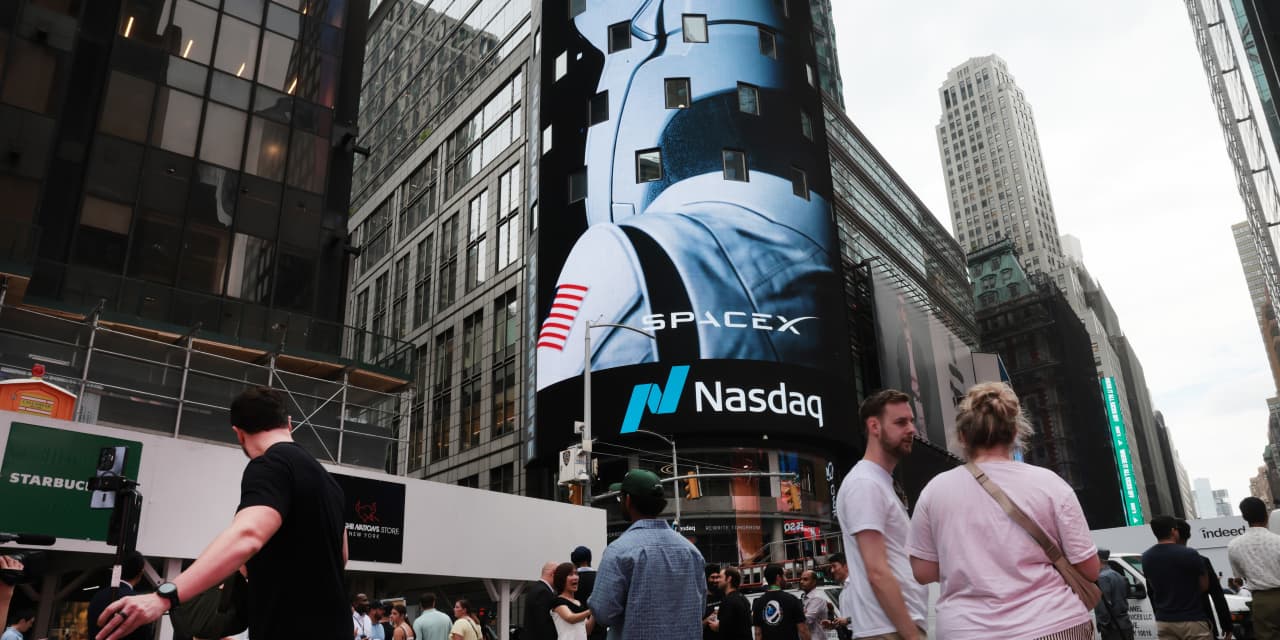
SpaceX shares have dropped under their $135 IPO price just weeks after the rocket company’s June 12 market debut, according to MarketWatch columnist Mark Hulbert.
The stock was also about 30% under its mid-June peak, MarketWatch reported. The move has put fresh attention on whether the celebrated listing has already lost its shine, but Hulbert pointed to IPO history showing that early weakness is far from rare.
Data compiled by University of Florida finance professor Jay Ritter found that 44.5% of large IPOs from 1975 through 2021 were trading below their offer price three years after listing, according to Hulbert. Looking across Ritter’s full IPO database, without limiting the sample by size, Hulbert said the historical odds rise to 56.1% that a newly public stock would still be below its IPO price after three years.
For SpaceX, that three-year check-in would fall in June 2029.
Hulbert used Meta Platforms as the go-to caution against reading too much into the first few months of trading. Facebook, now Meta, went public in May 2012. By Labor Day that year, its shares were 54% below the IPO price, according to Hulbert.
That early flop did not define the long run. LSEG data cited by Hulbert shows Meta is now almost 1,700% above its offering price, equal to roughly 23% a year on an annualized basis.
Why newly public stocks can wobble
Hulbert said IPO selling pressure can come from shareholders who are using their first chance to cash out, rather than from a sour view of the business. Employees who received stock instead of cash compensation, for example, may sell to turn years of deferred pay into money.
SpaceX may face that same pressure. MarketWatch reported that insiders holding early release shares can sell as much as 20% of those shares starting two trading days after the company’s second-quarter earnings report, which is expected in early August.
That matters because SpaceX sold just 4% of its total shares in the IPO, leaving a small public float, according to Hulbert. With fewer shares freely trading, insider sales could weigh on the stock in the near term, MarketWatch reported.
The next dates traders are watching
Ritter told Hulbert in an email that a stock’s decline during the first six months after an IPO is a mildly bearish signal for its performance over the following six months.
Applied to SpaceX, Hulbert said that means if the shares are still under $135 on Dec. 12, six months after the IPO, the chances would be somewhat higher that they remain below that price on June 12 next year.
Hulbert also cautioned that IPO returns vary widely, making the statistical strength of that signal unclear.
His conclusion for investors was direct: the long-term case for SpaceX depends more on business fundamentals, including earnings and revenue growth, than on whether the stock is above or below its offer price in the months after listing.
This story draws on original reporting from MarketWatch.