T. rex named Gus fetches record $50.1 million at Sotheby’s
The 67-million-year-old fossil beat its estimate and reset the dinosaur auction record after a 10-minute contest among seven bidders.
By Frankie Delgado · News Reporter
2 min read
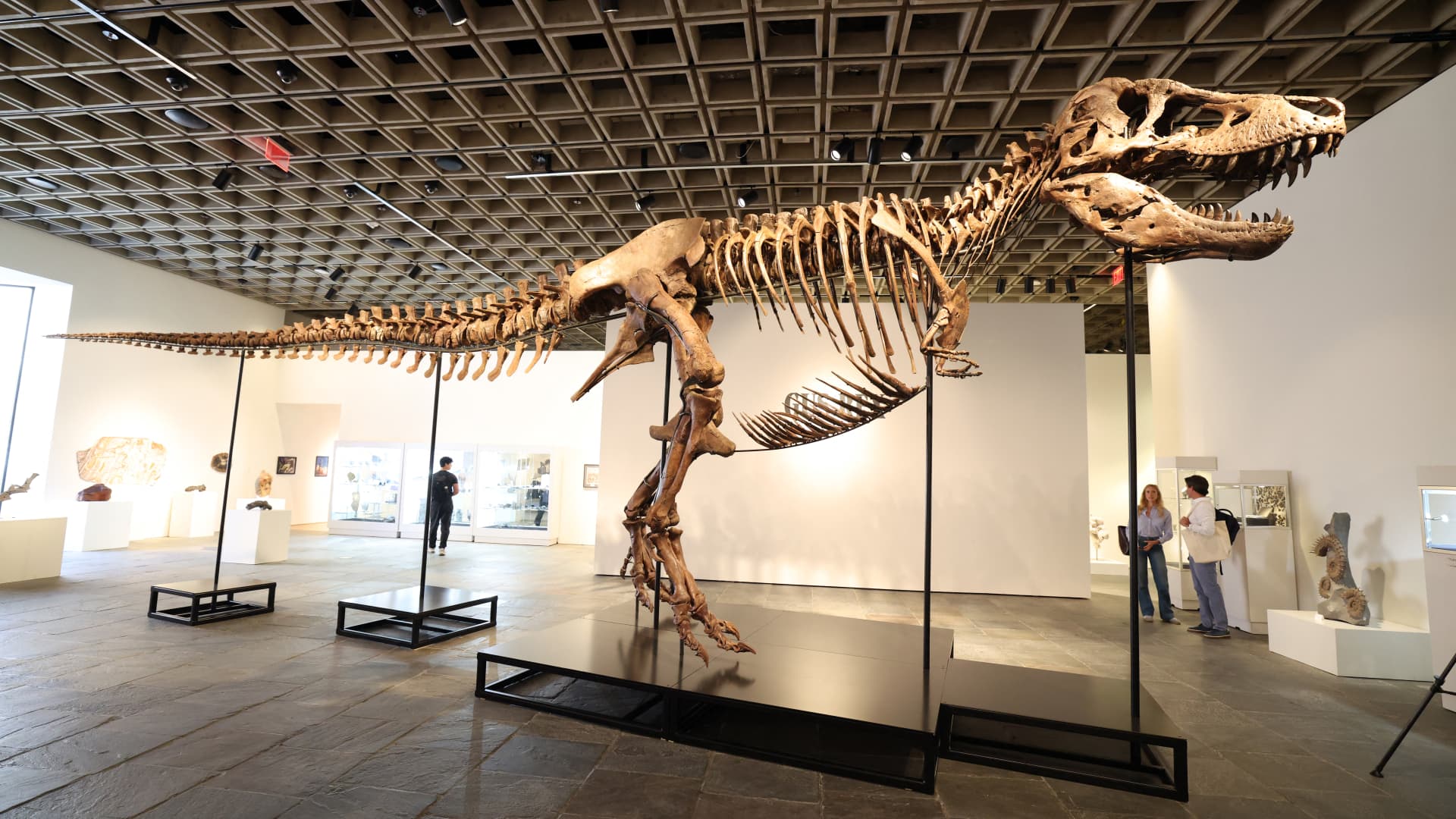
A Tyrannosaurus rex called Gus has just stomped into auction history, selling at Sotheby’s for $50.1 million and becoming the priciest dinosaur fossil ever bought under the hammer.
The sale blew past Sotheby’s presale estimate of $20 million to $30 million. According to CNBC, seven bidders fought it out for 10 minutes before the 67-million-year-old specimen landed its record price.
Gus overtook the previous dinosaur auction high set in 2024, when Sotheby’s sold a Stegosaurus skeleton nicknamed Apex for $44.6 million. CNBC reported that Apex was bought by billionaire hedge funder Ken Griffin.
A big beast with a big price
Sotheby’s said Gus was discovered in South Dakota and ranks among the most complete dinosaur specimens ever found. The auction house said the T. rex includes 183 fossil bone elements and is roughly 61% complete by bone count.
By size, Gus was no wallflower. Sotheby’s said the mounted skeleton measures about 38 feet long and about 12.5 feet tall, with a skull length of 54 inches. The auction house described it as one of the largest T. rex fossils ever found.
A photo caption from Getty Images noted that the mounted skeleton was shown during a press preview at Sotheby’s Breuer building in New York on July 1, 2026. The caption said the fossil represented up to 80% of the animal’s total bone mass.
The bones also carry the marks of a hard prehistoric life. Sotheby’s said Gus showed several injuries, including fractured and healed bones in multiple ribs and gastralia, along with bite marks on several skull bones.
Cassandra Hatton, Sotheby’s vice chairman and worldwide head of science and natural history, said Gus was “not only an exceptional find” but also a specimen excavated, documented, prepared and cared for “with real excellence.”
Dino fossils keep drawing rich buyers
The record sale comes as dinosaur fossils have become a fast-growing corner of the collectibles market, CNBC reported. Wealthy buyers have been seeking rare assets viewed as long-term stores of value, while auction houses have looked beyond art to broaden sales.
The T. rex market has already produced eye-popping numbers. In 2020, Christie’s sold a T. rex named Stan for $31.8 million, according to CNBC.
Gus’s price may encourage more dinosaur fossils to come to market, CNBC reported. But the boom has also brought warnings from paleontologists and other experts, who say the industry has limited safeguards around authenticity and verification.
For now, Gus has the crown. A fossil pulled from private land in South Dakota has become the new benchmark for a market where ancient bones are commanding very modern money.
This story draws on original reporting from CNBC.