Tech wealth auctions boom as dinosaurs, art and watches set records
Sotheby’s and Christie’s posted surging first-half sales as AI, IPO and stock gains sent young collectors chasing rare assets.
By Sal Moretti · Money Reporter
3 min read
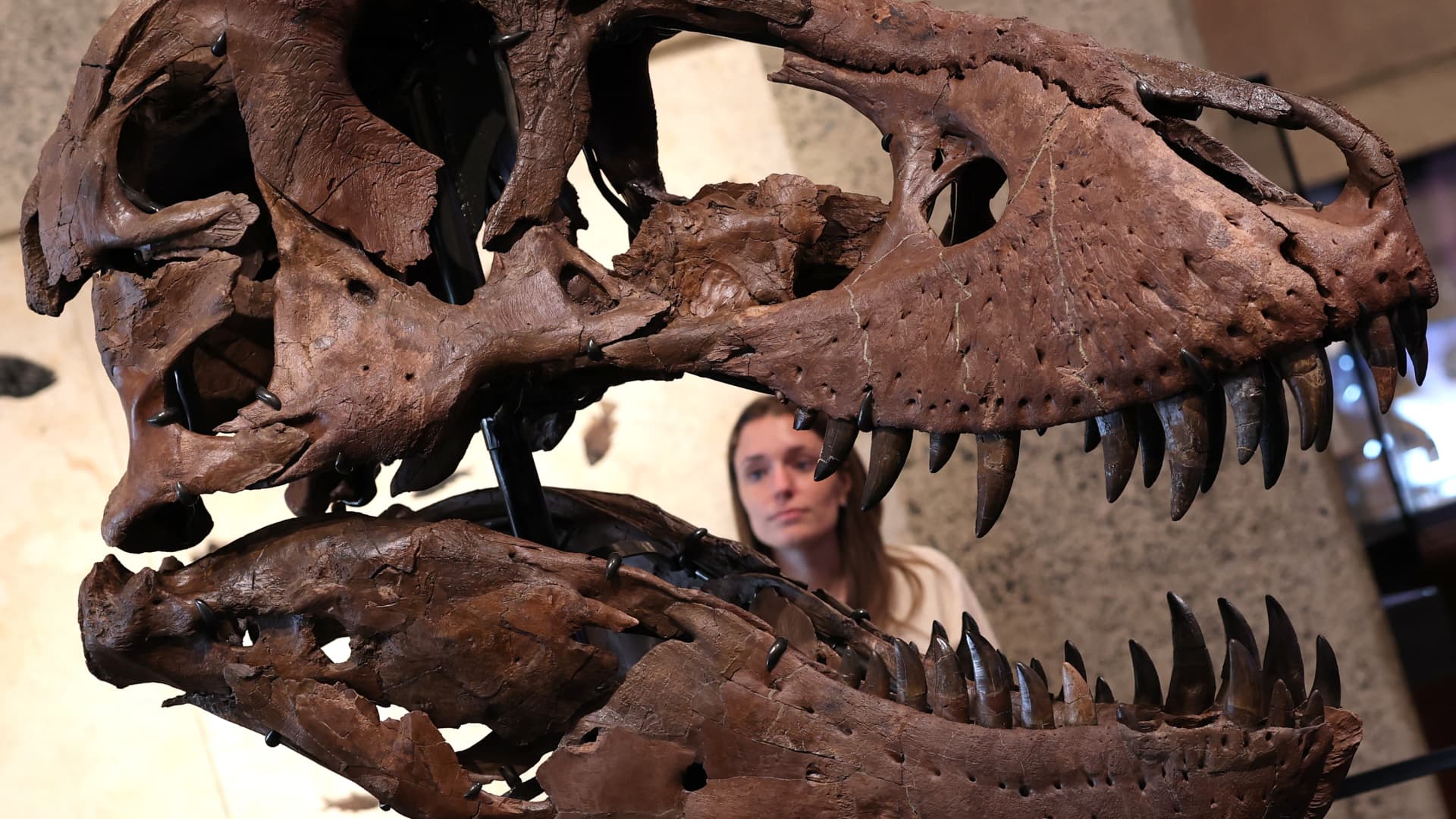
The tech wealth auctions boom has turned dinosaur bones, art, watches and even a CEO’s leather jacket into prized trophies, with major auction houses bringing in nearly $10 billion in the first half, CNBC reported.
Sotheby’s said it posted $4.4 billion in sales, up 58% from a year earlier and its strongest first half in its 282-year history. Christie’s reported $4.5 billion, up 71%, marking its best first-half result since 2021. CNBC said Phillips, Heritage and other auctioneers also opened the year strongly.
Artnet said eight lots sold for more than $50 million in the first six months. In 2024 and 2025, no lots reached that level, according to the same data cited by CNBC.
Why is tech wealth lifting auction prices?
Auction executives and dealers told CNBC that new fortunes from artificial intelligence, public offerings and rising stock prices are helping revive the art market after almost three years of declines. Christie’s CEO Bonnie Brennan said at the Christie’s Art + Tech Summit that the figures show buyers and sellers have confidence in the market.
Sotheby’s CEO Charles Stewart told CNBC that wealth creation is now the leading force in the auction business, pointing to attention around SpaceX, tech IPOs and AI enthusiasm.
The biggest first-half art sale cited by CNBC was Jackson Pollock’s “Number 7A, 1948,” which sold at Christie’s for $181 million. A Brancusi sculpture sold for $107.6 million. Both works had previously been owned by media executive and collector S.I. Newhouse, a history CNBC said helped draw interest.
The action is not limited to fine art. CNBC reported record-setting demand across categories including classic cars, watches, handbags, diamonds, whiskey and fossils. In cars, auction interest has shifted toward supercars from the 1990s and 2000s after decades in which sports cars from the 1950s and 1960s dominated the top prices.
Watches are also drawing younger money. Phillips in Association with Bacs & Russo reported $235 million in watch auction sales in the first half, its highest total to date, with bidding across New York, Geneva and Hong Kong. CNBC said Patek Philippe remains strong, while younger collectors are chasing harder-to-find independent brands.
The priciest watch sale was an F.P. Journe Souscription Résonance, which went for $13.9 million. CNBC noted that Meta CEO Mark Zuckerberg has become a visible F.P. Journe wearer in recent years and has appeared publicly with seven-figure pieces from the brand.
Christie’s said 30% of its first-half buyers were new to the auction house. Brennan said 47% of those new buyers were millennials or younger, and 85% of bids were made online.
What happened with the T. rex named Gus?
Sotheby’s sold a Tyrannosaurus rex fossil named Gus for $50.1 million this month, making it the most expensive fossil ever sold at auction, according to CNBC. The T. rex was excavated from the South Dakota badlands and is estimated to be 67 million years old.
The buyer has not been identified. CNBC reported that Gus is 38 feet long, and Stewart said seven bidders competed for the fossil for 10 minutes. A stegosaurus named Apex sold at Sotheby’s in 2024 to hedge-fund billionaire Ken Griffin for $44.6 million and is on loan to the Museum of Natural History, CNBC reported.
Sports and pop-culture objects are getting pulled into the same rush. CNBC said a jersey worn by New York Knicks player Jalen Brunson in Game 1 of the NBA Finals against the Spurs sold at Sotheby’s for $1.024 million, weeks after the Knicks won the championship.
A black Tom Ford leather jacket worn by Nvidia CEO Jensen Huang at a Foxconn event in Taiwan in 2023 sold for $960,000, far above its $40,000 to $60,000 presale estimate. CNBC reported that the proceeds went to charity.
This story draws on original reporting from CNBC.