Toyota, Honda and Hyundai grab the wheel in the hybrid boom
Hybrids hit a record U.S. market share in early 2026, with three Asian automakers controlling most sales, according to industry data.
By Sal Moretti · Money Reporter
3 min read
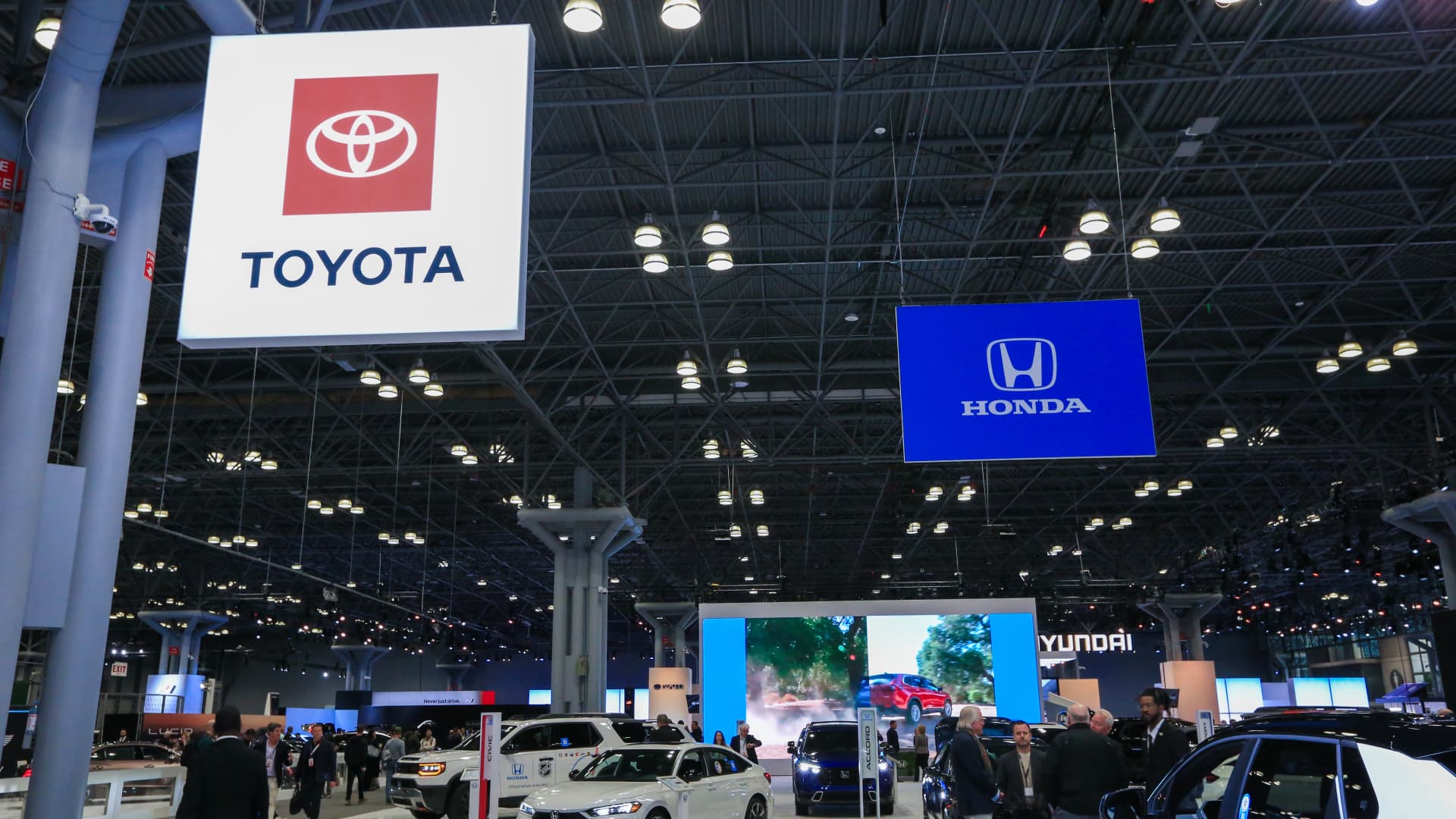
Hybrids are having their big U.S. moment, and three automakers are sitting in the fast lane.
Toyota, Honda and Hyundai Motor Group together control 86% of the American hybrid market, according to automotive analysis firm Baum & Associates. The surge has come as buyers keep looking for better fuel economy without committing to a fully electric car.
In the first half of 2026, U.S. hybrid sales climbed nearly 20% from a year earlier and reached a record 15.4% market share, according to the Center for Automotive Research. That was almost triple the share held by pure electric vehicles.
Elizabeth Krear, CEO of the Center for Automotive Research, told CNBC that hybrids are the only propulsion type gaining share so far this year, while every other category has lost ground.
Alan Baum, principal at Baum & Associates, told CNBC that buyers want hybrids, but relatively few automakers offer them in meaningful numbers.
Toyota leads the pack
Toyota is the heavyweight. The company sold more than 600,000 hybrids in the first six months of 2026 across its Toyota and Lexus brands, according to CNBC, giving it about half of the U.S. hybrid market.
That strength has helped Toyota move its overall U.S. sales closer to General Motors, the country’s top seller, according to CNBC. GM has focused heavily on electric vehicles and currently has one hybrid in its U.S. lineup, the Corvette E-Ray.
GM told CNBC in an email that hybrids “do have a role” in its future product plans.
Hyundai Motor Group, which includes Hyundai, Genesis and Kia, has also pushed hard into hybrids. Baum & Associates data cited by CNBC shows Hyundai Motor Group narrowly passed Honda in the first half of 2026.
Hyundai has put hybrid powertrains into a broad range of models, including large SUVs, according to CNBC.
Honda remains the second-best-selling hybrid brand in the U.S. behind Toyota. Hybrids make up 31% of American Honda sales, the company told CNBC, and Honda set a U.S. hybrid sales record in the first half of 2026.
Gary Robinson, vice president of auto strategy at American Honda Motor Co., told CNBC the company is “extremely happy” with how its hybrids have performed.
Why buyers are choosing hybrids
Higher fuel prices, more model choices and continued buyer concerns about EV range and charging are helping hybrids pull in customers, according to CNBC and the Center for Automotive Research.
Krear told CNBC that hybrids have historically cost more up front than gas-only vehicles because their powertrains are more complex. She said buyers can save about 30% to 50% on fuel costs and may recover the added purchase cost in two to three years.
The market looked very different when hybrids first arrived. Honda’s Insight reached the U.S. in 1999, followed by Toyota’s Prius in 2000. Krear said Toyota held about 75% of the hybrid market in the mid-2000s, when hybrids were only about 2% of new-vehicle sales.
Dave Christ, group vice president and general manager of the Toyota brand in the U.S., told CNBC that Toyota launched hybrid technology before it was widely seen as necessary because it believed in a long-term commitment to the powertrain.
Toyota and Honda kept investing even as Tesla and other companies ramped up pure EVs, a strategy that drew criticism, especially for Toyota, from activists and some shareholders, according to CNBC.
Baum & Associates expects EVs to reach 9.5% of the market in 2030, while hybrids rise to a quarter of sales. Honda is preparing a new hybrid system aimed at larger vehicles, Robinson told CNBC, as competition in the segment builds.
This story draws on original reporting from CNBC.